Introducing an Integrated Pathway
Integrative menopause care blends conventional medicine with evidence‑based complementary strategies to treat the person, not just isolated symptoms. It combines herbal supplements—such as sage, black cohosh, red clover, and evening primrose oil—chosen for their ability to modulate GABA receptors, mild estrogenic activity, or vasomotor relief. Lifestyle pillars include nutrition rich in calcium, vitamin D, phytoestrogens, aerobic and strength exercise, and sleep hygiene. Mind‑body practices like yoga, meditation, and tai chi lower cortisol, improve sleep, and reduce perceived hot‑flash intensity. Scientific trials show modest reductions in hot‑flash frequency with black cohosh and red clover, while lifestyle changes consistently improve mood, bone density, and cardiovascular health, providing a pathway for women.
Foundations of Integrative Menopause Medicine
| Pillar | Key Elements | Benefits |
|---|---|---|
| Nutrition | Calcium, Vitamin D, Phytoestrogens (soy, flaxseed, red clover), Omega‑3s | Supports bone density, cardiovascular health |
| Sleep | Consistent bedtime, cool bedroom, limited screens | Reduces nocturnal vasomotor symptoms |
| Exercise | Aerobic + strength training | Preserves lean muscle, bone mass |
| Stress Reduction | Yoga, meditation, tai chi, acupuncture | Lowers cortisol, reduces hot‑flash frequency |
| Herbal Adjuncts | Sage, Valerian, Black cohosh, Red clover | Modulate GABA, LH, provide phytoestrogenic activity |
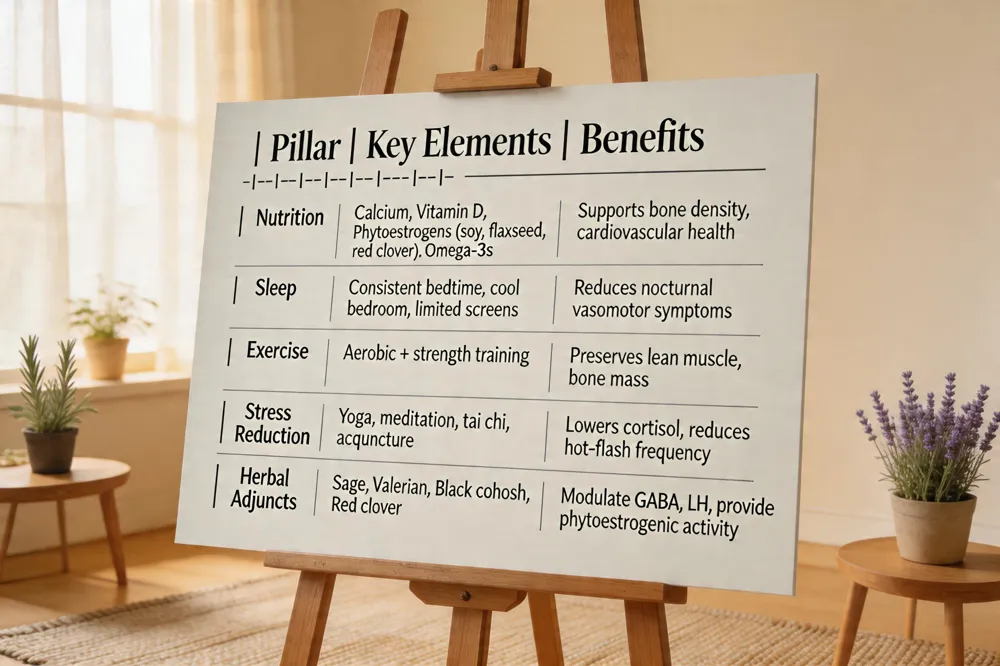 Integrative menopause care blends conventional medicine with evidence‑based lifestyle, mind‑body, and botanical strategies. It starts with a clear clinical definition: menopause is 12 months without menses, often accompanied by vasomotor, mood, sleep, and bone‑health changes. Core lifestyle pillars—nutrient‑dense nutrition, restorative sleep, regular aerobic and strength exercise, and stress‑reduction techniques—form the foundation. A diet rich in calcium, vitamin D, phytoestrogens (soy, flaxseed, red clover) and omega‑3s supports bone density and cardiovascular health. Mind‑body practices such as yoga, meditation, tai chi, and acupuncture have demonstrated reductions in hot‑flash frequency and anxiety. Herbal options with known pharmacologic actions include sage (GABA‑benzodiazepine receptor binding), valerian (increases synaptic GABA), black cohosh (terpene glycosides modulating LH), and red clover (isoflavone phytoestrogens). Each intervention is personalized, monitored for drug interactions, and integrated into a whole‑person plan, allowing women to navigate menopause with greater comfort and vitality. Prioritizing sleep hygiene—consistent bedtime, cool bedroom, limited screens—improves nocturnal symptoms. Regular strength training preserves lean muscle and bone mass, while mindfulness‑based stress reduction lowers cortisol, further easing vasomotor episodes. Professional oversight ensures safety always.
Targeted Herbal Solutions and Weight Management
| Herb | Primary Action | Typical Use | Cautions |
|---|---|---|---|
| Black cohosh | Modulates LH, GABA pathways | Vasomotor relief, sleep improvement | Liver disease, drug interactions |
| Red clover | Isoflavone phytoestrogen | Hormonal balance, appetite control | Estrogen‑sensitive conditions |
| Evening primrose oil | Gamma‑linolenic acid | Reduces night sweats, inflammation | Bleeding risk at high doses |
| Ginseng | Adaptogen | Boost energy, mood, stress tolerance | May affect blood pressure |
| Ashwagandha | Adaptogen | Stress resilience, cortisol regulation | Sedation, thyroid interaction |
| Sage | GABA‑benzodiazepine receptor binding | Anxiety, hot‑flash reduction | Not for pregnant women |
| Cinnamon | Glucose metabolism aid | Supports weight management | High doses may affect liver |
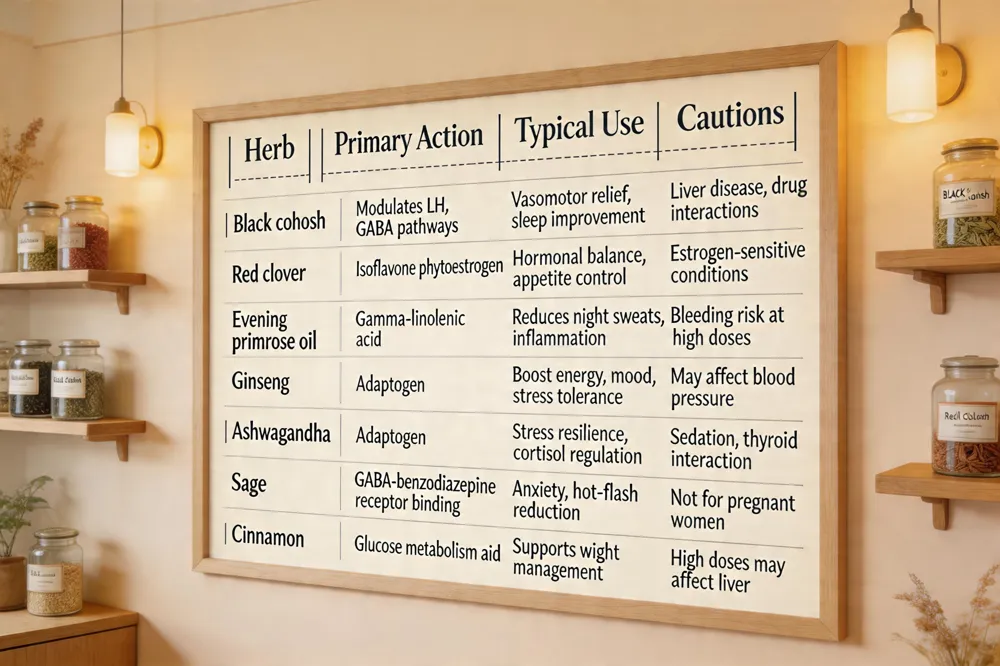 Best herbs for menopause
Black cohosh, red clover, and evening‑primrose oil are the most frequently cited botanicals for easing hot flashes and night sweats. Red clover and soy‑derived iso‑flavones act as phytoestrogens, helping balance estrogen levels, while Black cohosh supports both estrogen and progesterone pathways. Adaptogens such as ginseng and angelica boost energy, mood, and stress tolerance; St John’s wort can aid mood swings but requires caution due to drug‑interaction risk. Always consult a qualified practitioner before starting any herbal supplements.
Natural remedies for menopause weight gain
Balancing hormones, supporting metabolism, and reducing inflammation are key. Black cohosh, red clover, and evening primrose oil may act as mild estrogen‑like agents to stabilize appetite and fat distribution. Adaptogenic herbs like ginseng and ashwagandha improve stress resilience, making regular movement easier. Pair these with phytoestrogen‑rich foods (flaxseed, soy, chickpeas) and omega‑3 sources (walnuts, chia seeds) for a sustainable, natural approach.
What is the number one herb for menopause?
Black Cohosh is widely regarded as the # 1 herb because it targets hormonal fluctuations that cause vasomotor symptoms, without mimicking estrogen. Clinical use shows it can reduce hot‑flash frequency and improve sleep and mood, making it a cornerstone of integrative menopause care.
Herbs for menopause belly fat
Phyto‑estrogenic herbs—black cohosh, red clover, dong quai—support hormonal balance that influences abdominal fat. Sage and cinnamon aid glucose metabolism, while ginger helps regulate cortisol and curb stress‑related eating. Combine these botanicals with a protein‑rich diet, strength training, and adequate sleep for the best results.
Community Resources, Clinical Options, and Real‑World Experiences
| Resource Type | Example | Services Offered |
|---|---|---|
| Clinical Practice | Women’s Health & Wellness clinic (East Falls) | Hormone therapy, functional‑medicine counseling, same‑day visits |
| Functional Medicine Network | Harmony.care community | Practitioner referrals, integrative care plans |
| Non‑pharmacologic Programs | Yoga & meditation groups, acupuncture clinics | Stress reduction, vasomotor symptom relief |
| Patient Testimonials | Online reviews, clinic feedback | Real‑world outcomes, sleep & hot‑flash improvements |
| Emerging Therapies | Fezolinetant (neurokinin‑3 antagonist) | Prescription for severe hot flashes |
| FDA‑Approved Medications | Systemic estrogen, low‑dose vaginal estrogen, SSRIs, gabapentin, Brisdelle | Hormone replacement, non‑hormonal symptom control |
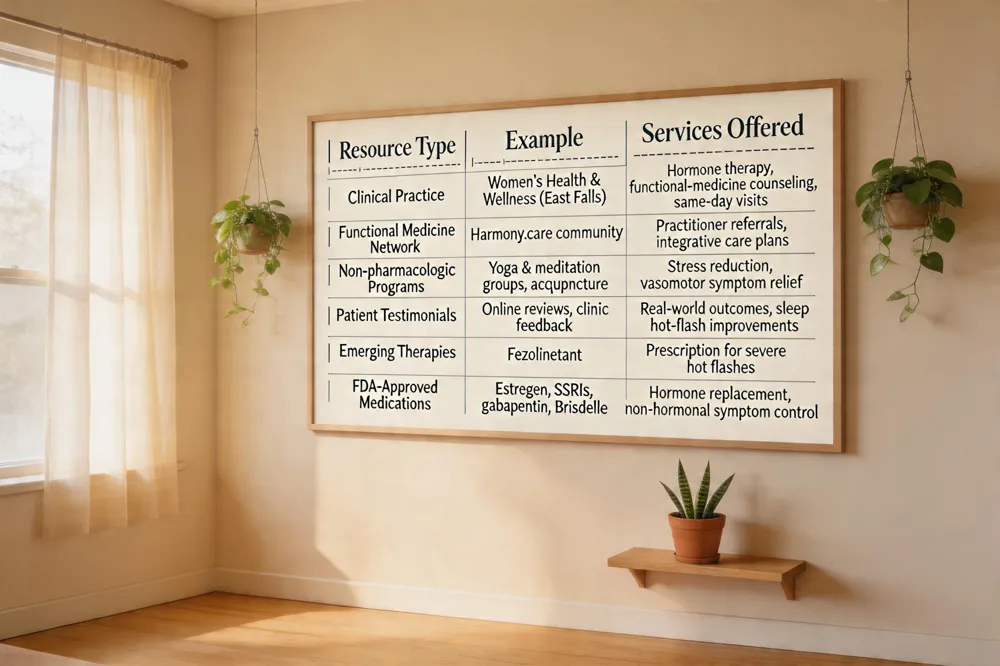 Philadelphia women seeking integrative menopause care can turn to local networks such as the Harmony.care community of functional‑medicine practitioners and the East Falls‑based Women’s Health & Wellness clinic (3300 Henry Ave, Suite 101). This board‑certified gynecologic practice blends conventional hormonal therapy with lifestyle counseling, offering same‑day appointments, pelvic pain evaluation, and personalized hormone replacement guided by functional‑medicine principles.
Evidence‑based non‑pharmacologic treatments include a nutrient‑dense, phytoestrogen‑rich diet (soy, flaxseed, legumes, fruits, vegetables), regular aerobic and strength‑training exercise, and mind‑body practices such as yoga, meditation, and deep‑breathing. Herbal supplements—black cohosh, red clover, evening primrose oil—show modest vasomotor relief when used under professional supervision.
Patient testimonials highlight improved sleep, reduced hot‑flash frequency, and greater confidence after integrating these strategies, while clinicians stress the importance of credentialed providers and third‑party supplement testing.
Current FDA‑approved options remain hormone therapy and non‑hormonal prescriptions (SSRIs, gabapentin); emerging therapies such as neurokinin‑3 receptor antagonists (fezolinetant) offer new avenues for severe hot flashes. Combining these medical options with lifestyle interventions yields the most sustainable relief.
Broader Holistic Context, Safety, and Future Directions
| Modality | Evidence Level | Safety / Interaction Notes |
|---|---|---|
| Phytoestrogen‑rich foods (soy, flaxseed) | Moderate (observational) | Weak estrogenic effect; caution in estrogen‑sensitive cancers |
| Mind‑body (CBT, yoga, tai chi) | Low‑to‑moderate (RCTs) | Generally safe; contraindications based on physical ability |
| Herbal supplements (black cohosh, red clover) | Low‑to‑moderate (small trials) | Potential liver toxicity, drug interactions (e.g., CYP450) |
| Acupuncture | Moderate (systematic reviews) | Minimal adverse effects; sterile technique required |
| Neurokinin‑3 antagonists (feitazolinetant) | Emerging (phase 3) | Under FDA review; monitor cardiovascular profile |
| Prescription HRT | High (large RCTs) | Risks: VTE, breast cancer; requires individualized assessment |
 Alternative therapies for menopause – Plant‑based phytoestrogens (soy, lentils, flaxseed) offer weak estrogenic effects but limited hot‑flash data. Mind‑body practices (CBT, yoga, tai chi, acupuncture, hypnosis) modestly reduce vasomotor and emotional symptoms. Herbal options (black cohosh, red clover, evening primrose oil, ginseng) are popular yet lack robust safety profiles and may interact with meds. What does Jennifer Aniston use for menopause? – She promotes the low‑impact Pvolve fitness program, emphasizing gentle strength and balance to ease hot flashes without hormone therapy. Best herbal supplements for menopause – Black cohosh (caution with liver issues), red clover, evening primrose oil, flaxseed, and ginseng show modest benefit; professional guidance is essential. Holistic women’s health near me – Integrative clinics (e.g., WonderCreek Health, Waterleaf Naturopathic) blend functional medicine, nutrition, acupuncture, and personalized supplement plans. Natural Women’s Health reviews – Patients praise compassionate, evidence‑based care and individualized nutrition/healing strategies. Latest menopause treatments – FDA‑approved options include systemic estrogen, low‑dose vaginal estrogen, fezolinetant, SSRIs, gabapentin, and prasterone for specific symptoms. Best natural estrogen replacement – Phytoestrogen‑rich foods (soy, flaxseed, whole grains) and herbs (black cohosh, red clover) support modest estrogenic activity; supplement under provider supervision. What are the top 3 vitamins for menopause – Vitamin D, vitamin E, and vitamin B6 are most critical for bone health, hot‑flash reduction, and mood stability. What does a holistic gynecologist do? – They integrate conventional gynecologic care with nutrition, botanicals, lifestyle counseling, and bioidentical hormones, focusing on root‑cause wellness. FDA‑approved menopause supplements – None; only prescription hormones and Brisdelle (low‑dose paroxetine) have FDA approval. Holistic women’s health podcast – The "Holistic Women’s Health" show offers weekly integrative nutrition, hormone, and lifestyle guidance (link). Can you take herbal supplements with HRT? – Caution: St. John’s wort can reduce HRT efficacy; other herbs may interact—consult a clinician first. Is holistic health covered by insurance? – Limited coverage exists for acupuncture, chiropractic, and some nutrition services when physician‑ordered; most naturopathic/functional therapies are out‑of‑pocket. What is the holistic approach to women’s health? – It addresses physical, mental, emotional, social, occupational, and financial wellness for balanced, personalized care. What is the integrative approach to menopause? – Combines conventional therapies with evidence‑based complementary modalities (mind‑body, nutrition, botanicals) tailored to individual needs.
Concluding Vision for Menopausal Wellness
| Goal | Strategy | Expected Outcome |
|---|---|---|
| Symptom Relief | Personalized herbal regimen + lifestyle pillars | Reduced hot flashes, improved sleep, mood stability |
| Bone Health | Calcium, Vitamin D, weight‑bearing exercise | Maintained bone density, lower fracture risk |
| Cardiovascular Wellness | Omega‑3s, phytoestrogens, aerobic activity | Improved lipid profile, reduced CVD risk |
| Holistic Empowerment | Patient‑centered care, education, integrative therapies | Greater self‑efficacy, sustained wellness |
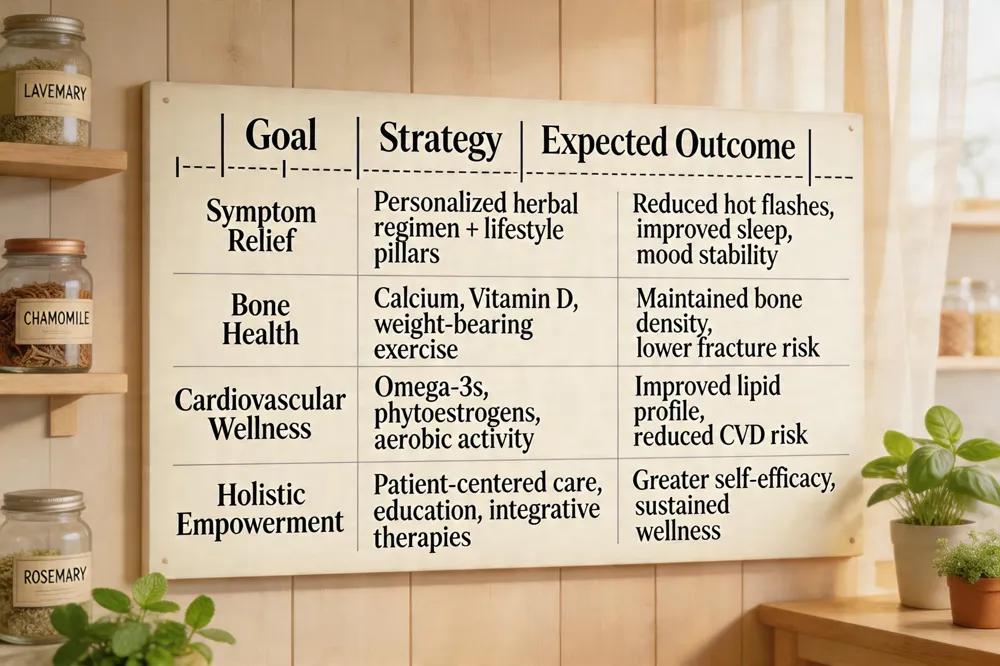 Integrative menopause care blends evidence‑based herbs such as black cohosh, sage, and red clover with lifestyle pillars—nutrition, aerobic and resistance exercise, sleep hygiene, and mind‑body practices like yoga. Tailoring supplements, activity, and stress‑reduction to each woman’s hormonal profile empowers patients to co‑design their wellness plan. Ongoing studies on phytoestrogen pathways and GABA‑modulating botanicals aim to expand safe options.
What is the holistic approach to women’s health? It treats the whole person—physical, mental, and emotional—using personalized strategies rather than isolated pills.
What is the integrative approach to menopause? It combines conventional medicine with therapies such as yoga, mindfulness, acupuncture, and herbal regimens to address vasomotor, mood, and bone health.
Putting It All Together
Integrative menopause care blends evidence‑based herbs, lifestyle tweaks, and mind‑body practices to address hot flashes, mood swings, sleep problems, and long‑term health. Key take‑aways are that personalized plans work best, that safe herbal options such as sage, black cohosh, and red clover can modestly ease vasomotor symptoms, and that regular exercise, balanced nutrition, stress reduction, and adequate calcium‑vitamin D are essential for bone and heart health. Action steps: track symptoms, discuss any supplement with a qualified provider, start a 150‑minute weekly aerobic routine, add strength training twice weekly, practice yoga or meditation, and choose herbal products. Ready to create a tailored strategy? Explore Harmony.Care for an integrative partnership.