Introduction
Menopause marks the natural transition when ovarian estrogen production declines, typically between ages 45‑55, bringing vasomotor symptoms (hot flashes, night sweats), sleep disruption, mood swings, and bone‑health concerns. Integrative care blends conventional medicine with evidence‑based mind‑body, nutritional, and botanical therapies—such as yoga, mindfulness, acupuncture, and phytoestrogen‑rich foods—to address both physical and emotional dimensions of this life stage. A multifaceted approach matters because menopausal experiences are highly individualized; combining lifestyle counseling, safe supplements, and targeted therapies can reduce symptom severity, improve quality of life, and support long‑term health while respecting each woman’s preferences and risk profile.
Mind‑Body Practices and Lifestyle Adjustments
| Practice | Evidence / Benefit | Practical Tips |
|---|---|---|
| Yoga & Tai Chi | Reduces hot‑flash frequency, improves mood & sleep; promotes circulation & mindfulness | Join UCLA free virtual classes or in‑person workshops; practice 2‑3 times/week |
| Mindfulness Meditation | Lowers perceived stress, improves quality of life | Use UCLA Mindful Awareness Research Center programs; 10‑20 min daily |
| Breathwork (diaphragmatic, Sudarshan Kriya) | Lowers cortisol, reduces anxiety, blunts night sweats | Practice 5‑10 min before bedtime or during stress episodes |
| Sleep Hygiene & Temperature Regulation | Cooler bedroom (18‑20 °C), breathable layers, fan/open window reduce night‑sweats | Keep caffeine/alcohol low after 3 pm; cool shower before bed |
| Natural Night‑Sweat Remedies (black cohosh, soy isoflavones, flaxseed, red clover, evening primrose oil, sage tea, vitamin E) | Modest relief; dosing to be discussed with clinician | Follow evidence‑based dosing (e.g., vitamin E 800 IU) and monitor for interactions |
| Fatigue Management (iron, B‑vitamins, adaptogens) | Improves energy when deficiencies corrected | Test labs; consider rhodiola or ginseng under guidance |
| Overall Lifestyle | Combined diet‑exercise‑stress reduction yields smoother transition | Plant‑rich diet, regular aerobic/strength training, adequate hydration |
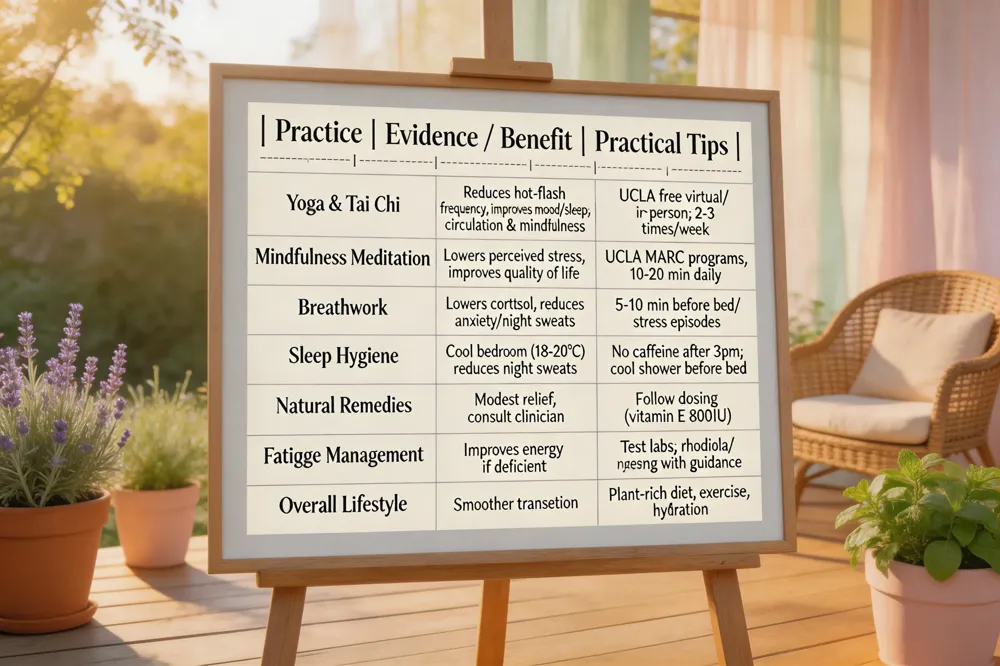 Integrative menopause care emphasizes gentle movement, focused breathing, and a supportive environment to ease vasomotor and mood disturbances.
[Yoga & Tai Chi] – Regular classes (virtual or in‑person) improve hot‑flash frequency, mood, and sleep quality by promoting circulation, flexibility, and mindfulness. UCLA’s Integrative Medicine offers free yoga sessions and Tai Chi workshops tailored for menopausal women.
Mindfulness Meditation – Structured programs, such as those from UCLA’s Mindful Awareness Research Center, reduce perceived stress and improve quality of life, even if they do not dramatically lower flash severity.
Breathwork – Techniques like diaphragmatic breathing and Sudarshan Kriya lower cortisol, lessen anxiety, and can blunt the intensity of nighttime sweats.
Sleep Hygiene & Temperature Regulation – A cool bedroom (18‑20 °C), breathable layered clothing, a fan or open window, and light bedding create a sleep‑friendly micro‑climate. Limiting caffeine/alcohol, staying hydrated with cold caffeine water‑free drinks, and a brief cool shower before bed further reduce night‑sweat episodes.
Natural remedies for night sweats – Black cohosh, soy isoflavones, flaxseed, red clover, evening primrose oil, sage tea, and vitamin E may provide modest relief; dosing should be discussed with a clinician.
How to solve menopause problems? – Combine evidence‑based hormone therapy (when appropriate) with targeted non‑hormonal options (vaginal estrogen, testosterone gel, SSRIs/SNRIs) and integrative strategies: nutrient‑dense diet, regular aerobic/strength exercise, stress‑reduction (CBT, hypnosis, mindfulness), and hydration.
Surviving menopause naturally – Embrace a plant‑rich diet rich in calcium and vitamin D, maintain consistent sleep routines, practice yoga/tai chi, use cooling sleep aids, and manage stress through breathing or CBT.
Natural remedies for fatigue – Check iron and B‑vitamins, consider adaptogens (rhodiola, ginseng), stay active with aerobic or yoga sessions, and ensure adequate sleep and hydration.
Together, these mind‑body practices and lifestyle adjustments create a personalized, evidence‑informed roadmap for smoother menopausal transition.
Herbal and Nutraceutical Options
| Supplement / Herb | Typical Dose / Use | Evidence / Notes |
|---|---|---|
| Soy Isoflavones | 40‑80 mg/day (standardized) | Modest reduction in hot‑flash frequency; phytoestrogen effect |
| Black Cohosh | 20‑40 mg/day (extract) | Short‑term relief of vasomotor symptoms; monitor liver function |
| Red Clover | 40‑80 mg/day (isoflavone‑rich) | Similar to soy; modest efficacy |
| Evening Primrose Oil | 1‑2 g/day (omega‑6) | May improve mood & skin; limited flash data |
| Vitamin E | 800 IU/day | Antioxidant; modest flash reduction |
| Sage (Salvia officinalis) | 1‑2 g/day (tea) or 300 mg extract | Reduces oxidative stress; some flash benefit |
| Magnesium | 300‑400 mg/day | Supports sleep & bone health |
| Calcium + Vitamin D | 1 200‑1 500 mg Ca + 800‑1 000 IU Vit D | Essential for bone density during menopause |
| B‑Complex (B6, B12, Folate) | As per RDA | Supports energy, mood, and nerve function |
| Adaptogens (Ashwagandha, Rhodiola) | Ashwagandha 300‑500 mg, Rhodiola 200‑400 mg | May lower cortisol, improve stress resilience |
| St. John’s Wort (caution) | Avoid if on SSRIs/SNRIs | Potent CYP450 inducer; can interact with hormone meds |
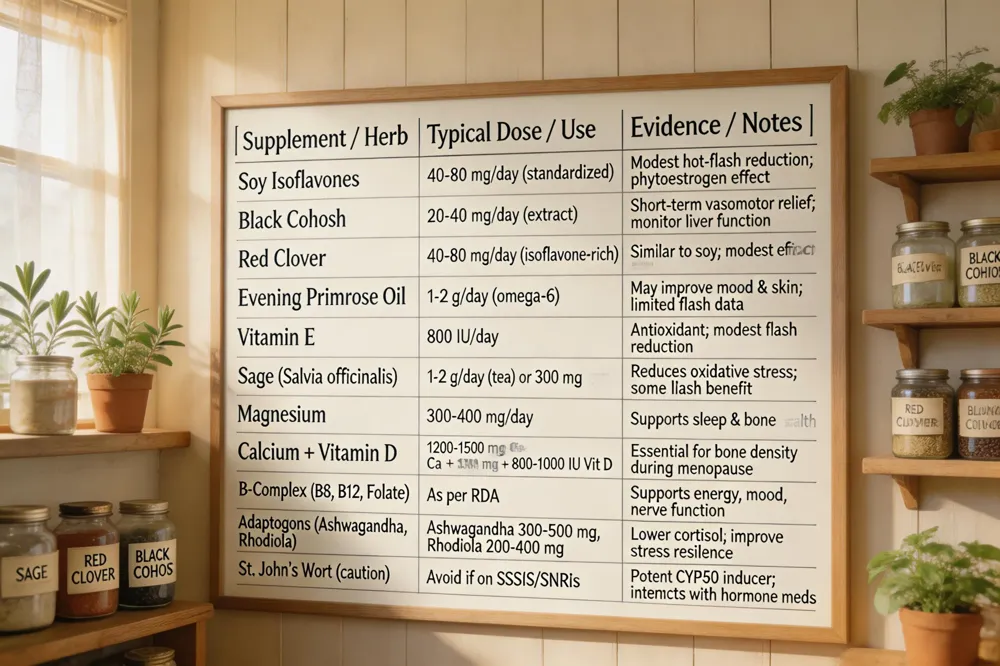 Natural menopause supplements Women frequently turn to phytoestrogen‑rich foods (soy, flaxseed, red clover) and herbs such as black cohosh to evening primrose oil to ease hot flashes, mood swings, and bone‑health concerns. Calcium, vitamin D, magnesium and a B‑complex complex are also recommended for bone density and energy. Because herbal products are not tightly regulated, a clinician should review any regimen for drug‑interaction risks (e.g., St. John’s wort) before use.
Natural remedies for menopause hot flashes Soy isoflavones, black cohosh, red clover, and evening primrose oil contain estrogen‑balancing compounds that have shown modest reductions in flash frequency. A modest dose of vitamin E and flavonoid‑rich sage may aid by reducing oxidative stress. Complementary mind‑body practices—yoga, mindfulness, paced breathing—calm the nervous system and can further lower flash intensity.
7 natural menopause treatments that really work
- Phytoestrogen‑rich diet (soy, flaxseed, legumes).
- Regular aerobic strength‑training, yoga.
- Black cohosh and red clover extracts (short‑term use).
- Evening primrose oil.
- Vitamin E (800 IU).
- Sage and magnesium for sleep and stress.
- B‑complex vitamins for energy and mood.
What vitamins should you take during menopause? Vitamin D (800‑1 000 IU/day), calcium (1 200‑1 500 mg/day), magnesium (300‑400 mg), vitamin K2, and a balanced B‑complex (B6, B12, folate) support bone health, cardiovascular function, and nervous‑system stability.
Natural remedies for menopause weight gain A nutrient‑dense, high‑fiber diet coupled with strength‑training and moderate aerobic activity helps preserve lean mass. Stress‑reduction techniques (yoga, meditation, deep‑breathing) lower cortisol‑driven abdominal fat. Herbal allies such as green‑tea extract, ashwagandha, black cohosh, and red clover may modestly boost metabolism, but professional guidance is essential.
Acupuncture, Reflexology, and Traditional Chinese Medicine
| Modality | Reported Effect | Typical Course |
|---|---|---|
| Acupuncture | ↓ hot‑flash frequency & severity; improves sleep & mood | 6‑12 weekly sessions, 30‑45 min each |
| Reflexology (foot massage) | 56 % drop in flash counts in one RCT; mixed results overall | 12 weekly 30‑min sessions |
| TCM Herbal Formulas (e.g., Zhi Bu Dai Zheng) | Balances Yin/Yang, may reduce vasomotor symptoms | Individualized, 3‑6 months, monitored by TCM practitioner |
| Hypnotherapy | ↓ hot‑flash frequency up to 74 %; ↓ interference up to 80 % | 6‑8 weekly 60‑min sessions |
| Integrated Programs (UCLA, Scripps) | Combine modalities with conventional care for personalized relief | Ongoing, tailored to patient needs |
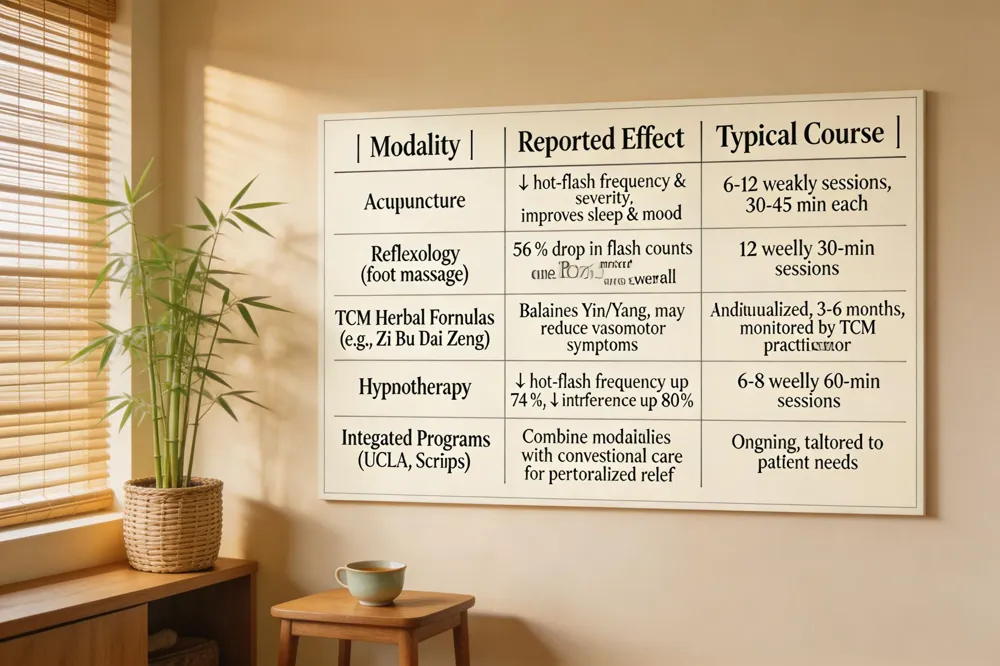 Hypnotherapy, another emerging integrative option, has shown clinically significant reductions in hot‑flash frequency (up to 74%) and interference (up to 80%) in multiple trials, making it a strong non‑pharmacologic choice for women seeking hormone‑free relief.
Reflexology, a foot‑massage technique, demonstrated a 56% drop in flash‑flash counts after 12 weekly sessions in one RCT, though results are mixed across studies.
For those interested in integrated care, UCLA Health’s Comprehensive Menopause Program offers personalized, evidence‑based plans that combine hormone therapy, lifestyle counseling, and integrative modalities such as acupuncture, hypnotherapy, and Reflexology. Likewise, the Scripps Center for Integrative Medicine and its Menopause specialists provide a multidisciplinary, whole‑person approach that includes acupuncture, TCM, and mind‑body practices, all coordinated with conventional medical care to optimize comfort and long‑term health. Women can contact UCLA at 310‑794‑7274 or explore Scripps services online to begin a tailored menopause wellness program.
Hormone Therapy and Emerging Pharmacologic Treatments
| Treatment | Mechanism / Effect | Typical Dose / Regimen |
|---|---|---|
| Systemic Estrogen (oral/patch) | Replaces declining estrogen; ↓ hot‑flashes ~75 % | Transdermal patch 0.025‑0.05 mg/week; oral 0.5‑1 mg/day (with progesterone if uterus present) |
| Low‑dose Topical Estrogen (creams, rings) | Local estrogen with minimal systemic exposure | Cream 0.5‑1 mg daily; vaginal ring 2‑4 µg/day |
| Fezolinetide (Veozah) | Neurokinin‑3 receptor antagonist; reduces vasomotor symptoms | FDA‑approved dosing: 10 mg subcutaneously daily |
| Paroxetine (Brisdelle) | SSRI; ↓ flash frequency 40‑60 % | 7.5 mg daily (menopause‑specific formulation) |
| Gabapentin | Modulates neuronal excitability; helps night sweats | 300‑600 mg at bedtime |
| Clonidine | Alpha‑2 agonist; reduces flashes | 0.05‑0.1 mg twice daily |
| Low‑dose SSRIs/SNRIs (e.g., venlafaxine) | Alter neurotransmitter pathways; hot‑flash relief | Venlafaxine 37.5‑75 mg daily |
| Bio‑identical Hormone Therapy (customized) | Tailored estrogen/progesterone dosing | Compounded per patient labs; monitored regularly |
| Combination Approaches (hormone + lifestyle) | Synergistic symptom control | Individualized plan with clinician |
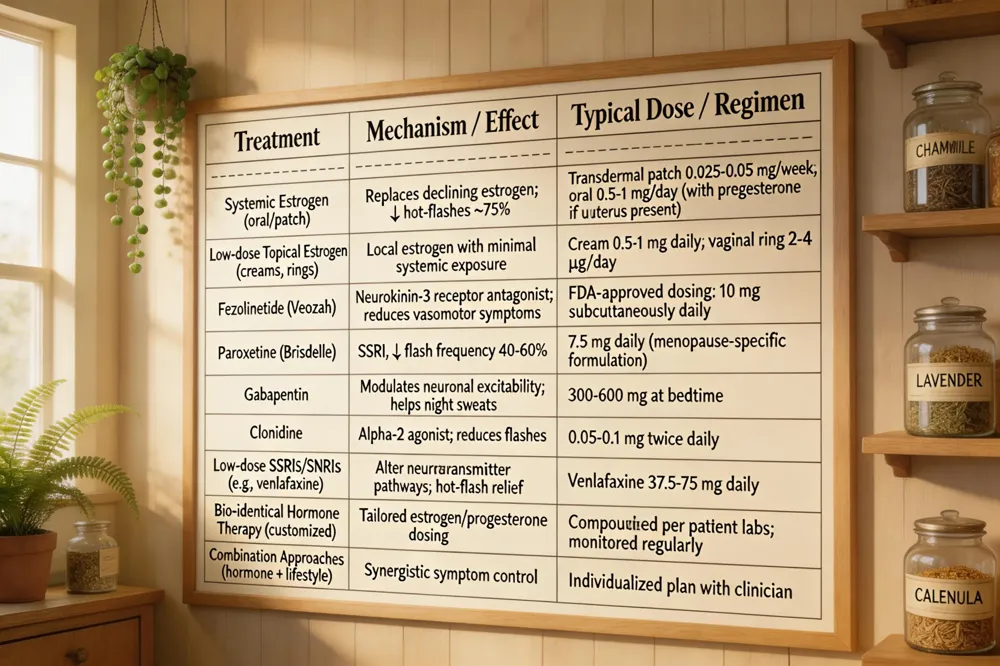 Hormone replacement therapy (HRT) remains the most effective option for moderate‑to‑severe vasomotor symptoms, with systemic estrogen (often combined with progesterone) reducing hot‑flash frequency by roughly 75 % compared with placebo. Transdermal estradiol patches and low‑dose topical estrogen formulations deliver steady hormone levels while minimizing first‑pass metabolism, making them a preferred choice for women who need symptom relief but want lower systemic exposure.
A newer class of non‑hormonal agents, the neurokinin‑3 receptor antagonist fezolinetide (Veozah) received FDA approval in 2023 and has shown significant reductions in moderate‑to‑severe hot flashes in phase 3 trials. Low‑dose selective serotonin reuptake inhibitors and serotonin‑norepinephrine reuptake inhibitors (e.g., paroxetine/Brisdelle) are FDA‑approved for hot‑flash management and can provide a 40‑60 % reduction in frequency and severity. Other non‑hormonal options—gabapentin, clonidine, and certain SSRIs/SNRIs—offer additional pathways for women who cannot or choose not to use hormones.
For personalized care in San Diego, specialists such as Dr. O’Bryan at SDSM Women’s Medicine & Wellness, Dr. Jennifer Davis, MD, MSCP, and functional‑medicine practitioner Angela Fernandez, N.P., integrate evidence‑based pharmacology with lifestyle counseling, acupuncture, nutrition, and mind‑body practices to create a comprehensive, patient‑centered menopause plan.
Local Integrative Clinics and Resources
| Clinic | Location / Contact | Services Offered |
|---|---|---|
| Scripps Menopause Center | Scripps Health, San Diego (555‑123‑4567) | Biomedicine + TCM, yoga, Tai Chi, acupuncture, herbal formulas, hormone therapy |
| Women’s Integrative Health – Encinitas | Encinitas, CA (555‑987‑6543) | OB/GYN, bio‑identical hormones, functional medicine, nutrition, mind‑body support, multilingual staff |
| Holistic OB‑GYN San Diego (Harmony Care) | San Diego, CA (555‑222‑3333) | Conventional gynecology + naturopathic/functional medicine, acupuncture, PRP, hormone‑balancing protocols |
| EmpowerMed (San Diego) | San Diego, CA (555‑444‑5555) | Integrated OB/GYN, bio‑identical hormones, stress‑reduction, lifestyle coaching |
| Midi Health (Virtual) | Nationwide (online) | Virtual functional labs, personalized nutrition, hormone‑balancing meds, GLP‑1 weight‑loss, movement therapy via Hinge Health |
| UCLA Integrative Medicine | Los Angeles, CA (310‑794‑7274) | Free yoga & Tai Chi classes, mindfulness programs, integrative health services |
| Scripps Center for Integrative Medicine | San Diego, CA (555‑666‑7777) | Multidisciplinary menopause care, acupuncture, TCM, mind‑body practices |
 Finding the right integrative menopause support close to home can make a big difference in symptom relief and overall wellbeing.
Scripps Menopause Center – Located within the Scripps Health system, the Center blends biomedicine with Traditional Chinese Medicine (TCM) and evidence‑based mind‑body therapies such as yoga, Tai Chi, and mindfulness. Patients receive personalized counseling on diet, sleep, stress management, and can access acupuncture, herbal formulas, and virtual yoga sessions—all coordinated with conventional hormone therapy when appropriate.
Women’s Integrative Health – Encinitas – Encinitas is home to several women‑focused integrative clinics, most notably Women’s Integrative Health, which combines board‑certified OB/GYN expertise with functional‑medicine approaches. The practice offers bio‑identical hormone therapy, fertility counseling, minimally invasive gynecologic procedures, and personalized nutrition and mind‑body support. Physicians Dr. Sieu Truong and Dr. Samina Makani spend ample time with each patient, using natural, evidence‑based treatments to address hormonal imbalance, reproductive health, and age‑related concerns. Services are accessible to most PPO insurance plans and the clinic staff speak English, Spanish, Mandarin, and Hindi to accommodate a diverse community. By integrating naturopathic principles with conventional gynecology, Women’s Integrative Health provides a holistic pathway to wellness for women in Encinitas.
Holistic OB‑GYN San Diego – In San Diego, holistic OB‑GYNs blend conventional gynecologic care with naturopathic and functional‑medicine strategies to address the whole person. At Harmony Care you’ll find a team that integrates nutrition counseling, acupuncture, hormone‑balancing protocols, and advanced functional testing into prenatal, fertility, and menopause care. Other practices such as EmpowerMed and Scripps’ Center for Integrative Medicine also offer women‑focused, mind‑body‑spirit programs that include bioidentical hormone replacement, PRP therapy, and stress‑reduction techniques. These clinics prioritize personalized treatment plans, collaborative decision‑making, and ongoing support to uncover root causes of hormonal, metabolic, and reproductive issues.
Midi Health virtual care – Midi Health delivers integrative women’s care through a fully virtual clinic that combines functional laboratory testing, personalized nutrition plans, hormone‑balancing therapies, and mind‑body support. All services are covered by insurance in every U.S. state, with clinicians directly billing insurers to eliminate out‑of‑pocket costs for patients. The platform offers prescription‑based treatments—including hormone replacement, GLP‑1 weight‑loss medication, and targeted supplements—alongside lifestyle coaching to address perimenopause, menopause, mood, sleep, and metabolic health. Partnerships with partners such as Hinge Health expand the care model to include movement‑based therapy for musculoskeletal syndrome of menopause. Over 200,000 women trust Midi Health for rapid, evidence‑based relief across the full spectrum of midlife health concerns.
Conclusion
Integrative menopause care blends conventional medicine with evidence‑based mind‑body practices, acupuncture, nutrition, and safe herbal options to address hot flashes, mood swings, sleep disturbances, and bone health. By reviewing the strongest data—hypnosis and CBT for symptom distress, yoga, tai chi, mindfulness for stress reduction, and acupuncture for vasomotor relief—women can make informed choices that align with their values and risk profile. Empowered patients can partner with clinicians to personalize a plan that includes lifestyle tweaks, targeted supplements, and, when appropriate, hormone or non‑hormonal pharmacotherapy. The next step is a comprehensive assessment—medical history, diet, activity, and stress levels—to co‑create a sustainable, patient‑centered strategy that promotes overall well‑being throughout the menopause transition.