Welcome to Your Naturopathic Path
Naturopathic medicine is built on six core principles that view health as a dynamic balance of body, mind, and spirit. By honoring the Healing Power of Nature and treating the whole person, naturopathic doctors (NDs) seek the root causes of hormonal imbalances, menstrual concerns, and stress‑related symptoms rather than just masking them. A patient‑centered intake is the cornerstone of this approach: before the first 60‑90‑minute visit you complete a detailed questionnaire that captures medical history, lifestyle, emotional well‑being, and environmental exposures. The ND then listens attentively, validates your goals, and uses tools like PHQ‑9 or GAD‑7 to screen mental health, fostering a trusting therapeutic alliance. Integrative wellness—combining evidence‑based nutrition counseling, botanical medicine, mind‑body practices, and targeted supplements—becomes especially powerful for women’s health. It allows personalized hormone support, perimenopause relief, and pelvic‑pain management while coordinating with conventional providers, empowering you to take active control of your well‑being.
The First Visit: What to Expect
| Aspect | Details |
|---|---|
| Duration | 60‑90 minutes (longer than a typical primary‑care visit) |
| Intake | Comprehensive questionnaire covering medical history, symptoms, meds, supplements, diet, sleep, stressors, lifestyle, menstrual cycle, menopause, sexual health, environmental exposures |
| Physical Exam | Vital signs, heart & lung auscultation, abdominal palpation, posture assessment, optional tongue/pulse evaluation (East Asian medicine) |
| Diagnostic Tests | Blood work, hormone panels, food‑sensitivity tests, stool analysis (ordered as needed) |
| Outcome | Personalized, root‑cause‑focused treatment roadmap (nutrition, supplements, lifestyle, mind‑body, coordination with conventional providers) |
| Key Takeaway | The visit is a thorough, relationship‑building health that gathers detailed data to design a targeted integrative plan. |
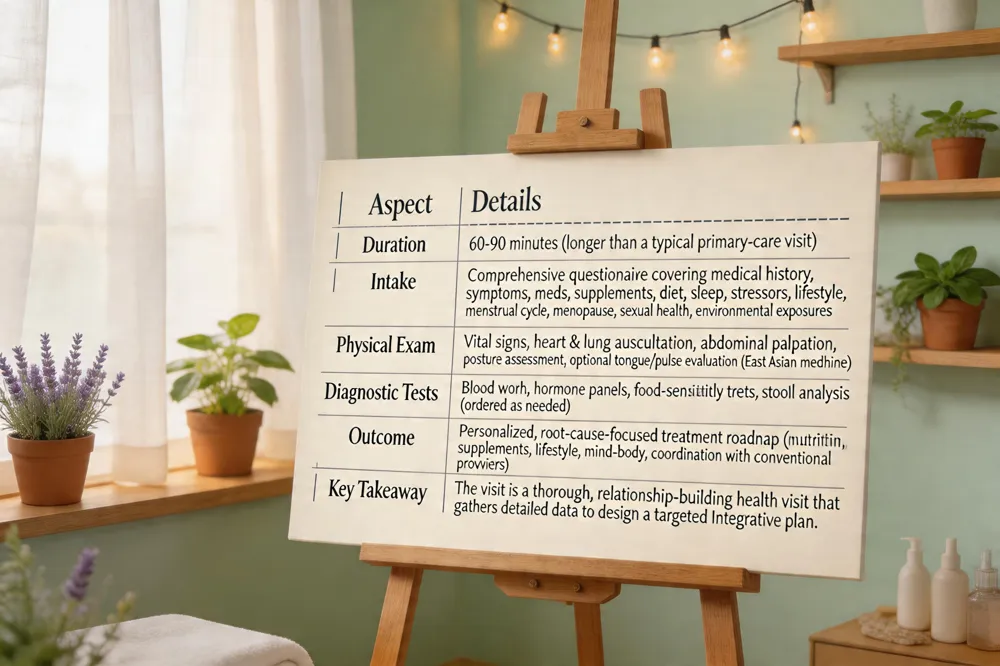 A first naturopathic appointment is intentionally longer than a typical primary‑care visit—usually 60‑90 minutes—so the practitioner can listen attentively and build a trusting relationship. The session begins with a comprehensive intake questionnaire that gathers your medical history, current symptoms, medications, supplements, diet, sleep, stressors, and lifestyle habits. For women, the form also asks about menstrual cycle patterns, PMS, menopause symptoms, and sexual health, as well as environmental exposures that could affect hormonal balance.
After reviewing your answers, the naturopathic doctor conducts a focused physical exam that includes vital signs (blood pressure, pulse), heart and lung auscultation, abdominal palpation, posture assessment, and, when appropriate, a tongue or pulse evaluation from East Asian medicine. This hands‑on assessment helps identify visible signs of imbalance.
Based on the history and exam, the ND may order diagnostic tests such as blood work, hormone panels, food sensitivity tests or stool analysis to uncover hidden biochemical issues. The findings guide a personalized, root‑cause‑focused treatment plan that can involve nutritional counseling, botanical medicine, lifestyle modifications, mind‑body practices, and, when needed, coordination with conventional providers.
What to expect at first naturopath appointment – You will spend 60‑90 minutes sharing your health story, undergoing a gentle physical exam, and discussing potential laboratory tests. The visit ends with a clear, individualized roadmap for nutrition, supplements, lifestyle changes, and follow‑up support.
Naturopathic intake form – This detailed questionnaire captures personal data, medical history and surgical history, current symptoms, medications, allergies, family health history, and, for women, menstrual and hormonal information. Completing it thoroughly (electronically or on paper) before your visit equips the clinician to design a targeted, integrative wellness plan that honors your unique health goals.
Building a Personalized Treatment Plan
| Component | Description / Examples |
|---|---|
| Patient‑centered intake | Captures medical history, lifestyle, diet, stress, sleep, menstrual & environmental exposures |
| Core modalities | Physical exam, vital‑sign checks, targeted labs (blood work, hormone panels, gut microbiome/stool), optional tongue/pulse assessment |
| Nutrition & lifestyle counseling | Whole‑food anti‑inflammatory diet, stress‑reduction (mindfulness, yoga, breathing), sleep hygiene, individualized exercise plan |
| Herbal / supplement / hormone strategies | Botanical medicines (e.g., Vitex, black cohosh), high‑quality supplements (magnesium, vitamin D, omega‑3), bio‑identical estrogen/progesterone (where legal) |
| Mind‑body & functional testing | PHQ‑9, GAD‑7 questionnaires; periodic symptom diaries; follow‑up labs every 4‑6 weeks |
| Iterative process | Continuous adjustment based on lab results, symptom tracking, and patient feedback |
| Goal | Empower women to achieve sustainable health by integrating nutrition, botanicals, lifestyle, and safe hormone therapy. |
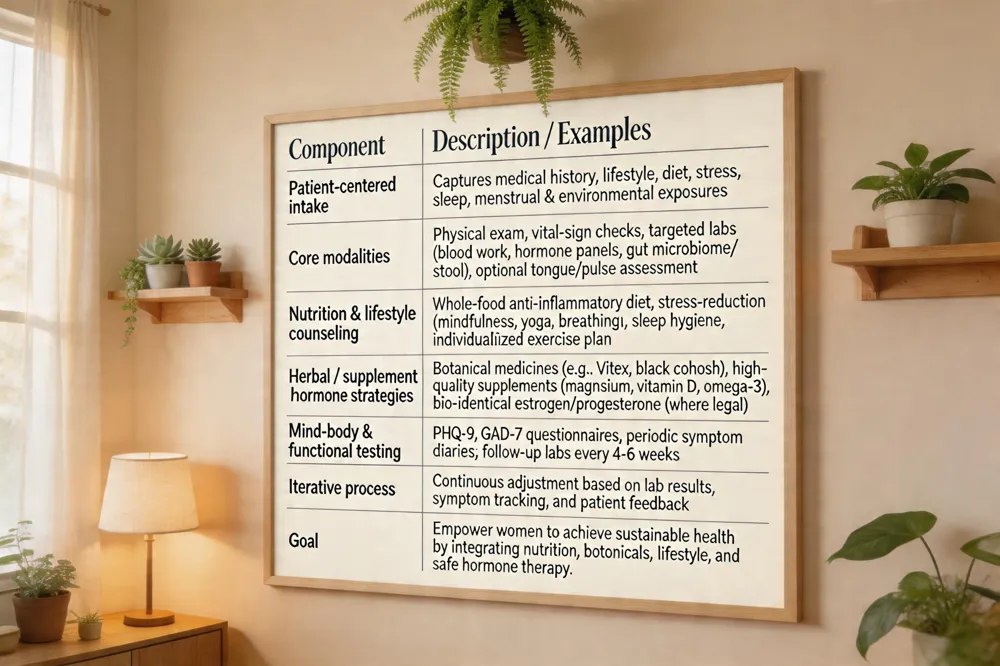 A personalized naturopathic treatment plan is built on a thorough, patient‑centered intake that captures medical history, lifestyle, diet, stress, sleep, menstrual and environmental exposures. The licensed naturopathic doctor (ND) – a graduate‑level health professional who has completed a four‑year accredited program and passed national licensing exams uses this information to identify root causes and then selects the least‑invasive, evidence‑based modalities.
Core naturopathic modalities include a physical exam, vital‑sign checks, and targeted laboratory testing (blood work, hormone panels, gut microbiome or stool analysis) to uncover hidden imbalances. The ND may also incorporate East Asian diagnostic tools such as tongue and pulse assessment when appropriate.
Nutrition and lifestyle counseling is the foundation of the therapeutic order. Patients receive individualized dietary recommendations (whole‑food, anti‑inflammatory, nutrient‑dense meals), stress‑reduction techniques (mindfulness, yoga, breathing exercises), sleep hygiene guidance, and an exercise prescription that fits their preferences and abilities.
Herbal, supplement, and hormone strategies are added only after lifestyle changes are in place. Botanical medicines (e.g., Vitex for hormonal balance, black cohosh for menopausal symptoms) and high‑quality supplements (magnesium, vitamin D, omega‑3s) address specific deficiencies. Where legally permitted, the ND can prescribe bio‑identical estrogen or progesterone to manage perimenopause, menopause, or thyroid‑related hormonal disruptions, always coordinating with conventional providers to avoid interactions. Mind‑body and functional lab testing round out the plan. Validated questionnaires (PHQ‑9, GAD‑7) screen mental health, while follow‑up visits every 4‑6 weeks track symptom diaries, repeat labs, and adjust interventions. This collaborative, iterative process empowers women to take charge of their health, integrating nutrition, botanical medicine, lifestyle, and, when needed, safe hormone therapy into a cohesive, personalized roadmap.
Integrative and Holistic Care for Women
| Service / Center | Location | Highlights |
|---|---|---|
| Integrative Gynecologist (Orlando) | Orlando, FL | Tree of Life, Caceres Specialized Gynecology, Contemporary Women’s Care – extended appointments, acupuncture, herbal medicine |
| Women Wise Holistic Healthcare & Wellness | Roxborough, Philadelphia, PA | Nurse Practitioner‑ Jacobs, naturopathic + functional‑medicine + conventional gynecologic care; nutrition, menopause, sexual health, pelvic pain, life‑coaching |
| Philadelphia Women Health & Wellness | Philadelphia, PA | Board‑certified OBGYNs, hormone‑replacement therapy, minimally invasive surgery, holistic approach with nutrition & stress‑management |
| Rittenhouse Women’s Wellness Center | Philadelphia, PA | Functional‑medicine assessments, preventive primary care, same‑day pelvic pain/hormonal imbalance visits |
| Women’s Center for Integrative Health | Eatontown, NJ | 3.5‑star Yelp rating; hormone‑replacement pellets, aesthetic treatments, personalized care |
| Core Idea | Whole‑person model merging conventional medicine with evidence‑based complementary therapies (yoga, meditation, acupuncture, botanicals) to address physical, hormonal, emotional, and spiritual health. |
 Integrative gynecologist near me
If you’re searching for an integrative gynecologist in Orlando, look for practices such as Tree of Life, Caceres Specialized Gynecology, and Contemporary Women’s Care. These clinics blend conventional obstetrics with functional, naturopathic, and wellness‑focused care, offering extended appointments, personalized treatment plans, and options like acupuncture or herbal medicine to address root‑cause health concerns. You can locate them quickly via online directories, Google Maps, or by calling their offices (e.g., Whole Family Healthcare 407‑644‑2990) to schedule a consultation.
Women Wise Holistic Healthcare and Wellness
Women Wise Holistic Healthcare and Wellness, situated in Roxborough, Philadelphia, provides soul‑centered, integrative women’s health services. Led by Nurse Practitioner Eve Jacobs, MSN, CRNP, WHNP‑BC, the clinic combines naturopathic, functional‑medicine, and conventional gynecologic expertise to offer well‑woman exams, nutrition counseling, menopause care, sexual health, pelvic pain management, adolescent exams, life‑coaching, and empowerment seminars. The historic Victorian setting and garden spaces create a nurturing environment that encourages patients to feel heard, respected, and empowered.
Philadelphia women's health and Wellness
Philadelphia hosts a variety of women‑focused centers that integrate conventional gynecologic care with holistic approaches. Philadelphia Women Health & Wellness offers board‑certified OBGYNs, hormone‑replacement therapy, minimally invasive surgery, and aesthetic services while emphasizing personalized, one‑woman‑at‑a‑time care. Complementary clinics such as Rittenhouse Women’s Wellness Center prioritize functional‑medicine assessments, preventive primary care, and same‑day appointments for pelvic pain, hormonal imbalance, and urinary incontinence, often incorporating nutrition counseling and stress‑management techniques.
What is integrative women’s health?
Integrative women’s health is a whole‑person model that merges conventional medicine with evidence‑based complementary therapies. It addresses physical, hormonal, emotional, and spiritual needs through mind‑body practices (yoga, meditation), botanical supplements, acupuncture, and lifestyle counseling. Collaborative, patient‑centered care focuses on bone, cardiovascular, mental, and sexual health, empowering women to thrive across all life stages.
Women’s Center for Integrative Health reviews
The Women’s Center for Integrative Health in Eatontown, NJ holds a Yelp rating of 3.5 stars from 13 reviews. Patients praise the welcoming atmosphere, free Wi‑Fi, and comprehensive services ranging from hormone‑replacement pellets to aesthetic treatments. Dr. Andrea Price’s personalized approach is highlighted, though some reviewers note occasional wait times and a desire for clearer communication. Overall, the center is a solid option for women seeking holistic, integrative care.
Navigating the Healthcare System: Insurance, Legitimacy, and Collaboration
| Topic | Key Points |
|---|---|
| Insurance coverage | Private insurers may reimburse for licensed NDs with superbill/medical‑necessity letter; Medicare does not cover; Medicaid limited to a few states. Verify with clinic & insurer. |
| Legitimacy | NDs are licensed health professionals (4‑year graduate program, national exam) regulated in 22 states + DC. Not MDs, but can prescribe, order labs, and provide natural‑therapy within state scope. |
| Collaboration | NDs often work with conventional physicians, creating coordinated integrative teams; essential for complex cases, surgery, or emergency care. |
| Choosing an ND | Use American Association of Naturopathic Physicians database; look for credentials, state licensure, and collaborative practice statements. |
| Comparison to MD | ND excels in preventive, whole‑person, chronic‑condition management; MD/DO required for acute emergencies, surgery, highly specialized interventions. |
 When you first consider seeing a naturopathic doctor (ND), the biggest practical question is whether insurance will cover the visit. Coverage varies by state and plan—many private insurers reimburse for licensed NDs if you provide a superbill or a medical‑necessity letter, but Medicare does not, and Medicaid reimbursement is limited to a few states. Call both the clinic and your insurer to confirm any pre‑authorization requirements.
Naturopathy is a recognized health‑care discipline in the United States. Licensed NDs complete a four‑year graduate program, pass a national licensing exam, and are regulated in 22 states plus Washington, DC. While their training is rigorous, it differs from that of MDs, who undergo medical school plus several years of residency. Therefore an ND is not an MD, but a non‑physician health professional who can prescribe, order labs, and offer natural‑therapy interventions within the scope allowed by state law.
Is an ND as good as an MD? It depends on your health goals. For preventive, whole‑person care and chronic‑condition management, an ND can be an excellent partner; for acute emergencies, complex surgery, or highly specialized treatment, an MD (or DO) is required. In many states, NDs collaborate with conventional physicians, creating a coordinated, integrative care team.
If you’re in Los Angeles, reputable licensed NDs can be found through the American Association of Naturopathic Physicians database, offering services such as hormone balancing, functional lab testing, and women’s‑health counseling.
Follow‑Up, Outcomes, and Ongoing Support
| Follow‑up Element | Details |
|---|---|
| Visit frequency | Every 2–6 weeks after initial intake (adjust based on progress) |
| Tools used | Symptom diaries, PHQ‑9, GAD‑7, quality‑of‑life scales, lab result reviews |
| Outcome tracking | Document improvements, identify new concerns, adjust supplements, nutrition, lifestyle, and hormone strategies |
| Patient questions | “What do recent labs indicate?”, “Which lifestyle changes are most impactful?”, “How should the plan be modified to align with my goals?” |
| Challenges | Fragmented care, insurance limits, variable practitioner training |
| Solutions | Clear communication, interprofessional collaboration, teach‑back method for patient understanding |
| Benefit | Higher patient satisfaction, better adherence, reduced healthcare costs, durable health gains through whole‑person care. |
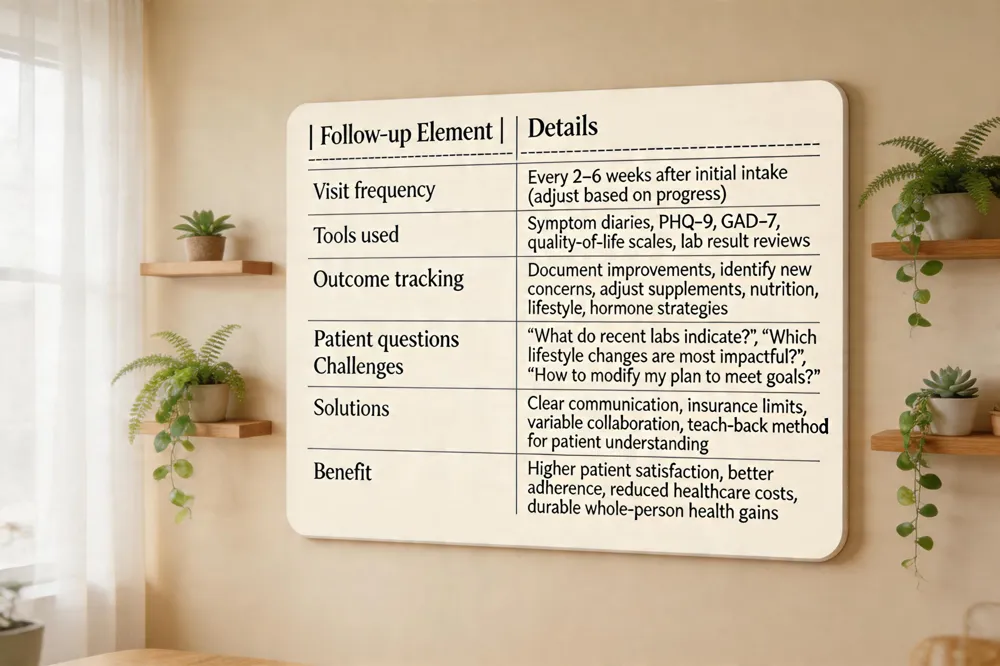 After the initial 60‑90‑minute naturopathic intake, follow‑up visits are scheduled every 2–6 weeks to review lab results, assess symptom changes, and fine‑tune the personalized plan. These appointments serve as a checkpoint for goal progress, medication or supplement adjustments, and reinforcement of lifestyle habits such as nutrition, sleep, and stress‑reduction techniques.
Practitioners use outcome‑tracking tools—including symptom diaries, validated questionnaires like PHQ‑9 and GAD‑7, and quality‑of‑life scales—to document improvements and identify new concerns. By visualizing trends, both clinician and patient can celebrate successes and address setbacks promptly.
Research and clinical experience show that holistic care improves patient outcomes: whole‑person approaches lead to higher satisfaction, better adherence, and reduced healthcare costs. Addressing physical, emotional, mental, and spiritual dimensions uncovers root causes that conventional care may miss, resulting in more durable health gains.
Key questions to ask your practitioner at each follow‑up include: “What do my recent labs tell us about my progress?”, “Which lifestyle changes are having the biggest impact?”, and “How can we adjust my treatment plan to stay aligned with my goals?”
Challenges such as fragmented care, insurance limits, and limited practitioner training can hinder holistic care. Solutions involve clear communication, interprofessional collaboration, and using the teach‑back method to ensure understanding of recommendations. Embracing these strategies supports a continuous, patient‑centered healing journey.
Your Compassionate Path Forward
Embracing the whole‑person approach means honoring physical, emotional, mental and spiritual dimensions of health. During the first visit a naturopathic doctor spends 60‑90 minutes reviewing a detailed intake that captures medical history, lifestyle, diet, stress, menstrual patterns and environmental exposures. This compassionate conversation builds trust and reveals root causes. After the assessment a personalized plan is co‑created, integrating nutrition, botanical medicine, hormone‑balancing strategies and mind‑body practices. Ongoing partnership is reinforced by regular follow‑up visits every 4‑6 weeks, symptom tracking tools and self‑care guidance, empowering you to sustain wellness and adapt the plan as life changes for lasting health and balance.