Why Patient‑Centred Care Matters
Patient‑centered care is the cornerstone of modern naturopathic and integrative medicine because it directly translates into better health results, higher satisfaction, and lower costs. By spending 60‑120 minutes listening to a woman’s unique history—her diet, stressors, hormonal cycles, cultural preferences, and life goals—NDs can pinpoint root causes rather than merely treating symptoms. This comprehensive, evidence‑based approach has been shown to improve clinical outcomes such as reduced HbA1c in type‑2 diabetes, lower blood pressure, and decreased depressive scores when yoga, St. John’s Wort, or omega‑3 supplementation are used. Patients who feel heard and co‑create their treatment plans report higher satisfaction scores than those seen in conventional primary‑care settings, and they are more likely to adhere to lifestyle changes that sustain health. Because interventions focus on prevention, nutrition, and non‑pharmacologic therapies, reliance on expensive drugs and surgeries drops, producing measurable cost savings for individuals and the health‑care system alike.
Foundations of Naturopathy and Integrative Medicine
 WHO Recognition
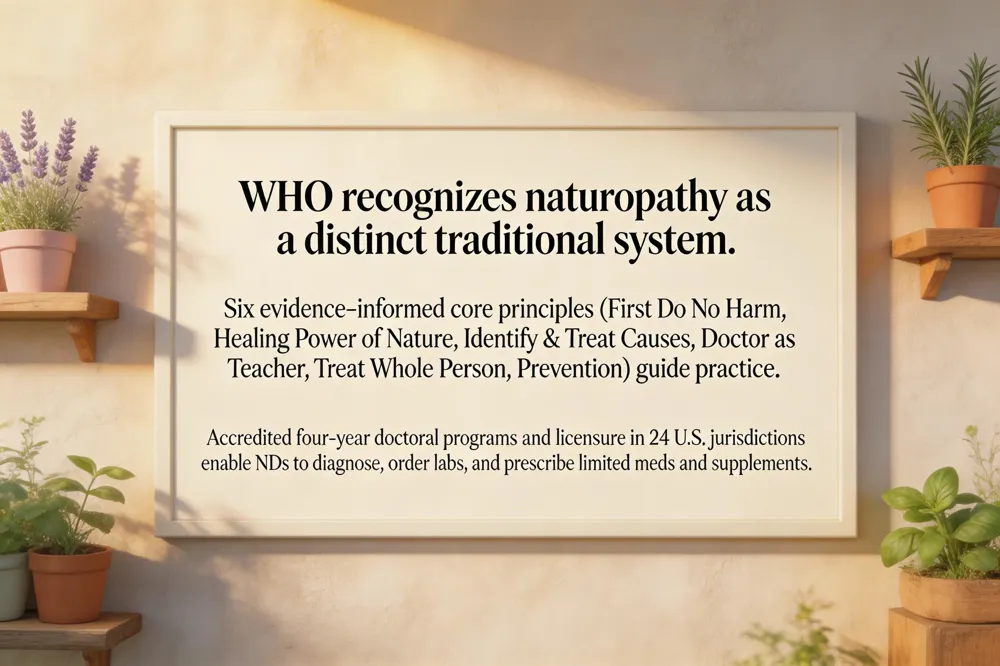
Naturopathy is recognized by the World Health Organization as a distinct system of traditional and complementary medicine, validating its global relevance and encouraging research‑based integration with mainstream health services.
Six Core Principles
Naturopathy is built on six evidence‑informed pillars: (1) First Do No Harm, (2) Healing Power of Nature, (3) Identify and Treat the Causes, (4) Doctor as Teacher, (5) Treat the Whole Person, and (6) Prevention. These principles guide every patient interaction, ensuring care is safe, personalized, and rooted in lifestyle‑oriented self‑care.
Accredited Education & Licensure
NDs complete a four‑year doctoral program accredited by the Council on Naturopathic Medical Education, covering biomedical sciences, diagnostics, and natural therapeutics. After passing the Naturopathic Physicians Licensing Examination, In the United States, naturopathy is licensed in 20 states, the District of Columbia, Puerto Rico, and the U.S. Virgin Islands, granting authority to diagnose, order labs, and prescribe limited medications and supplements.
Scope of Practice Across States
Licensure varies, but most states allow NDs to provide comprehensive primary‑care services, including nutrition counseling, botanical medicine, acupuncture, and minor surgery. Collaborative models with MDs are common, enhancing continuity of care and expanding treatment options.
Frequently Asked Questions
What is the naturopathic approach to healthcare?
Naturopathy takes a holistic, root‑cause‑focused approach, emphasizing nutrition, physical activity, stress management, sleep hygiene, and natural therapeutics to support the body’s innate healing abilities. It integrates lifestyle counseling, dietary supplements, herbal medicine, homeopathy, and therapeutic modifications, empowering patients with personalized, evidence‑informed care.
Is naturopathic medicine real?
Yes. It is taught in accredited four‑year graduate programs, regulated in 24 states and D.C., and practitioners must pass a national licensing exam. While licensed NDs are regulated, some “traditional” providers lack formal accreditation, so patients should verify licensure.
Naturopathic approach
The approach centers on treating the whole person by identifying root causes, using the body’s self‑healing power, and applying the six guiding principles to create individualized, minimally invasive treatment plans.
Is a naturopathic doctor a real doctor?
A naturopathic doctor holds a doctoral‑level degree from an accredited program, must pass a licensing exam, and is legally recognized as a doctor within the regulated scope of naturopathic practice. Their training focuses on complementary therapies, which differs from the MD/DO pathway, but they are legitimate health professionals when properly licensed.
Patient‑Centred Clinical Practice
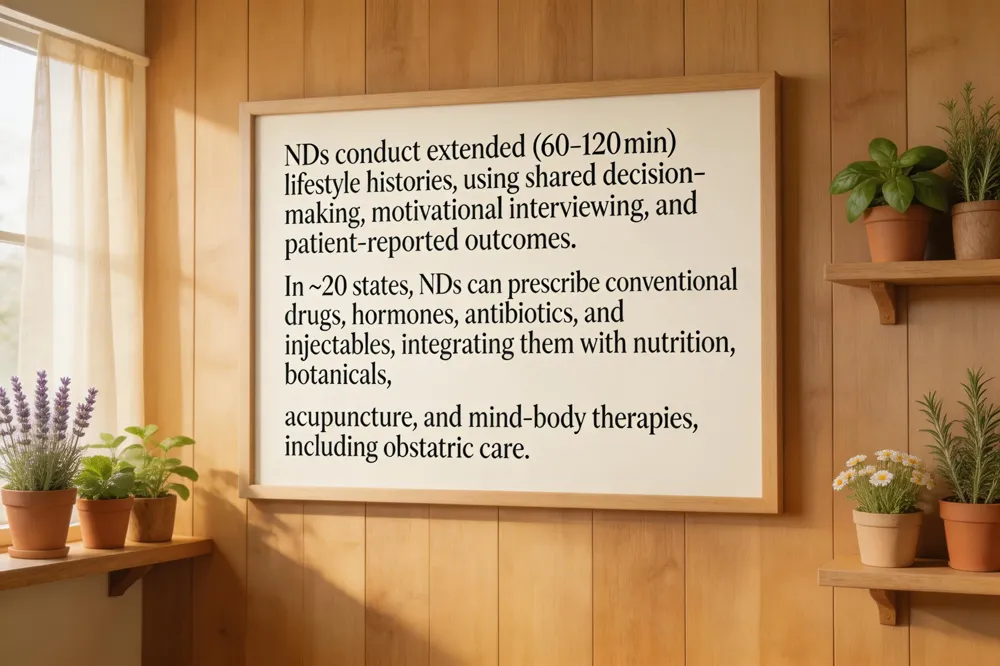 Naturopathic doctors (NDs) devote extended initial consultations—often 60‑120 minutes—to gather a detailed history of diet, activity, stress, sleep, menstrual cycles, and psychosocial factors. This comprehensive lifestyle assessment lets the clinician identify root causes and tailor interventions that align with each woman’s values and goals.
Can naturopathic doctors prescribe medication? Yes. NDs complete four‑year accredited training that includes pharmacology and pass the NPLEX exam. In jurisdictions that grant prescribing authority (approximately 20 U.S. states, D.C., Puerto Rico, and U.S. Virgin Islands), they can safely prescribe conventional drugs, hormonal therapies, antibiotics, and injectable nutrients, always integrating them with natural modalities.
What is the holistic approach to patient‑centered care? It treats the person as a whole—physical, emotional, mental, spiritual, and social determinants—using shared decision‑making, motivational interviewing, and patient‑reported outcome measures. Plans are co‑created, continuously monitored, and adjusted to reflect cultural preferences and life circumstances.
Can naturopathic doctors help with pregnancy? Yes. NDs provide nutrition counseling, safe herbal formulas, prenatal vitamins, acupuncture, pelvic‑floor therapy, and stress‑reduction techniques, coordinating closely with obstetricians to ensure maternal‑fetal safety.
Do naturopathic doctors prescribe estrogen? In states that allow hormone prescribing, NDs can prescribe bio‑identical estrogen via compounded low‑dose formulations, monitoring serum levels and adjusting doses “low and slow.”
Female hormone specialist NYC NYC offers integrative clinicians—such as Mount Sinai’s endocrine team and Weill Cornell’s functional‑medicine program—who blend evidence‑based hormone therapy, nutrition, acupuncture, and mind‑body practices to treat menopausal and menstrual concerns holistically.
Evidence‑Based Therapies and Outcomes
 Naturopathic and integrative practitioners rely on a growing body of peer‑reviewed evidence to address women’s health concerns. St. John’s Wort for depression has been shown in meta‑analyses to be as effective as conventional antidepressants for mild‑to‑moderate depression, with a more favorable safety profile, making it a viable first‑line option when patients prefer botanical therapy. Yoga and mind‑body benefits consistently reduce depressive symptoms and pelvic pain, and improve stress resilience; regular practice is a cornerstone of naturopathic lifestyle counseling for hormonal and psychological balance. Omega‑3 fatty acids (e.g., EPA/DHA) improve glycemic control and lipid profiles in type‑2 diabetes, supporting the naturopathic emphasis on diet‑first interventions. PCOS and menstrual health studies demonstrate that personalized nutrition, acupuncture, and herbal protocols can increase menstrual regularity by up to 45 % and lower androgenic symptoms, underscoring the value of root‑cause, patient‑centered treatment plans.
Is functional medicine legit? Yes – it is a systems‑based, evidence‑informed discipline endorsed by bodies like the Institute for Functional Medicine, focusing on root‑cause identification and personalized care. Is integrative medicine legitimate? Absolutely; recognized by major professional organizations and academic centers, it blends evidence‑based conventional care with complementary therapies such as acupuncture and yoga. What are the 5 pillars of functional medicine? Nutrition, Movement, Sleep, Stress Management, and Relationships & Community. What are the 4 pillars of functional medicine? Movement, Nutrition, Stress Management, and Community. What is an example of functional medicine? A chronic‑fatigue patient receives a comprehensive history, targeted labs, and a customized plan involving diet, supplements, sleep hygiene, stress‑reduction, and graded exercise, addressing root causes rather than merely symptoms. Is functional medicine covered by insurance? Coverage varies; routine labs and preventive visits may be reimbursed, but longer integrative appointments and specialized testing often require out‑of‑pocket payment, HSA/FSA funds. Problems with functional medicine include inconsistent training, limited high‑quality research for some protocols, potential over‑testing, and supplement‑driven conflicts of interest. Integrative healthcare combines conventional medicine with evidence‑based complementary modalities, offering holistic, patient‑centered care that improves outcomes, satisfaction, and long‑term health for women.
Collaborative and Integrative Care Models
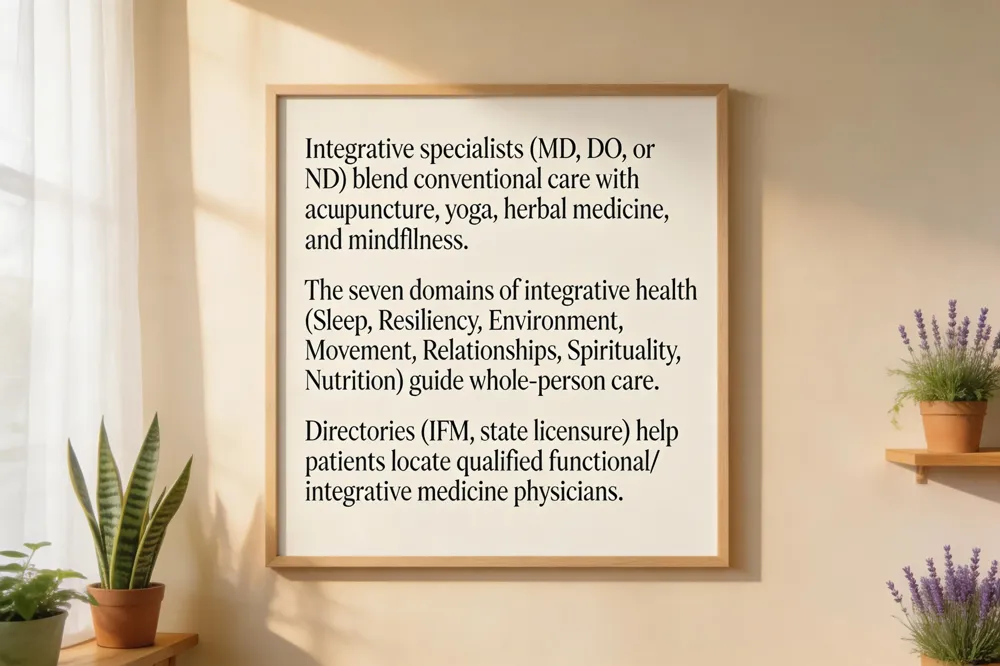 Is an integrative medicine specialist a doctor? Yes—licensed physicians (MD, DO, or ND) with additional integrative training.
What are the 7 domains of integrative health? Sleep, Resiliency, Environment, Movement, Relationships, Spirituality, Nutrition.
Integrative health care approaches blend evidence‑based conventional medicine with complementary therapies (acupuncture, yoga, herbal medicine, mindfulness) to treat the whole person and target root causes.
Functional medicine near me – Search “functional medicine doctor” + city/zip; verify IFM certification and board status.
How to find a functional medicine doctor – Use the Institute for Functional Medicine’s practitioner directory, check licensure, reviews, and insurance acceptance.
Best naturopathic doctor NYC – Consider Dr. Robert Kachko, ND, or Dr. Lauren Geyman, ND, both offering comprehensive, personalized women's health care.
What is the name for a holistic doctor for females? An Integrative Women’s Health Practitioner (ND, MD/DO with integrative/functional training).
Holistic women’s health blends conventional gynecologic care with nutrition, stress‑management, hormone balancing, and mind‑body therapies to nurture vitality across all life stages.
Future Directions and Patient Empowerment
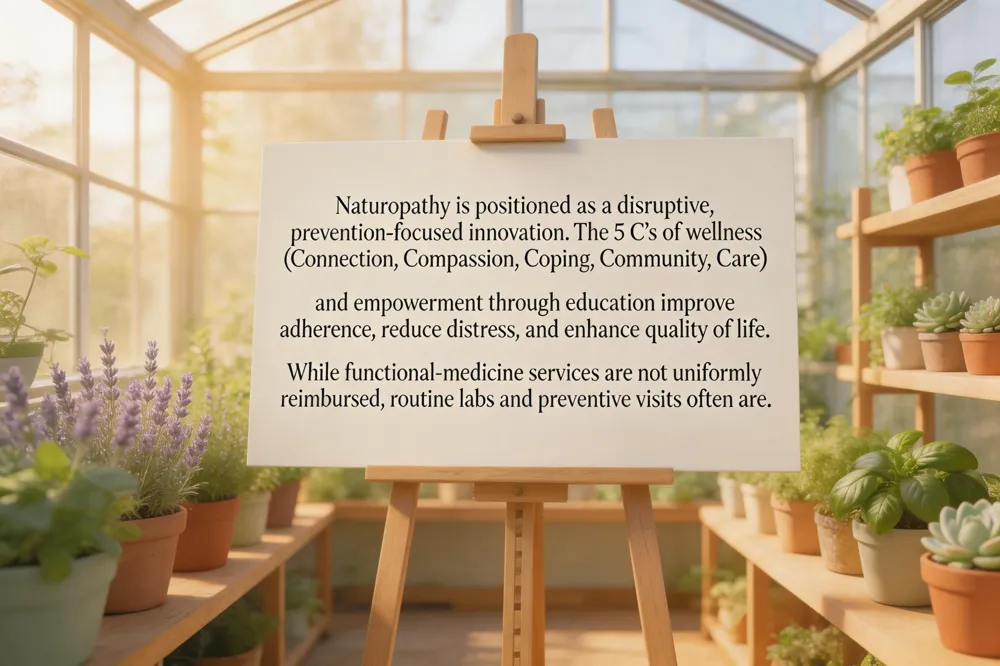 Naturopathy is poised to act as a disruptive innovation in health care by shifting focus from reactive, procedure‑driven models to prevention‑oriented, patient‑centered care that reduces iatrogenic harm and costs. Central to this shift are the 5 C’s of wellness: Connection, Compassion, Coping, Community, and Care. These pillars nurture supportive relationships, kindness, effective stress‑management strategies, social participation, and proactive self‑maintenance (nutrition, sleep, preventive care). Empowerment through education is a cornerstone of naturopathic practice. Practitioners build therapeutic relationships, engage in shared decision‑making, and act as teachers, enhancing health literacy and self‑agency. Research shows that such empowerment improves adherence, reduces pain and emotional distress, and boosts quality of life. While functional‑medicine services are not uniformly covered by insurance, many plans reimburse routine labs and preventive visits; out‑of‑network or specialized services may be paid with HSAs/FSAs or cash‑pay. This integrated, evidence‑based approach promises healthier outcomes and a more active role for patients in their wellness journey.
Putting It All Together
Patient‑centered care creates a synergistic foundation where the woman’s values, lifestyle, and goals guide every therapeutic decision. By listening deeply and co‑creating plans, clinicians can weave together evidence‑based integrative tools—such as targeted nutrition, botanical supplements, yoga, acupuncture, and personalized mind‑body practices—to address hormonal balance, metabolic health, and emotional well‑being. This collaborative model not only improves adherence and satisfaction but also reduces reliance on unnecessary pharmaceuticals. Looking ahead, expanding tele‑health platforms, integrating AI‑driven biomarker mapping, and fostering interdisciplinary teams will accelerate preventive, root‑cause strategies, positioning women’s health at the forefront of holistic, cost‑effective care for generations to come hope and prosperity.