
Your Cycle as a Personal Health Pattern
A menstrual cycle is more than the days of bleeding. Changes in timing, flow, pain, mood, and energy can offer useful context about physical and emotional well-being. Patterns differ from person to person, and an individual cycle may vary over time, so there is no single experience everyone should expect.
A change or symptom is not a diagnosis by itself. Stress, illness, life stage, and many other factors can affect cycles. Still, symptoms that disrupt daily activities, feel unusual for you, or persist deserve attention rather than dismissal. The U.S. Office on Women’s Health recommends tracking period dates, bleeding, and pain to help inform conversations with a healthcare professional.
At harmony.care, care is grounded in personalized, integrative women’s health. Bringing a simple record of your own pattern to an appointment can help make the conversation more specific and support decisions based on your experience, not assumptions.
How the Cycle Phases Shape Experience
 A cycle is counted from the first day of one period to the first day of the next. Its menstrual, follicular, ovulatory, and luteal phases overlap, and their timing is not identical for everyone. The menstrual cycle is a connected process involving changes in the ovaries and uterus.
During menstruation, the uterine lining sheds. The follicular phase begins on the first day of bleeding and continues toward ovulation, so the two phases overlap. As an ovarian follicle develops, estrogen rises and helps prepare the uterine lining. Some people notice cramps, fatigue, headaches, or lower mood during this part of the cycle, while others feel little change.
Ovulation is the release of an egg from an ovary. Cervical mucus may change around this time, and some people feel brief discomfort on one side of the lower abdomen. These signs can vary and do not follow a fixed calendar schedule for everyone.
After ovulation, progesterone rises during the luteal phase. If pregnancy does not occur, progesterone and estrogen fall, and premenstrual symptoms may follow. Breast tenderness, bloating, fatigue, appetite or sleep changes, and shifts in mood are possible, but not everyone experiences them.
Energy, mood, focus, and physical symptoms may also change during the follicular phase as estrogen rises. These experiences differ between people and from cycle to cycle; some notice clear patterns, while others notice few or none. Keeping a simple record of bleeding dates and symptoms can help you identify what is usual for you and bring useful context to a healthcare conversation. For a broader look at how hormonal changes may relate to appetite, see the cycle and cravings.
Premenstrual Symptoms and Their Patterns
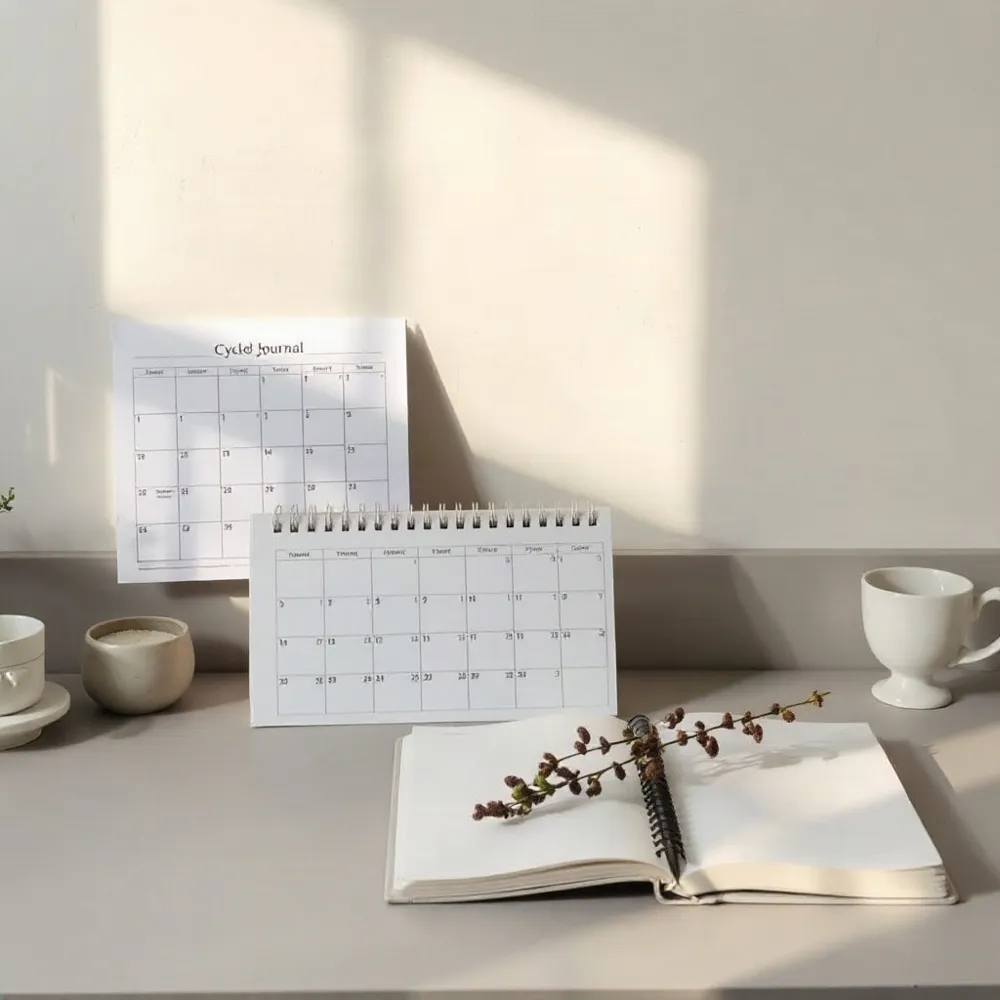 What are common signs that a period is approaching? Some people notice bloating, cramps, breast tenderness, headaches, fatigue, acne, digestive changes, or shifts in appetite and food cravings. Mood swings, irritability, anxiety, sadness, difficulty concentrating, and changes in sleep may also occur.
These symptoms often begin or intensify in the days or weeks before bleeding and may ease after a period starts, but their timing and combination differ from person to person. Premenstrual syndrome (PMS) describes recurring physical or mood symptoms that affect normal activities, rather than any single symptom in isolation.
How is PMS assessed? There is no single test that confirms it. A clinician looks for a recurring pattern: symptoms arise before menstruation, improve after bleeding begins, and interfere with daily life. They may ask for a daily record of symptoms and period dates over at least two to three cycles. A symptom and cycle diary can also help make a healthcare conversation more specific.
A record can include when symptoms start and ease, their intensity, and how they affect sleep, work, relationships, or usual activities. This can help distinguish a cycle-linked pattern from symptoms that continue throughout the month.
Depression, anxiety, thyroid disease, and anemia may overlap with or resemble some premenstrual symptoms. A clinician can consider these and other possible contributors in light of a person’s symptoms and health history. If symptoms are severe or disrupt daily life, discussing them with a healthcare professional is appropriate.
Personalized care starts with taking the pattern seriously without assuming every change has the same cause. At harmony.care, menstrual-cycle concerns are considered within an integrative women’s health practice, where a person’s symptom history can inform an individualized assessment.
When Premenstrual Symptoms Need More Support
PMS can bring mood or physical changes before a period, but symptoms that severely disrupt daily life may point to premenstrual dysphoric disorder (PMDD), a more severe premenstrual condition. The distinction is not simply which symptoms occur, but how intense they are and how much they affect work, relationships, or usual activities. ACOG’s guidance on PMS describes PMDD as involving symptoms that can interfere with work or personal relationships.
PMDD may involve intense sadness or hopelessness, anxiety, irritability, anger, or sharp mood swings. Physical symptoms such as bloating, breast tenderness, and fatigue can occur as well. Symptoms generally appear before menstruation and ease after bleeding begins, though experiences differ from person to person.
A symptom diary can help show whether changes recur in a premenstrual pattern and how strongly they affect everyday life. Recording mood, physical symptoms, their timing, and when they ease across several cycles gives a clinician useful context. At harmony.care, menstrual concerns are addressed through personalized, integrative women’s health care, with attention to individual patterns rather than assuming one explanation fits everyone.
A healthcare professional can assess whether PMDD or another condition may be contributing and discuss appropriate support. Severe emotional symptoms are real health concerns, not a personal failing, and you do not have to manage them alone. If symptoms include thoughts of self-harm, seek urgent professional help.
Recognizing Typical Variation and Warning Signs
A cycle is measured from the first day of one period to the first day of the next. Guidance does not set one required schedule: some sources describe 21–35 days as typical, while others include cycles up to 38 days. A 28-day cycle is an average, not a rule, and patterns can vary with age and life stage. See the ACOG guidance on abnormal uterine bleeding for one commonly used range.
Bleeding often lasts about 2–7 days, though some guidance considers up to 8 days within range. Mild cramps, bloating, breast tenderness, headaches, or mood changes may occur. What matters is both the range and your usual pattern: a lasting change can be worth discussing even when it does not cross a single threshold.
Consider speaking with a healthcare professional about repeated cycles that are shorter or longer than usual, several missed periods without an expected explanation, bleeding that lasts beyond about 7–8 days, or bleeding between periods or after sex. Pain or fatigue that disrupts daily activities also deserves attention. These patterns provide context for assessment, but cannot identify a cause on their own.
Very heavy bleeding, such as soaking a pad or tampon about every hour for several hours, warrants medical advice. If heavy bleeding comes with dizziness, fainting, or weakness, seek urgent care. The Office on Women’s Health period-problem guidance also recommends discussing concerning changes with a clinician.
Writing down period dates, bleeding duration and flow, and symptoms can make a visit more useful. At harmony.care, menstrual-cycle concerns are addressed through a personalized, integrative women’s health approach; the menstrual cycle issues resource describes concerns such as irregular periods, painful cramps, and excessive bleeding.
Changes That Deserve a Closer Look
 A cycle that shifts occasionally is not automatically a sign of a health problem. Timing can vary in the first years after periods begin and during the transition toward menopause. Stress, inadequate nutrition, changes in weight or exercise, disrupted sleep, pregnancy, changes in hormonal contraception, and some medications may also affect cycles. If pregnancy is possible, consider taking a pregnancy test rather than guessing at the cause.
Persistent changes may have medical causes, including thyroid disorders, polycystic ovary syndrome (PCOS), endometriosis, or pelvic infection. These are possibilities to discuss with a clinician, not conditions that can be diagnosed from cycle patterns alone. Irregular cycles may also be associated with broader health concerns, but a change in timing by itself does not confirm a specific condition. The Office on Women’s Health recommends seeking advice when a new change follows previously regular cycles.
Heavy or prolonged bleeding can contribute to iron-deficiency anemia, which may cause tiredness or weakness. Contact a healthcare professional about repeated cycles that are unusually close together or far apart, bleeding that lasts longer than about seven days, or periods that stop for around 90 days when you are not pregnant or breastfeeding. Bleeding between periods or after sex, severe pain, and bleeding that requires changing a pad or tampon every one to two hours also warrant assessment. Heavy bleeding with dizziness or fainting needs urgent care.
A simple record of period dates, bleeding, pain, and other symptoms can help prepare for an appointment. A clinician may review your menstrual and medical history, then decide whether an examination, blood tests, imaging, or other assessment is appropriate. At harmony.care, menstrual cycle concerns are considered in the context of a person’s overall health, with menstrual cycle issues treated as a reason for personalized evaluation rather than self-diagnosis.
Bring Your Pattern Into the Conversation
For a clearer picture of your cycle, record period start and end dates, flow, pain, any bleeding between periods, and physical or emotional symptoms. A diary or calendar can help you notice what repeats and give a clinician useful context when discussing concerns, as the NHS recommends.
Tracking is a tool for observation, not a diagnosis or a demand to follow rigid cycle rules. Individual patterns differ. If symptoms persist, feel severe, or disrupt daily life, bring your notes to a healthcare professional to discuss personalized, evidence-based care.