Why Home‑Based Urgent Care Matters
Integrative wellness blends evidence‑based conventional care with personalized natural tools, allowing women to address minor ailments while honoring hormonal and emotional cycles. For non‑life‑threatening issues—such as mild colds, tension headaches, minor skin irritations, or low‑grade fevers—self‑care at home can be both safe and effective when the individual can monitor symptoms, stay hydrated, and access tele‑health follow‑up if needed. Essential‑oil aromatherapy (e.g., lavender for anxiety, peppermint for tension) and diluted topical applications (1–3 % in a carrier oil) can provide temporary symptom relief, and homeopathic tinctures may be used for very mild, self‑limiting complaints after consulting a qualified practitioner. Safety hinges on proper dilution, avoidance of ingestion, and awareness that the FDA classifies essential oils as cosmetics or dietary supplements, not drugs, so manufacturers are not required to prove efficacy. Pregnant or nursing women, children, and those on prescription meds should always confirm suitability with a healthcare professional before employing these remedies.
Practical Uses and Safe Handling of Essential Oils
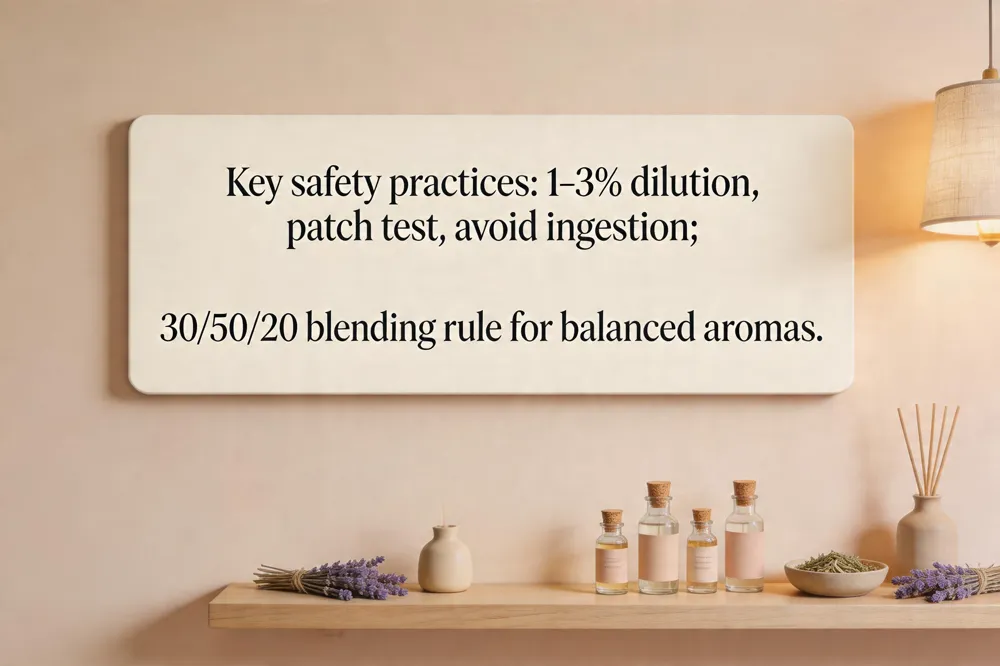 Diffusion for mood and sleep – A few drops of lavender, chamomile or eucalyptus placed in a diffuser create a calming atmosphere that can ease stress, improve sleep quality, and support gentle respiratory comfort. Diffusing for 15‑30 minutes in a well‑ventilated room is sufficient for most adults.
Topical blends for skin and hormonal balance – Diluted blends (1‑3 % essential oil in a carrier such as jojoba or sweet almond) can be massaged onto the skin to address acne, dryness, or menstrual cramps. For hormonal balance, a blend of clary sage (1 %), geranium (2 %), and lavender (2 %) applied to the lower abdomen has been reported an help reduce tension and support mood.
Bath and cleaning applications – Adding 5‑10 drops of peppermint or eucalyptus to a warm bath provides a soothing, aromatic soak; the same oils can be mixed with vinegar and water for antimicrobial household cleaners.
Safety: dilution, patch testing, ingestion warnings – Always dilute before skin contact; a patch test on the inner forearm for 24 hours checks for irritation. Ingestion is discouraged unless supervised by a qualified practitioner, as many oils are toxic when swallowed, especially for children and pets.
30/50/20 blending rule – Create balanced aromas by using 30 % top‑note oils (e.g., citrus or peppermint), 50 % middle‑note oils (lavender, geranium, rosemary, and 20 % base‑note oils (sandalwood, frankincense, patchouli). A simple 10‑drop blend might contain 3 drops top, 5 drops middle, and 2 drops base, yielding a harmonious scent for diffusers or massage oils.
Essential Oils for Pain Relief: Core Options and DIY Blends
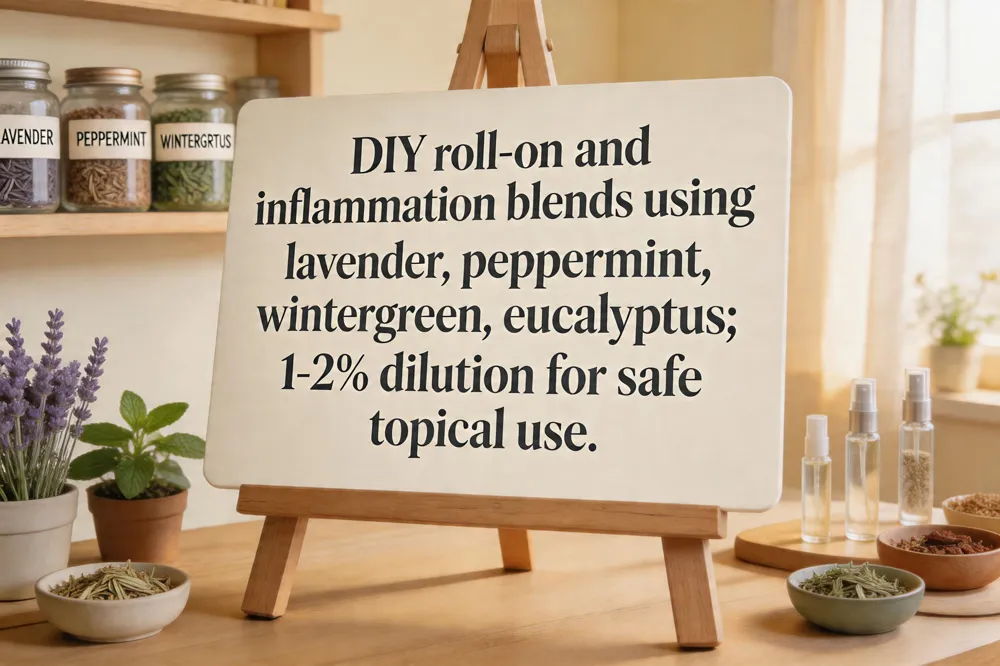 When women look for natural, personalized ways to ease aches, several essential oils consistently rise to the top. Peppermint, rich in menthol, creates a cooling sensation that eases muscle tension and joint stiffness. Lavender offers gentle calming effects that can lessen tension‑type headaches and menstrual cramps. Eucalyptus and rosemary contain cineole and camphor, which improve circulation and reduce swelling in sore muscles. For deeper, targeted relief, frankincense combined with ginger can be massaged into joints to support flexibility and curb inflammation, especially useful for arthritis or post‑exercise soreness.
DIY Pain‑Relief Roll‑On Blend
Mix 2 drops lavender, 2 drops peppermint, 3 drops wintergreen, and 3 drops eucalyptus into a 2‑ounce roller bottle with a carrier oil such as fractionated coconut or sweet almond oil. Shake gently and apply to sore areas 2–3 times daily. The blend delivers cooling menthol, anti‑inflammatory eucalyptol, and soothing linalool while keeping skin safe through proper dilution (≈1‑2 %).
Inflammation‑Targeting Blend
Combine 10 drops peppermint, 8 drops eucalyptus, and 6 drops lavender in a 30 ml amber bottle, fill the remainder with a carrier oil, and store in a cool, dark place. Massage a small amount onto inflamed joints for 2–3 minutes. This formulation leverages menthol’s analgesic action, eucalyptus’s anti‑inflammatory compounds, and lavender’s calming linalool.
Safety Tips
Always perform a patch test on the inner forearm before full use‑application, avoid ingestion unless supervised, and keep oils out of reach of children and pets. Pregnant or nursing women should consult a healthcare professional before using oils such as rosemary or clary sage. Essential oils are regulated as cosmetics or dietary supplements, not drugs so quality matters—choose therapeutic‑grade, pure oils from reputable sources. When used as an adjunct to conventional care, these blends can provide drug‑free, evidence‑inspired support for everyday pain while respecting individual health needs.
Targeted Relief: Nerve and Muscle Pain
 Essential oils for nerve pain relief – Lavender, bergamot, rosemary, ginger and eucalyptus have shown modest anti‑inflammatory and analgesic activity in animal models and small human trials. A 2017 Turkish study reported a 66 % pain reduction after four weeks of diluted oil massage (lavender, geranium, rosemary, blue chamomile, lemon eucalyptus) compared with routine care. Topical ginger massage also outperformed standard massage for chronic back pain, suggesting that both the active compounds and the massage technique matter. For safety, dilute oils to 3‑5 % in a carrier (coconut or jojoba) and perform a patch test; always discuss with your clinician before use.
Essential oils for muscle pain relief – Peppermint, lavender, eucalyptus, rosemary, wintergreen and winter oils glycol. a blends apply a 2‑3 % dilution and massage into sore muscles to improve circulation, reduce inflammation and provide a cooling or warming sensation. Menthol (peppermint) and methyl salicylate (wintergreen) act like over‑the‑counter topical analgesics, while lavender adds anti‑spasm and calming effects. Adding ginger or black‑pepper can further enhance circulation. Patch‑test first, avoid broken skin, and seek professional guidance during pregnancy.
Essential oils for pain and inflammation – Ginger, lavender, eucalyptus, frankincense and peppermint modulate inflammatory pathways. Gingerols lower joint swelling; lavender blocks pro‑inflammatory cytokines; eucalyptol (eucalyptus) reduces swelling in respiratory and muscle tissue; frankincense supports joint health; peppermint’s menthol diminishes redness. Use these oils diluted and applied topically or diffused as adjuncts to conventional care, never as a replacement for medical advice.
Beyond Pain: Skin Health, Brain Function, and Bone Support
 Essential oils for skin health
Gentle, antioxidant‑rich oils such as lavender, frankincense, and tea‑tree can calm irritation, reduce occasional breakouts, and support healing when diluted (1–2 % in a carrier oil like jojoba or sweet almond) and patch‑tested first. Integrated with balanced nutrition, hydration, and stress‑reduction, these botanical actives help maintain a resilient complexion without harsh synthetics—especially valuable during hormonal shifts in women’s lives. Consulting a qualified practitioner is advised when pregnant or experiencing significant hormonal changes.
Essential oils and brain health
Aromatherapy with lavender, rose, or peppermint has shown modest improvements in memory recall and reduced “brain fog” by delivering neuroprotective, anti‑inflammatory, and antioxidant compounds. Regular, pleasant olfactory exposure can enhance connectivity in pathways such as the left uncinate fasciculus, supporting mood and mental clarity. When combined with a holistic routine—adequate sleep, mindfulness, and a nutrient‑dense diet—scent‑based therapy offers a low‑cost, natural adjunct for cognitive well‑being.
Can essential oils help osteoporosis?
Pre‑clinical studies in rodents suggest that thyme and rosemary essential oils may mitigate calcium‑deficiency‑induced bone loss by lowering inflammation and oxidative stress while promoting osteoblast activity. However, human data are lacking, and these findings remain experimental. Essential oils can be considered a supportive element of an integrative bone‑health plan, but they should never replace evidence‑based treatments for osteoporosis.
Holistic Health Pillars and Care Model
 Understanding the building blocks of holistic wellness helps women create a personalized care plan that blends everyday self‑care with urgent‑care‑at‑home support.
What are the 5 pillars of holistic health? The five pillars are Physical Wellness (regular activity, balanced nutrition, restorative sleep, preventive care), Emotional Wellness (recognizing and managing feelings to build resilience), Mental Wellness (learning, problem‑solving, stress‑reduction practices such as meditation), Spiritual Wellness (seeking purpose, meaning, connection), and Social Wellness (nurturing healthy relationships and community).
What are the 7 pillars of holistic health? A broader model adds Environmental Wellness (clean, sustainable surroundings) and Cognitive Enhancement (lifelong learning, mental stimulation) to the core five: Physical, Mental‑Emotional, Social, Spiritual, plus the two new pillars.
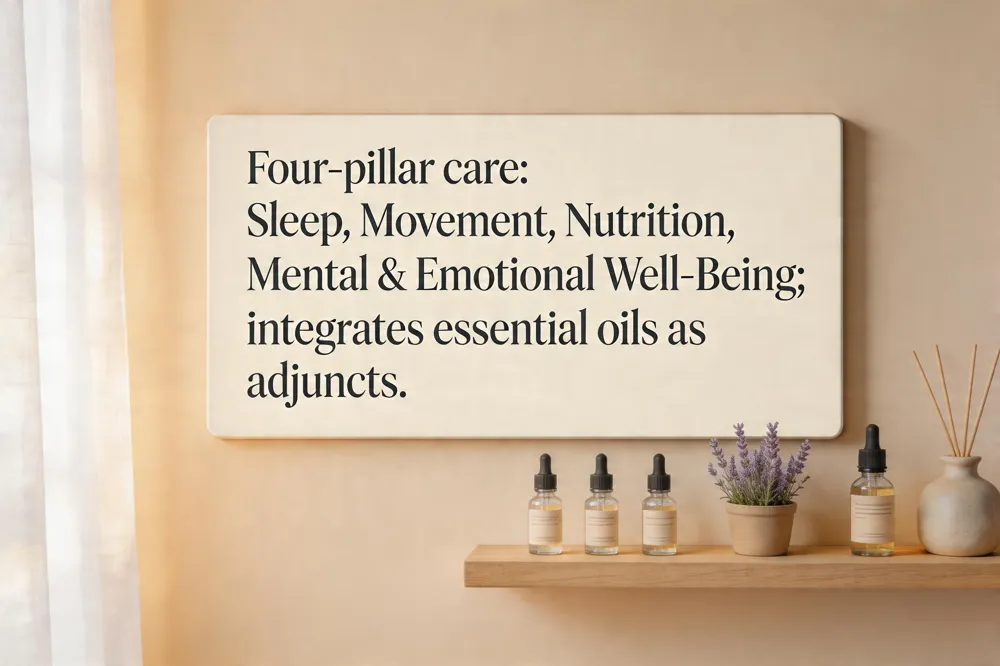
What are the 4 pillars of holistic care? The four‑pillar care framework focuses on Sleep (cellular repair, hormone balance), Movement (regular physical activity for joints, heart, brain), Nutrition (nutrient‑dense whole‑food diet supporting gut, immune, mental health), and Mental & Emotional Well‑Being (mindfulness, stress‑management, emotional support).
Integration with urgent care at home For non‑life‑threatening issues—minor cuts, mild colds, tension headaches—these pillars guide safe self‑treatment. Diluted essential oils (e.g., lavender for anxiety, peppermint for tension‑type headaches) can complement conventional over‑the‑counter options, while homeopathic remedies may be used for symptom relief in mild, self‑limiting conditions after consulting a qualified practitioner. Crucially, red‑flag symptoms (high fever, severe pain, uncontrolled bleeding) trigger immediate professional evaluation, ensuring that complementary therapies enhance rather than replace evidence‑based medical care.
Homeopathy in Home Urgent Care and Finding a Practitioner
 Homeopathy offers a complementary, patient‑centered option for minor, self‑limiting conditions such as mild colds, slight bruises, or menstrual discomfort. While systematic reviews repeatedly show that homeopathic remedies perform no better than placebo for most ailments, they are generally safe when used as directed and rarely cause adverse effects. The U.S. FDA classifies homeopathic products as over‑the‑counter drugs, meaning manufacturers must meet labeling requirements but are not required to prove efficacy through rigorous clinical trials. For women seeking a female homeopathic doctor, the National Center for Homeopathy’s "Find a Homeopathic Practitioner" directory is a reliable resource. Enter your state or ZIP code, filter by gender and specialty (e.g., women’s health), and browse listed clinicians such as Kathleen Slonager (CCH DIHom RN ADS AE‑C, Franklin, MI), Mariana Sullivan (CCH, Arlington, TX), or Ashley Christianson (Classical Homeopath, Montevideo, MN). If local options are limited, the directory also provides practitioners who offer virtual appointments via Zoom, Skype, or Google Meet, expanding access nationwide. When selecting a practitioner, verify credentials (e.g., CCH), look for additional training in integrative or naturopathic medicine, and ensure the provider’s focus aligns with your health goals.
Putting It All Together
Key takeaways: Essential oils (e.g., lavender, peppermint, eucalyptus) can offer modest relief for mild pain, tension headaches, and nasal congestion when diluted and applied topically or inhaled. Homeopathic remedies are highly diluted and generally safe, but robust evidence for efficacy beyond placebo is lacking; they may be useful for self‑limiting symptoms when used under professional guidance. Both modalities should complement, not replace, conventional care.
When to seek professional care: Immediate medical evaluation is warranted for high fever (> 39 °C/102 °F), severe pain, uncontrolled bleeding, difficulty breathing, chest pain, or any rapidly worsening symptom. Women who are pregnant, nursing, or have chronic conditions should consult a healthcare provider before using essential oils or homeopathic products.
Resources for safe use: Choose therapeutic‑grade, 100 % pure essential oils from reputable manufacturers and perform a patch test (1–2 % dilution) before topical use. Follow FDA guidance that oils are cosmetics or supplements, not drugs. For homeopathic products, verify potency labeling (e.g., 30C) and obtain them from licensed practitioners. Integrative wellness programs, telehealth urgent‑care services, and reputable organizations such as the National Center for Complementary and Integrative Health (NCCIH) provide evidence‑based guidance and safety checklists.