Introduction
Bioidentical hormones are plant‑derived compounds that are chemically identical to the estrogen, progesterone, and testosterone our bodies naturally produce. They are used in hormone‑replacement therapy to relieve menopausal symptoms—hot flashes, night sweats, vaginal dryness, mood swings, and sleep disturbances—by restoring a hormone balance that mirrors the body’s own signals. From an integrative and functional‑medicine viewpoint, therapyRT is personalized: clinicians consider each woman’s symptom pattern, health history, and lifestyle, then choose the lowest effective dose and route (oral, transdermal, topical, or pellet) that fits her preferences. Evidence shows that FDA‑approved bioidentical products are safe and effective when monitored, while compounded preparations lack standardized testing; shared decision‑making ensures a natural, evidence‑based, and patient‑centered approach.
Foundations: Chemistry, Sources, and FDA Status
 Bioidentical hormones begin with plant‑derived sterols—most commonly soybeans or wild yam—that are chemically converted in a laboratory into molecules that are structurally identical to the body’s native estrogen, progesterone, and testosterone. This laboratory synthesis makes the final products chemically “identical” to endogenous hormones, even though they are not directly extracted from the plants.
The FDA‑approved bioidentical hormone products include oral estradiol tablets (e.g., Estrace) and transdermal estradiol patches (Climara, Vivelle‑Dreame), micronized oral progesterone (Prometrium), and topical testosterone gels or patches (AndroGel, Testim). Vaginal estradiol creams and inserts are also FDA‑cleared for local symptom relief.
Safety is not guaranteed by the term “bioidentical.” FDA‑approved formulations undergo rigorous testing for purity, potency, and efficacy, yet they still carry the same clot, cardiovascular, and breast‑cancer risks as conventional hormone therapy. Compounded bioidentical preparations lack FDA oversight, leading to batch‑to‑batch variability in dose and purity, which adds uncertainty to their safety profile.
Compared with synthetic hormones—chemically altered molecules that differ slightly from natural hormones—bioidentical products are molecularly identical but have not demonstrated superior safety or effectiveness in large studies. The decision to use bioidentical versus synthetic therapy should be individualized, based on a thorough discussion with a qualified clinician who weighs symptom severity, personal health history, and the best available evidence.
Clinical Use: Dosing, Delivery Methods, and Low‑Dose Strategies
 Delivery routes include oral tablets, transdermal patches/gel/creams, vaginal inserts or rings, and sub‑cutaneous pellets. Oral dosing is convenient but undergoes first‑pass liver metabolism; transdermal preparations bypass the liver and lower clot risk. Vaginal products deliver hormone directly to the genital tissue with minimal systemic exposure, while pellets—tiny rice‑sized implants placed under the skin—provide a steady release for 3–6 months, reducing the need for daily applications.
Low‑dose principle and personalized titration means clinicians start with the smallest dose that offers relief and then titrate up slowly, monitoring symptoms rather than chasing laboratory “normal” levels, which fluctuate daily. A low dose is therefore individualized: for estrogen it may be as low as 0.5 mg/day, for progesterone 5 mg‑10 mg/day transdermally, or 100 mg oral micronized progesterone. Pellet therapy follows the same low‑dose philosophy, delivering a customized, steady dose over months.
Side effects are usually mild—breast tenderness, bloating, mood swings, or skin irritation—and often resolve with dose tweaks. More serious risks (blood clots, stroke, breast cancer) are discussed before treatment, especially for women with a history of cardiovascular disease or cancer. Regular follow‑up ensures the regimen remains safe and effective.
Therapeutic Benefits and Symptom Relief
 Bioidentical hormone therapy (BHRT) is designed to replace the estrogen, progesterone and testosterone that naturally decline during perimenopause and menopause.
Hot flashes, night sweats, vaginal dryness – The most consistent benefit reported in clinical observations and patient surveys is rapid relief of vasomotor symptoms. Women often notice fewer or less intense hot flashes and night sweats within one to two weeks, and vaginal moisturizers become unnecessary once localized estrogen is restored.
Bone health, mood, cognition, libido – Restoring estradiol and progesterone helps preserve bone density, reducing the risk of osteopenia and fractures. Studies show improvements in mood stability, sleep quality, and cognitive focus when hormone levels are kept in the physiologic range. Low‑dose testosterone or bioidentical estradiol can also boost sexual desire and overall vitality.
Evidence from clinical observations – Large‑scale randomized trials exist for FDA‑approved bioidentical products (e.g., estradiol patches, micronized progesterone) and demonstrate efficacy comparable to conventional hormone therapy. Compounded preparations lack the same rigorous testing, and saliva‑based dosing has not been shown to correlate with blood levels or symptom relief. Professional societies therefore recommend the lowest effective dose, symptom‑guided titration, and regular follow‑up.
What are the benefits? BHRT can alleviate hot flashes, night sweats, vaginal dryness, mood swings, sleep disturbances, weight gain, and libido loss while supporting bone health and muscle mass. Because the molecules are chemically identical to endogenous hormones, they are readily absorbed and act exactly like the body’s own hormones.
Patient reviews Many women experience quick symptom relief and feel more energetic, especially when dosing is individualized. Others report side‑effects such as breast tenderness, mood swings, or minimal benefit, highlighting the importance of monitoring and using FDA‑approved products when possible.
When to consider therapy? Persistent vasomotor symptoms, disruptive night sweats, sleep problems, brain fog, mood instability, vaginal dryness, decreased libido, joint pain, or early signs of bone loss are cues that hormone replacement may improve quality of life. Discuss these signs with a qualified provider to determine the safest, most effective approach.
Risks, Contra‑indications, and Cancer Considerations
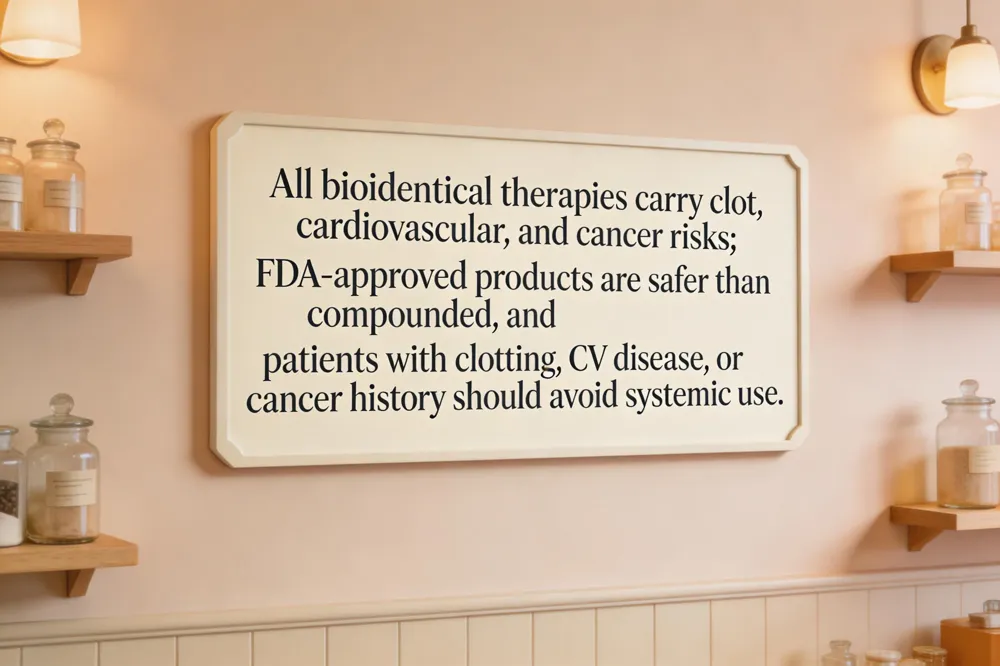 Bioidentical hormone therapy (BHRT) can be an effective way to ease hot flashes, night sweats, vaginal dryness, and mood swings, but it is not free of serious risks. The most common safety concerns involve thromboembolic events, cardiovascular disease, and cancer. Estrogen‑only regimens raise the chance of endometrial hyperplasia and, if not protected by a progestin, endometrial cancer. Combined estrogen‑plus‑progesterone (or micronized progesterone) preparations are linked to a modest increase in breast‑cancer incidence, especially when used for more than five years, at higher doses. Transdermal delivery (patches, gels, or sprays) tends to produce lower peak estradiol levels and may reduce clot‑forming potential compared with oral formulations, but the overall cancer‑risk profile remains similar to conventional hormone therapy.
The type of product matters. FDA‑approved bioidentical hormones—such as estradiol tablets, patches, and micronized progesterone—are manufactured under strict quality‑control standards, with documented purity, potency, and safety data. Compounded bioidentical hormones, custom‑mixed by pharmacies based on a provider’s prescription, lack FDA oversight; batch‑to‑batch potency can vary by as much as 30 %, and contamination or inconsistent dosing is possible. That variability can amplify the risks of blood clots, stroke, and endometrial or breast cancer because hormone levels may become supraphysiologic or insufficiently suppressed.
Patient selection and monitoring are essential. Women with a history of clotting disorders, uncontrolled hypertension, cardiovascular disease, stroke, or prior breast/uterine cancer should generally avoid systemic hormone therapy, whether bioidentical or synthetic. When BHRT is chosen, clinicians aim for the lowest effective dose for the shortest duration, regularly reassessing symptoms, performing pelvic exams, and obtaining mammograms as indicated. Routine hormone‑level testing (especially saliva) is not recommended for dose titration because daily fluctuations do not reliably predict symptom control or safety outcomes.
In summary, bioidentical hormones are not intrinsically safer than traditional hormone therapy; the key determinants of risk are the hormone dose, route of administration, and whether the product is FDA‑approved. Women should discuss personal risk factors—including age, family cancer history, and cardiovascular health—with a qualified healthcare provider before initiating any hormone regimen, and they should prioritize FDA‑approved, evidence‑based options over compounded preparations whenever possible.
Practical Guidance: Finding Care, Cost, and Duration
 Finding the right provider for bioidentical hormone therapy (BHRT) begins with a targeted search for integrative or functional‑medicine clinics that specialize in women’s health. Many practices, such as Harmony Care, Menopause Solutions, and other naturopathic centers, offer personalized BHRT options—including transdermal gels, vaginal inserts, and sub‑cutaneous pellets—and often provide telemedicine consultations for patients who live farther away. A quick online search using keywords like "BHRT clinic" plus your city or ZIP code, checking professional directories, and confirming board‑certification can help you locate a qualified practitioner.
Cost of hormone replacement therapy varies widely. Generic oral estrogen tablets may cost as little as $10 per month, while brand‑name vaginal rings or high‑dose gels can exceed $500 per month. Most insurance plans cover FDA‑approved formulations when medically necessary, but the out‑of‑pocket amount depends on the specific product, dosage, and your plan’s pharmacy benefits. Cash prices for a 90‑day supply of generic tablets or gels typically range from $30 to $200 per month; manufacturer coupons, savings programs, and patient‑assistance initiatives can further reduce expenses for those without coverage.
The duration of BHRT is not a one‑size‑fits‑all decision. Women may remain on therapy for a few years during perimenopause or early menopause, or continue indefinitely under regular supervision if symptom relief and health benefits persist. Guidelines emphasize the "lowest effective dose for the shortest time needed," with ongoing monitoring of symptoms, bone health, and cardiovascular risk. A collaborative, individualized plan—regularly revisited with your provider—ensures that therapy is adjusted or tapered when appropriate, balancing safety, efficacy, and personal wellness goals.
Integrative Lifestyle Support and Future Directions
 Nutrition, stress, and sleep as adjuncts
A balanced diet rich in phytoestrogens (soy, flaxseed), calcium, vitamin D, omega‑3 fatty acids, and anti‑inflammatory foods can blunt vasomotor symptoms and protect bone health. Stress‑reduction techniques—mindful breathing, yoga, acupuncture—lower cortisol, which otherwise worsens hot flashes, mood swings, and sleep disruption. Prioritizing 7‑9 hours of restorative sleep stabilizes endogenous hormone rhythms and reduces fatigue.
Nutrition, stress, and sleep as adjuncts
A balanced diet rich in phytoestrogens (soy, flaxseed), calcium, vitamin D, omega‑3 fatty acids, and anti‑inflammatory foods can blunt vasomotor symptoms and protect bone health. Stress‑reduction techniques—mindful breathing, yoga, acupuncture—lower cortisol, which otherwise worsens hot flashes, mood swings, and sleep disruption. Prioritizing 7‑9 hours of restorative sleep stabilizes endogenous hormone rhythms and reduces fatigue.
Functional‑medicine testing and monitoring Functional labs such as the DUTCH urine panel or serum estradiol, progesterone, and testosterone tests help personalize bioidentical dosing and track progress. Because hormone levels fluctuate daily, clinicians focus on symptom relief rather than single‑point levels, using regular follow‑ups to adjust dose, switch routes (oral, transdermal, vaginal), or taper therapy safely.
Research gaps and upcoming studies Large, randomized trials comparing compounded bioidentical hormones with FDA‑approved products are still lacking, as are long‑term safety data for newer delivery methods (pellets, sprays). Ongoing studies by the North American Menopause Society and the Endocrine Society aim to clarify cardiovascular, breast‑cancer, and bone‑health outcomes, and to evaluate integrative interventions (diet, lifestyle) as adjuncts to hormone therapy.
What happens when you go off bioidentical hormones? Discontinuation returns estrogen, progesterone, and testosterone to pre‑treatment levels, often reviving hot flashes, night sweats, insomnia, mood swings, and decreased libido. A brief adjustment phase may feel worse before stabilizing; a clinician‑guided taper and functional‑medicine monitoring can ease the transition.
Hormone replacement therapy pdf Free, evidence‑based PDFs are available from the Endocrine Society, North American Menopause Society, and the National Center for Health Statistics. These guides detail HRT types, dosing, benefits, risks, and personalization strategies.
What are the signs that you need hormone replacement therapy? Persistent hot flashes, night sweats, sleep disruption, brain fog, irritability, vaginal dryness, painful intercourse, joint pain, low libido, or early bone‑density loss—especially when lifestyle changes fail—signal that HRT may improve quality of life. Discuss these symptoms with a qualified provider.
Conclusion
Bioidentical hormone therapy (BHRT) offers a scientifically sound option for menopausal symptom relief, but it is not inherently safer or more effective than FDA‑approved hormone products. The strongest evidence supports using the lowest effective dose of a regulated formulation, whether bioidentical or synthetic, and monitoring symptoms rather than relying on fluctuating hormone‑level tests. Because each woman’s hormonal landscape, health history, and personal goals differ, therapy must be tailored through shared decision‑making, thorough medical evaluation, and regular follow‑up. Women interested in a holistic, evidence‑based approach should schedule an integrative consultation, where a qualified clinician can review risks, benefits, lifestyle factors, and the best individualized plan for optimal wellness.