Why Holistic Urgent Care Matters
Integrative urgent‑care clinics are expanding because patients want fast, convenient treatment that also respects their desire for natural, personalized care. By pairing conventional assessment—clean wound irrigation, sterile dressings, X‑ray or lab testing—with evidence‑based remedies such as aloe vera gel, medical‑grade Manuka honey, arnica or turmeric creams, and diluted tea‑tree oil, clinics can reduce infection risk and swelling while avoiding unnecessary NSAIDs. This hybrid model is especially valuable for women, whose hormonal fluctuations can affect pain perception and wound healing; practitioners can tailor nutrition (vitamin C, zinc, omega‑3s), stress‑reduction techniques, and gentle modalities like acupuncture or lymphatic massage to support recovery. Harmony Care exemplifies this approach, offering walk‑in urgent‑care services alongside primary‑care continuity, telehealth triage, and on‑site integrative therapies. The result is a seamless, patient‑centered experience that addresses acute injuries promptly, supports overall wellness, and aligns with each individual’s health goals.
Holistic Primary Care and the Role of Naturopathic Professionals
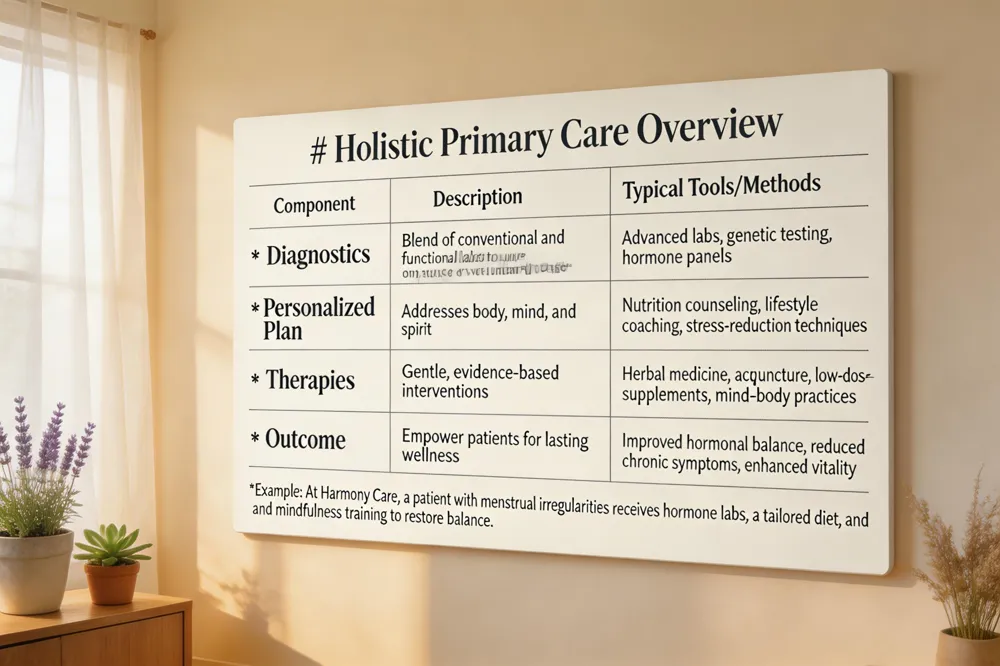
Holistic Primary Care Overview
| Component | Description | Typical Tools/Methods |
|---|---|---|
| Diagnostics | Blend of conventional and functional labs to uncover root causes | Advanced labs, genetic testing, hormone panels |
| Personalized Plan | Addresses body, mind, and spirit | Nutrition counseling, lifestyle coaching, stress‑reduction techniques |
| Therapies | Gentle, evidence‑based interventions | Herbal medicine, acupuncture, low‑dose supplements, mind‑body practices |
| Outcome | Empower patients for lasting wellness | Improved hormonal balance, reduced chronic symptoms, enhanced vitality |
Example: At Harmony Care, a patient with menstrual irregularities receives hormone labs, a tailored diet, and mindfulness training to restore balance.
Holistic Primary Care
Holistic primary care blends conventional diagnostics with naturopathic and functional‑medicine strategies to treat the whole person—body, mind, and spirit. At clinics like Harmony Care, personalized plans address hormonal balance, nutrition, genetics, and lifestyle factors, especially those affecting women’s health. Advanced labs, preventive screenings, and gentle, evidence‑based therapies uncover root causes instead of merely suppressing symptoms, empowering patients to achieve lasting wellness.
Is NMD a real doctor?
NMD stands for Doctor of Naturopathic Medicine, a doctoral degree earned after a four‑year accredited program. Graduates are licensed in more than 20 U.S. states and the District of Columbia after passing the Naturopathic Physicians Licensing Exam. While they hold a doctoral title and are trained in basic sciences and complementary therapies, their education is shorter than that of MDs/DOs. Thus, an NMD is a recognized health professional, but not a conventional medical doctor.
Can a naturopathic doctor write a prescription?
Yes—if the ND is licensed in a state that grants prescribing authority, they may write prescriptions for herbal, nutritional, and certain conventional medications (e.g., antibiotics, hormones). The specific formulary varies by state, so patients should confirm the ND’s scope of practice.
What states have licensed naturopathic doctors?
Licensed NDs practice in 24 states plus D.C., including Arizona, California, Colorado, Connecticut, Hawaii, Idaho, Kansas, Maine, Maryland, Massachusetts, Minnesota, Montana, New Hampshire, New Mexico, North Dakota, Oregon, Pennsylvania, Rhode Island, Utah, Vermont, Washington, and Wisconsin, as well as Puerto Rico and the U.S. Virgin Islands.
Holistic urgent‑care patient portal
A secure, HIPAA‑compliant portal gives patients 24/7 access to health records, lab results, and prescriptions. It enables same‑day appointment booking, telehealth visits, secure messaging, and integration of wellness tools (blood pressure, glucose, cholesterol), ensuring seamless coordination of acute and ongoing functional‑medicine care.
First‑Aid Foundations: RICE, Clean‑Wound Care, and Natural Topicals
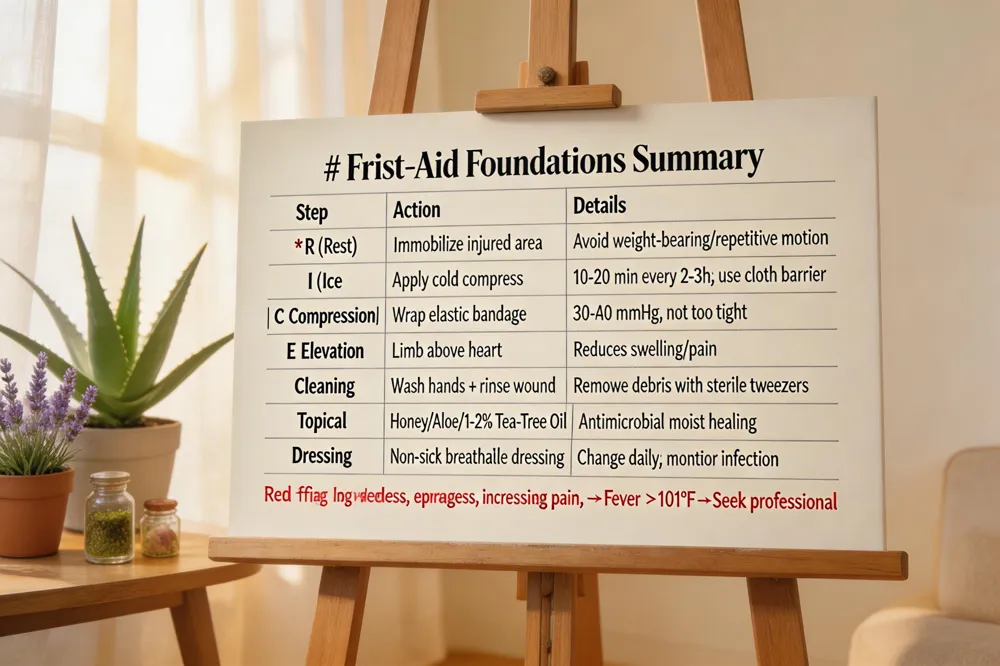
First‑Aid Foundations Summary
| Step | Action | Details |
|---|---|---|
| R (Rest) | Immobilize the injured area | Avoid weight‑bearing or repetitive motion |
| I (Ice) | Apply cold compress | 10‑20 min every 2‑3 h; use a cloth barrier |
| C (Compression) | Wrap with elastic bandage | 30‑40 mmHg pressure, not too tight |
| E (Elevation) | Raise limb above heart level | Reduces swelling and pain |
| Cleaning | Wash hands, rinse wound with sterile saline | Remove debris with sterilized tweezers |
| Topical | Apply medical‑grade honey, aloe vera gel, or 1‑2 % tea‑tree oil | Antimicrobial, moist‑healing environment |
| Dressing | Cover with breathable, non‑stick dressing | Change daily; monitor for infection |
Red‑flag signs – spreading redness, increasing pain, pus, fever > 101 °F → seek professional care.
 How to treat minor injuries at home?
Begin by washing your hands, then gently press a clean cloth to stop any bleeding. Rinse the wound with cool running water (or a sterile saline rinse) and remove visible debris with sterilized tweezers. Pat the area dry and apply a thin layer of a natural antimicrobial—medical‑grade honey, aloe vera gel, or a diluted tea‑tree oil solution (1‑2 % in a carrier oil). Cover with a breathable, sterile dressing and change it daily. Elevate the injured limb and, if a sprain or bruise, follow the R.I.C.E. protocol (Rest, Ice for 10‑20 minutes every 2‑3 hours, Compression with an elastic bandage, Elevation). Monitor for spreading redness, increasing pain, pus, or fever and seek professional care if these appear.
How to treat minor injuries at home?
Begin by washing your hands, then gently press a clean cloth to stop any bleeding. Rinse the wound with cool running water (or a sterile saline rinse) and remove visible debris with sterilized tweezers. Pat the area dry and apply a thin layer of a natural antimicrobial—medical‑grade honey, aloe vera gel, or a diluted tea‑tree oil solution (1‑2 % in a carrier oil). Cover with a breathable, sterile dressing and change it daily. Elevate the injured limb and, if a sprain or bruise, follow the R.I.C.E. protocol (Rest, Ice for 10‑20 minutes every 2‑3 hours, Compression with an elastic bandage, Elevation). Monitor for spreading redness, increasing pain, pus, or fever and seek professional care if these appear.
Natural wound healing Moisture balance is key: a thin honey or aloe vera gel creates a moist environment that accelerates epithelialization while reducing scarring. Support tissue repair with hydration and a diet rich in protein, vitamin C, zinc, and omega‑3 fats. Adequate sleep, stress‑reduction, and gentle movement (e.g., light yoga) improve circulation and immune function—especially important for women whose hormonal cycles can affect healing.
What is a home remedy for injuries? The evidence‑based R.I.C.E. method remains the cornerstone for sprains and bruises. Rest the area, apply a cold compress wrapped in a cloth for 10‑20 minutes every few hours, compress lightly with an elastic bandage, and keep the limb elevated above heart level to limit swelling.
How to heal a wound naturally? Clean gently, apply honey or diluted tea‑tree oil as an antiseptic, and protect with a non‑stick dressing. Maintain moisture, stay hydrated, and consume collagen‑supporting nutrients (vitamin C, zinc, protein). Watch for infection signs and obtain medical evaluation if healing stalls.
How to heal wounds faster naturally? Combine meticulous cleaning, a moist honey-based dressing, and a nutrient‑dense diet. Avoid smoking, prioritize 7‑9 hours of sleep, and incorporate stress‑relief practices such as deep breathing or meditation to enhance immune response and tissue regeneration.
Urgent‑Care Capabilities for Infections and Wound Management
Urgent‑Care Capabilities
| Service | What’s Offered | Typical Turn‑around |
|---|---|---|
| On‑site Bacterial Testing | Throat swab, wound culture, urinalysis, rapid labs | Results in 30‑60 min |
| Wound Management | Debridement, X‑ray if needed, suturing, Steri‑strips, honey/tea‑tree dressings | Immediate treatment during visit |
| Prescription | Antibiotics, tetanus booster, topical agents | Same‑day prescription |
| Tele‑triage | Photo upload, symptom questionnaire, guidance on walk‑in need | Remote assessment, often within 24 h |
| Extended Hours | Evening & weekend walk‑ins at Insight Urgent Care (Houston), Holistic Urgent Care (Scottsdale), Medex Diagnostic Center (Queens) | No appointment needed |
Tip: Bring a medication list and insurance card for a smooth visit.
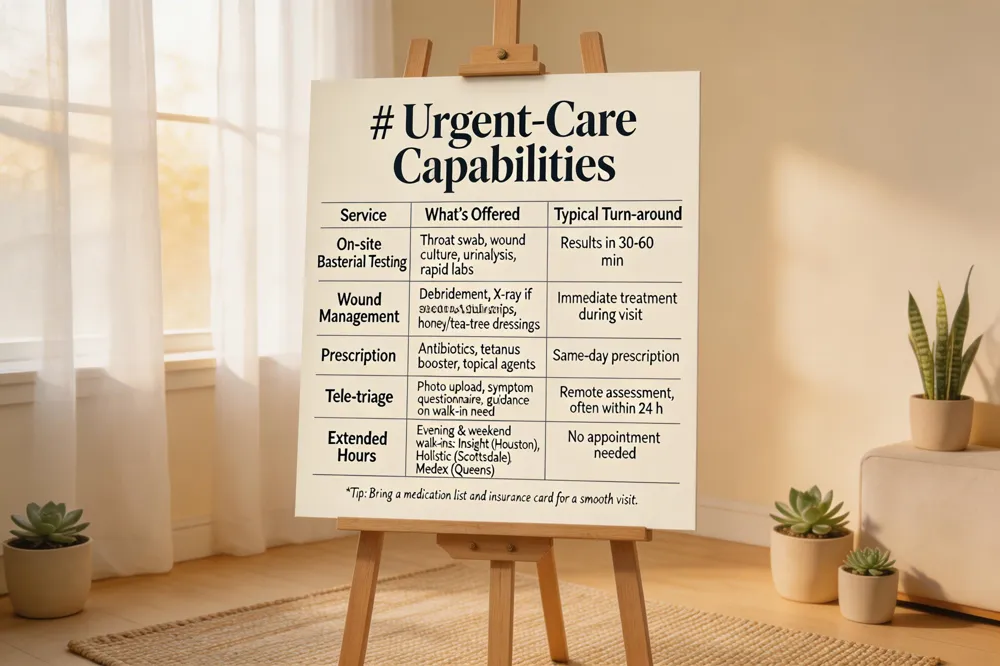 Urgent‑care clinics are equipped to handle bacterial infections and wounded skin with speed and convenience. On‑site bacterial testing—throat swabs, wound cultures, urinalysis, and rapid labs—lets clinicians quickly identify strep, staph, urinary‑tract organisms, or skin pathogens. Once a bacterial cause is confirmed, they prescribe the appropriate antibiotic on the spot, avoiding a separate doctor’s visit.
For infected cuts, burns, or deeper wounds, the provider cleans the area, removes debris, may X‑ray for hidden fragments, and decides whether to suture, use Steri‑strips, or keep the wound open. Oral antibiotics, topical honey or tea‑tree dressings, and tetanus updates are offered as needed, along with clear dressing and follow‑up instructions.
Tele‑triage options let patients describe symptoms, upload photos, and receive guidance on whether a walk‑in is required. Walk‑in hours are extended evenings and weekends at clinics such as Insight Urgent Care (Houston, TX), Holistic Urgent Care (Scottsdale, AZ), and Medex Diagnostic Center (Queens, NY), making timely care accessible without an appointment.
If you need urgent‑care care, search your zip code for nearby walk‑in locations, verify insurance acceptance, and bring a medication list for a smooth visit.
Natural Therapies and Nutrition to Accelerate Healing
Natural Therapies & Nutrition
| Agent | Primary Benefits | How to Use |
|---|---|---|
| Medical‑grade Honey (Manuka) | Antimicrobial, moist‑healing, reduces scarring | Thin layer on clean wound, cover with dressing |
| Aloe Vera Gel | Anti‑inflammatory, soothing | Apply 2‑3 times daily; repeat dress dry |
| ** | ** (Cream or Salve) | Reduces bruising, speeds tissue repair |
| Turmeric/Curcumin | Anti‑oxidant, anti‑inflammatory | Oral supplement 500 mg or paste on affected skin |
| Tea‑Tree Oil (1‑2 % in carrier) | Antiseptic, antifungal | Apply with cotton swab; avoid undiluted use |
| Zinc‑rich Foods (pumpkin seeds, nuts) | Collagen synthesis, immune support | Include 1‑2 servings daily |
| Vitamin C Sources (citrus, berries) | Antioxidant, promotes fibroblast activity | 75‑90 mg daily (higher if healing) |
| Omega‑3 Fatty Acids (fatty fish, flaxseed) | Anti‑inflammatory, cell membrane health | 2 servings/week or supplement 1 g EPA/DHA |
Overall strategy: Clean wound, apply moist natural dressing, support with protein, vitamin C, zinc, and omega‑3s, stay hydrated, and get 7‑9 h sleep.
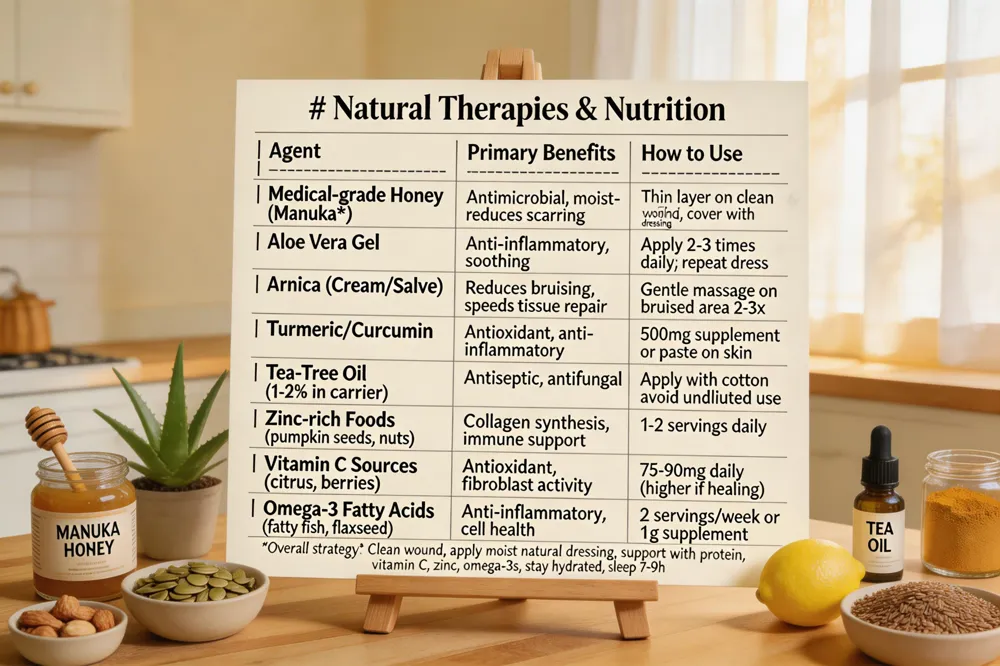 When a minor injury occurs, a blend of evidence‑based natural agents and targeted nutrition can speed recovery while minimizing reliance on drugs. Aloe vera gel, medical‑grade honey (especially Manuka), arnica cream, turmeric (curcumin) paste, and diluted tea‑tree oil each provide anti‑inflammatory, antimicrobial, or circulatory benefits that soothe cuts, bruises, sprains, and superficial burns. Magnesium‑rich Epsom‑salt baths reduce swelling and muscle tension, while zinc‑rich foods (pumpkin seeds, nuts) support collagen synthesis and immune defense. Probiotic‑rich yogurt or kefir and adequate vitamin D maintain a healthy gut microbiome and modulate inflammation, essential for tissue repair. Herbal blends such as calendula‑chamomile compresses or a soothingarnica‑turmeric salve can be applied to bruises and minor burns for added comfort.
How to heal surgery wounds faster naturally? Clean the incision gently with mild soap and water, pat dry, and apply a thin layer of aloe vera or calendula gel. Eat protein‑rich meals, vitamin‑C fruits, and zinc‑rich nuts; stay hydrated, avoid smoking/alcohol, and follow surgeon instructions while walking gently to boost circulation.
How to treat wounds that won’t heal? Seek clinician evaluation for infection or systemic issues. Clean with saline, use a moist breathable dressing, and support healing with protein, vitamin C, zinc, omega-3s, hydration, and stress reduction. Consider medical‑grade honey or advanced therapies if stagnation persists.
How to heal deep wounds faster? Professional cleaning, debridement, and moist non‑adherent dressings are essential. Optimize nutrition (protein, vitamin C, zinc), avoid smoking/alcohol, and use gentle compression or off‑loading. Monitor for infection and follow up regularly.
What herb will cure any minor injury? Calendula, lavender, and chamomile offer anti‑inflammatory and antimicrobial properties that aid minor wound healing.
Can urgent care give antibiotics for an infection? Yes. Urgent‑care clinicians can prescribe antibiotics after assessing symptoms, performing a physical exam, and confirming bacterial infection with rapid tests or labs. They choose appropriate agents, emphasize completing the full course, and educate on responsible use.
Beyond the Clinic: Telehealth, Alternatives, and When to Seek Higher‑Level Care
Beyond the Clinic Options
| Option | Description | When to Use |
|---|---|---|
| Virtual Holistic Urgent‑Care | Video visit ($77) with licensed ND/NP; can prescribe meds & suggest natural remedies | Minor injuries, early infection signs, convenience needed |
| Retail Clinics / Walk‑In Primary Care | Pharmacies, big‑box stores; NP/PA staff | Simple cuts, sprains, OTC pain relief, quick labs |
| Telemedicine Platforms | Symptom questionnaire, remote prescription, home‑care guidance | When you can self‑manage but need professional advice |
| Red‑Flag Symptoms | Spreading redness, fever > 101 °F, pus, severe pain, uncontrolled bleeding, loss of function | Immediate emergency department visit |
| Preventive Home Kit | Sterile dressings, medical‑grade honey, aloe vera gel, reusable ice packs, nutrition snacks | Daily readiness for minor injuries |
Key takeaway – Start with telehealth or retail clinic for minor issues; escalate to urgent‑care or ED if red‑flag signs appear.
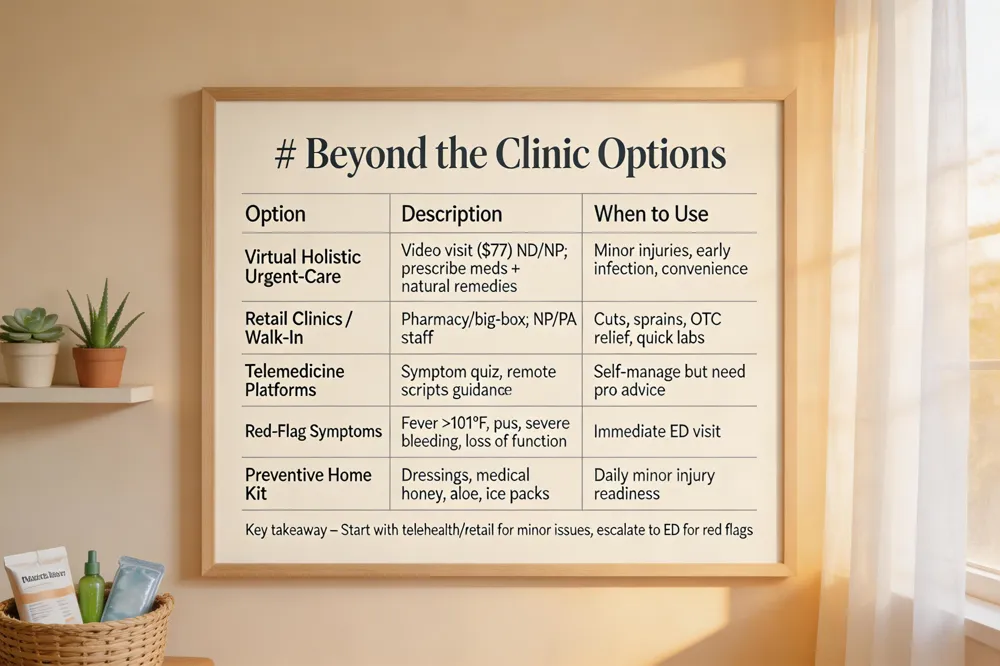 When a minor injury or infection strikes, you have several convenient options beyond a traditional urgent‑care visit.
Virtual holistic urgent‑care platforms – Services such as Cherish Immune’s $77 video visit or telehealth triage offered by many urgent‑care chains let a licensed clinician assess your symptoms, prescribe needed medications, and suggest natural remedies (e.g., aloe vera for burns, diluted tea‑tree oil for small cuts) from home. This remote care is especially helpful for those who prefer a personalized, evidence‑based approach that blends conventional treatment with integrative options.
Retail clinics, walk‑in primary care, and telemedicine – Pharmacies, big‑box stores, and community health centers provide low‑cost, no‑appointment walk‑ins for cuts, sprains, or mild infections. Nurse practitioners and physician assistants staff these sites, delivering prompt care that often includes over‑the‑counter pain relievers, compression wraps, and education on nutrition‑rich wound healing (vitamin C, zinc). Telemedicine platforms further expand access, allowing you to receive guidance on home‑care measures such as R.I.C.E. , cold compresses , or herbal anti‑inflammatories (arnica , turmeric before deciding if an in‑person visit is needed.
Red‑flag symptoms that require emergency care – Seek immediate attention if you notice spreading redness, increasing pain, pus, fever over 101 °F, or systemic signs like rapid heartbeat. Other emergencies include uncontrolled bleeding, loss of function, or signs of a deeper infection (red streaks, severe swelling).
Cost‑effective home care and preventive measures – A well‑stocked first‑aid kit with sterile dressings, medical‑grade honey, aloe vera gel and reusable ice packs can reduce infection risk and accelerate healing. Elevating injured limbs, staying hydrated, and consuming anti‑inflammatory foods (leafy greens, omega‑3‑rich fish) further support recovery and may prevent future injuries.
Answers to common questions –
- What are alternatives to urgent care? Retail clinics , walk‑in primary‑care offices, and health‑center urgent‑care units offer low‑cost, in‑person care, while telehealth platforms provide remote consultations and prescriptions.
- Should you go to urgent care for infections? Most infections can be managed at urgent care, but emergency care is needed for severe symptoms such as vision loss, balance problems, or rapidly worsening pain.
- Can urgent care give antibiotics for an infection? Yes. Clinicians evaluate symptoms, perform exams, and may order rapid tests or labs to confirm a bacterial cause before prescribing the appropriate antibiotic and counseling on responsible use.
Empowering Women with Integrated, Natural Care
Holistic urgent‑care clinics blend rapid, walk‑in medical evaluation with evidence‑based natural therapies—think soothing aloe for minor burns, medical‑grade honey or cuts, and arnica or turmeric to tame bruising and sprain swelling. This integrative model shortens wait times, lowers costs, and lets women receive personalized lifestyle counseling, hormone‑balanced nutrition, and stress‑reduction techniques that support faster tissue repair and immune resilience. While natural remedies can safely complement first‑aid steps, they are not a substitute for professional assessment when infection signs, worsening pain, or systemic symptoms appear. To make this partnership seamless, Harmony Care invites you to join our secure patient portal, where you’ll receive tailored care plans, reminders for follow‑up visits, and easy access to both conventional and integrative treatment options—all designed to empower you on your health journey.