Overview
Hormone replacement therapy (HRT) has a long history—thyroxine entered the market in 1917, insulin shortly after, and conjugated equine estrogen became the most prescribed drug for post‑menopausal women by the 1980‑1990s. In men, testosterone was first synthesized in 1935 and, for decades, has been delivered via oral gels, patches, intramuscular injections, or implanted pellets, each with trade‑offs in convenience, absorption consistency, and side‑effect risk. Today, only about 20 % of patients with sex‑hormone deficiencies receive treatment, highlighting a gap between need and delivery options. An integrative wellness lens emphasizes confirming low testosterone with two morning labs, then choosing a personalized regimen—whether a self‑administered subcutaneous hydrogel microbead injection, a transdermal gel, or a bioidentical pellet—while pairing therapy with lifestyle measures such as resistance training, adequate sleep, stress reduction, and nutrient optimization. This patient‑centered approach aims to restore physiologic hormone levels, improve energy, libido, bone health, and mood, and minimize adverse effects through regular monitoring and shared decision‑making.
Innovative Delivery Platforms for Testosterone
Innovative Delivery Platforms for Testosterone
| Feature | Description | Potential Benefits |
|---|---|---|
| Hydrogel microbead (hydrogel‑acid) | Tiny injectable microspheres fabricated by Core Shell Spherification (CSS) | fully aqueous, oil‑free process |
| Core Shell Spherification (CSS) | Scalable, aqueous manufacturing technique that creates a biocompatible shell around testosterone‑laden core | Eliminates complex microfluidics, reduces cost, improves batch‑to‑ could consistency |
| Extended‑release profile | Weeks‑long, near‑linear testosterone release | Smoother serum levels, fewer peaks/troughs, reduced skin irritation and hormone‑transfer risk |
| Patient convenience | Home injection, no clinic visits, no pellet surgery | Improves adherence, enhances quality of life |
| Platform adaptability | Same hydrogel matrix can be loaded with other peptides (e.g., insulin) | Opens pathway for multi‑hormone delivery systems |
 Recent advances in hormone replacement therapy are reshaping how men receive testosterone. One promising approach uses hydrogel microbeads—tiny, hyaluronic‑acid‑based spheres that encapsulate testosterone and can be injected subcutaneously once a month. The Core Shell Spherification (CSS) process creates these injectable microspheres in an entirely aqueous, scalable manner, avoiding oil emulsions or complex microfluidics. Because the microbeads sit in the subcutaneous tissue, patients can self‑administer at home, eliminating the need for frequent clinic visits or invasive pellet implants. Pre‑clinical studies show a steady, weeks‑long release of testosterone, smoothing the peaks and troughs seen with daily gels, patches, or weekly injections. This extended‑release profile may reduce skin irritation, hormone‑transfer risks, and the laboratoryic swings that cause mood or energy fluctuations. By combining a biocompatible hydrogel matrix with CSS manufacturing, the new platform aligns with the ideal HRT goals of convenience, stability, and minimal side‑effects, offering a patient‑centered alternative to traditional delivery methods.
Regulatory Landscape and Safety Warnings
Regulatory Landscape and Safety Warnings
| Change | Detail | Clinical Implication |
|---|---|---|
| Removal of broad “black‑box” warnings for menopausal HRT | FDA updated labeling after meta‑analysis showing limited cardiovascular, breast‑cancer, and dementia risk when started ≤10 years post‑menopause | Clinicians can discuss HRT with less fear of severe adverse warnings; still monitor patient‑specific factors |
| Retained boxed warning for endometrial cancer (estrogen‑alone) | Applies only to systemic estrogen‑alone products in women with an intact uterus | Necessitates concurrent progestin or use of estrogen‑alone only after hysterectomy |
| FDA‑approved HRT categories remain unchanged | Systemic combo, systemic estrogen‑alone, systemic progestogen‑alone, topical vaginal estrogen | Guides product selection based on patient anatomy and symptom profile |
| Introduction of Fezolinetant (Veoza) | Non‑hormonal oral NK‑3 antagonist 45 mg daily for vasomotor symptoms | Provides an alternative for patients contraindicated for or who decline hormones |
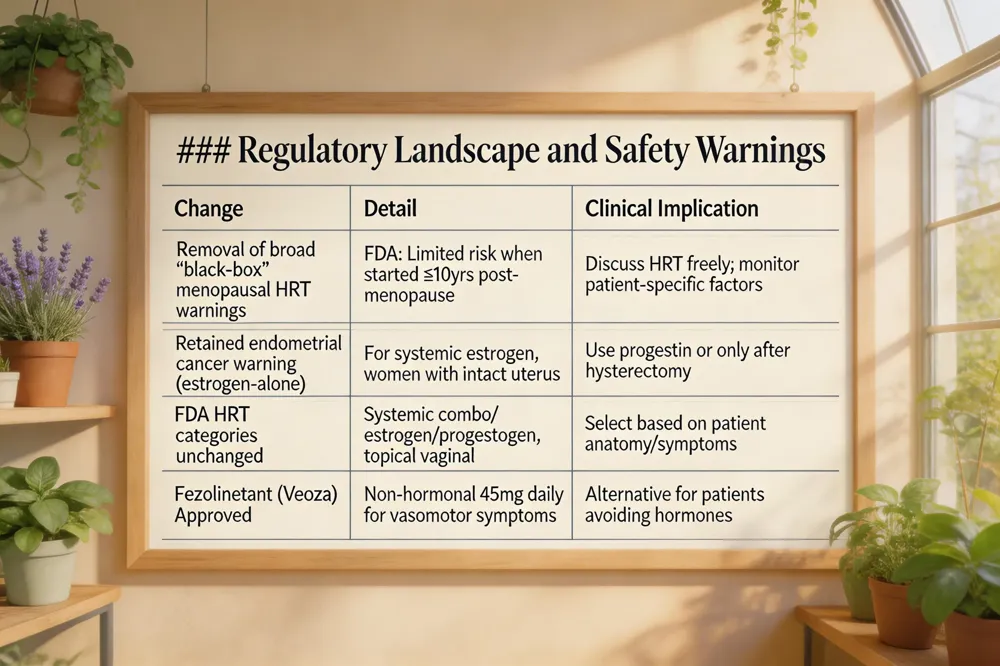 The FDA is now removing the broad “black‑box” warnings that once linked menopausal hormone‑replacement therapy (HRT) to cardiovascular disease, breast cancer and probable dementia. This change follows a thorough review of recent studies showing that, when started within ten years of menopause (typically before age 60), HRT can lower hot‑flash frequency, reduce fracture risk and even improve heart‑health and cognition. The agency will retain only the boxed warning for endometrial cancer on systemic estrogen‑alone products for women who still have a uterus. FDA‑approved HRT categories remain: systemic combination therapy (estrogen + progestogen), systemic estrogen‑alone (no uterus), systemic progestogen‑alone (used with estrogen), and topical vaginal estrogen preparations. For women who cannot or prefer not to use hormones, the newly approved non‑hormonal medication Fezolinetant (Veoza) offers a daily 45 mg oral option that blocks neurokinin‑3 receptors to lessen hot flashes and night sweats. Clinicians should discuss these updated labels, individual benefits, and residual risks so each woman can make an evidence‑based, personalized decision about menopause care.
Identifying When Hormone Therapy Is Needed
Identifying When Hormone Therapy Is Needed
| Sex | Symptoms | Screening Tool |
|---|---|---|
| Women | Frequent intense hot flashes/night sweats, vaginal atrophy, libido loss, insomnia, mood swings, brain fog, joint pain | Menopause symptom checklists, validated questionnaires (e.g., MENQOL) |
| Men | Reduced sex drive, fatigue, loss of muscle mass, increased abdominal fat, mood changes, low bone density, anemia | ADAM questionnaire (Androgen Deficiency in the Aging Male) |
| Both | Symptoms persisting despite lifestyle modification | Morning serum hormone levels (estradiol, testosterone) plus clinical assessment |
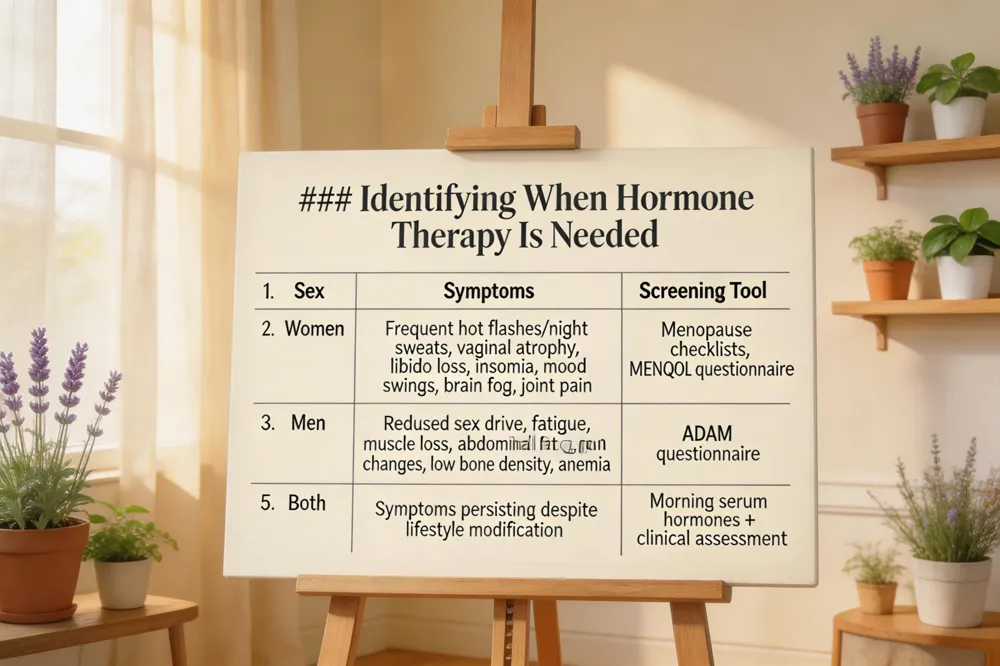 Estrogen deficiency in women often presents as frequent, intense hot flashes or night sweats that disrupt sleep, persistent vaginal dryness, itching, burning, or atrophic changes that make intercourse uncomfortable, a noticeable drop in libido, chronic insomnia, mood swings, brain fog, and joint pain that does not improve with lifestyle changes. In men, low testosterone may cause reduced sex drive, fatigue, loss of muscle mass, increased abdominal fat, mood changes, low bone density, and anemia. A practical screening tool for men is the ADAM ADAM questionnaire (Androgen Deficiency in the Aging Male), which asks about libido, energy, strength, mood, erections, and sleep; a positive response to key questions flags possible hypogonadism. Women can be screened with symptom checklists and validated menopause questionnaires, while both sexes benefit from a thorough medical history and morning hormone testing.
What are the signs that you need hormone replacement therapy? Signs that you may benefit from hormone replacement therapy include frequent, intense hot flashes or night sweats that disrupt sleep and daily activities. Persistent vaginal dryness, itching, burning, or atrophy that makes intercourse uncomfortable is another indicator. A noticeable drop in libido or low sex drive often accompanies declining estrogen levels. Chronic insomnia, mood swings, foggy thinking, or joint pain that does not improve with lifestyle changes can signal a hormonal imbalance. If these symptoms are severe enough to affect your quality of life, discussing HRT with a healthcare professional is advisable.
Current Guidelines for Hormone Therapy
Current Guidelines for Hormone Therapy
| Guideline Body | Key Recommendation | Target Population |
|---|---|---|
| NAMS 2022 Position Statement | Individualize therapy, lowest effective dose, shortest duration; start before age 60 or within 10 years of menopause | Women < 60 y, < 10 y post‑menopause |
| Endocrine Society | Early timing, reassess every 6–12 months, progestin required if uterus present | Similar to NAMS; emphasizes regular monitoring |
| ACOG Practice Bulletin | Systemic therapy for vasomotor and bone protection; low‑dose vaginal estrogen for genitourinary symptoms | Women with moderate‑to‑severe symptoms |
| NIH Fact Sheet | Lifestyle measures should accompany HRT (diet, exercise, sleep) | All candidates for hormone therapy |
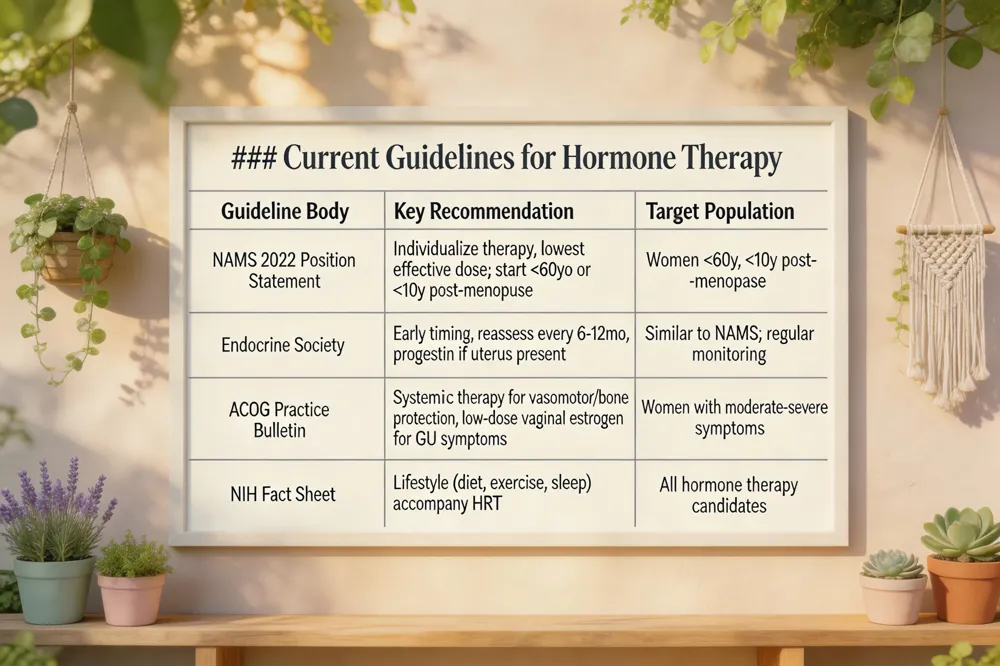 The 2022 North American Menopause Society (NAMS) Hormone Therapy Position Statement, readily available as a PDF on the NAMS website, is the most current U.S. guideline for HRT. It advises that therapy be individualized, using the lowest effective dose for the shortest time needed to relieve symptoms. Women under 60 years of age or within 10 years of menopause have a more favorable benefit‑risk profile; initiating HRT after age 60 or beyond a decade post‑menopause raises cardiovascular and cancer concerns. The Endocrine Society concurs, emphasizing early timing and regular reassessment every 6–12 months. If a uterus is present, estrogen must be paired with a progestin (or a progestin‑releasing IUD) to prevent endometrial hyperplasia; women without a uterus may use estrogen alone. Systemic formulations (pills, patches, gels) are preferred for vasomotor and bone protection, while low‑dose vaginal estrogen is reserved for local genitourinary symptoms. Lifestyle measures—balanced diet, regular exercise, stress reduction, and adequate sleep—should be integrated into the overall plan. PDF versions of the NAMS statement, ACOG Practice Bulletin, and NIH Fact Sheet can be downloaded for detailed reference.
Latest Research Findings 2025
Latest Research Findings 2025
| Study/Area | Main Finding | Clinical Impact |
|---|---|---|
| 2025 Menopausal HRT Guidelines | Early symptom‑directed HRT reduces cardiovascular events by 25‑50 % and fractures by up to 60 % | Strengthens case for early initiation within 10 y of menopause |
| Large retrospective cohort (120 M patients) | No increase in breast cancer, MI, or stroke with perimenopausal estrogen start | Reassures safety profile for timely therapy |
| Pre‑clinical hydrogel microbead data | Weeks‑long steady testosterone release, improved adherence in animal models | Supports translation to human trials for self‑administered platform |
| Alzheimer’s risk reduction analysis | Early HRT associated with ~35 % lower AD incidence | May influence counseling on neurocognitive benefits |
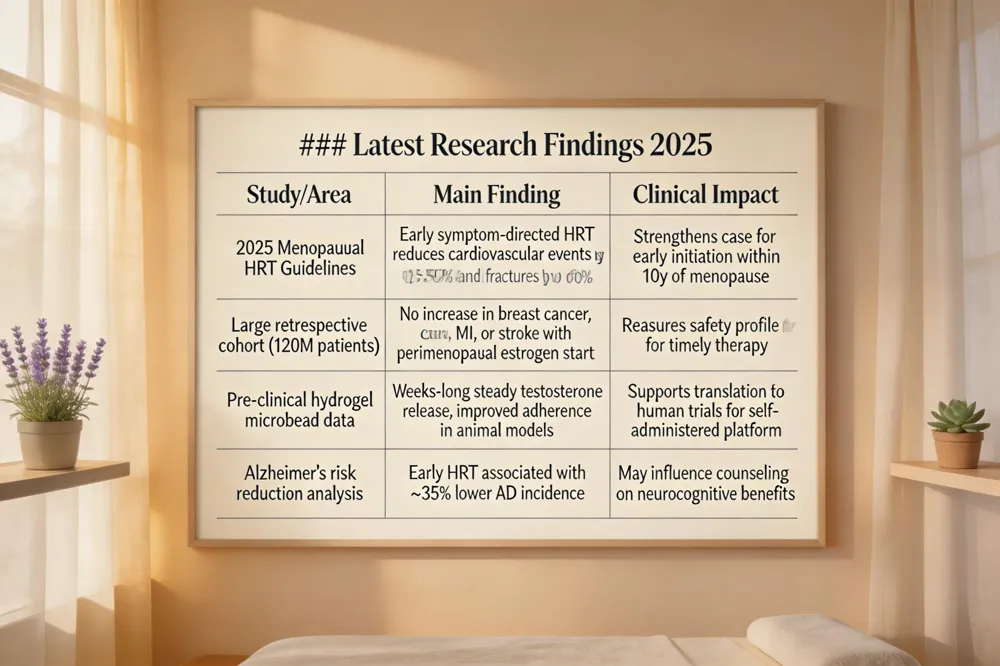 ClinLatest research on HRT 2025** – The 2025 Menopausal Hormone Therapy Guidelines and the FDA’s removal of broad black‑box warnings reflect a growing consensus that modern hormone therapy is safe when personalized. A large retrospective cohort of over 120 million patients showed women who began estrogen treatment in perimenopause did not have higher breast‑cancer, heart‑attack, or stroke rates than those who started later or never used HRT. Early, symptom‑directed therapy is linked to reduced fracture risk, potential cognitive protection, and improved quality of life.
Latest research on hormone replacement therapy – Initiating HRT within within ten years of menopause can cut vasomotor symptoms, lower fatal cardiovascular events by 25‑50 %, reduce bone fractures by up to 60 %, and decrease Alzheimer’s disease risk by about 35 %. Updated labeling emphasizes individualized dosing and monitoring, with only the endometrial‑cancer warning retained for systemic estrogen‑alone products.
Pre‑clinical data for hydrogel microbead testosterone delivery – Core Shell Spherification creates injectable hydrogel microbeads that release testosterone steadily over weeks, offering a self‑administered, extended‑release option that meets Ideal HRT criteria. Early studies suggest this platform could improve adherence and side‑effect profiles while being adaptable to other hormones like insulin.
Integrative and Functional Approaches to Hormone Health
Integrative and Functional Approaches to Hormone Health
| Lifestyle Pillar | Recommendation | Rationale |
|---|---|---|
| Resistance training | 2–3 sessions/week (compound lifts) | Acute testosterone spikes, preserves muscle mass |
| Sleep | 7–9 h uninterrupted nightly | Restores nocturnal testosterone surge |
| Stress management | Mindfulness, yoga, short daily walks | Lowers cortisol, protects HPG axis |
| Nutrition | Zinc‑rich foods, magnesium, healthy fats, vitamin D (30‑50 ng/mL) | Cofactors for steroidogenesis and receptor function |
| Supplement adjuncts | Ashwagandha, fenugreek, magnesium | Modest serum testosterone increase, mood support |
| Bioidentical testosterone (USP‑GMP) | Consider when lifestyle insufficient | Physiologic molecular structure, potentially lower side‑effects |
 A personalized, functional‑medicine lens helps men regain hormonal balance by first addressing the lifestyle pillars that naturally support testosterone production. Regular resistance‑training sessions (2–3 times per week) stimulate muscle fibers and trigger acute testosterone spikes, while adequate sleep (7–9 hours of uninterrupted rest) restores the nocturnal surge that peaks in the early morning. Chronic stress elevates cortisol, which can blunt the hypothalamic‑pituitary‑testicular axis; stress‑reduction techniques such as mindfulness, yoga, or short daily walks mitigate this effect. Nutrition plays an equal role: a diet rich in zinc‑dense foods (pumpkin seeds, legumes), magnesium (leafy greens, nuts), and healthy fats (avocado, olive oil) provides the cofactors needed for steroidogenesis. Vitamin D, especially in winter months, should be maintained at 30–50 ng/mL to support androgen receptor function. When lifestyle measures are insufficient, bioidentical testosterone—compounded under USP‑GMP standards to match endogenous molecular structure—offers a physiologic option with a potentially lower side‑effect profile than synthetic analogues. Adjunctive supplements such as ashwagandha, fenugreek, and magnesium have modest evidence for modestly raising serum testosterone and improving mood, making them useful additions to a comprehensive, patient‑centered hormone plan.
Future Directions: Expanding Delivery Platforms
Future Directions: Expanding Delivery Platforms
| Technology | Status | Expected Advantage |
|---|---|---|
| Hyaluronic‑acid hydrogel microbeads (CSS) | Pre‑clinical, moving to early‑phase human trials | Monthly self‑injection, stable release, adaptable to other peptides |
| Selective Androgen Receptor Modulators (SARMs) | Experimental, not FDA‑approved | Oral anabolic benefit with reduced androgenic side‑effects |
| Oral testosterone undecanoate | FDA‑approved (available) | Convenient oral dosing, avoids skin‑transfer risk |
| Nasal testosterone spray (e.g., Natesto) | FDA‑approved | Daily dosing, rapid absorption, minimal transfer |
| Core Shell Spherification manufacturing | Established scalable process | Oil‑free, cost‑effective production of injectable microspheres |
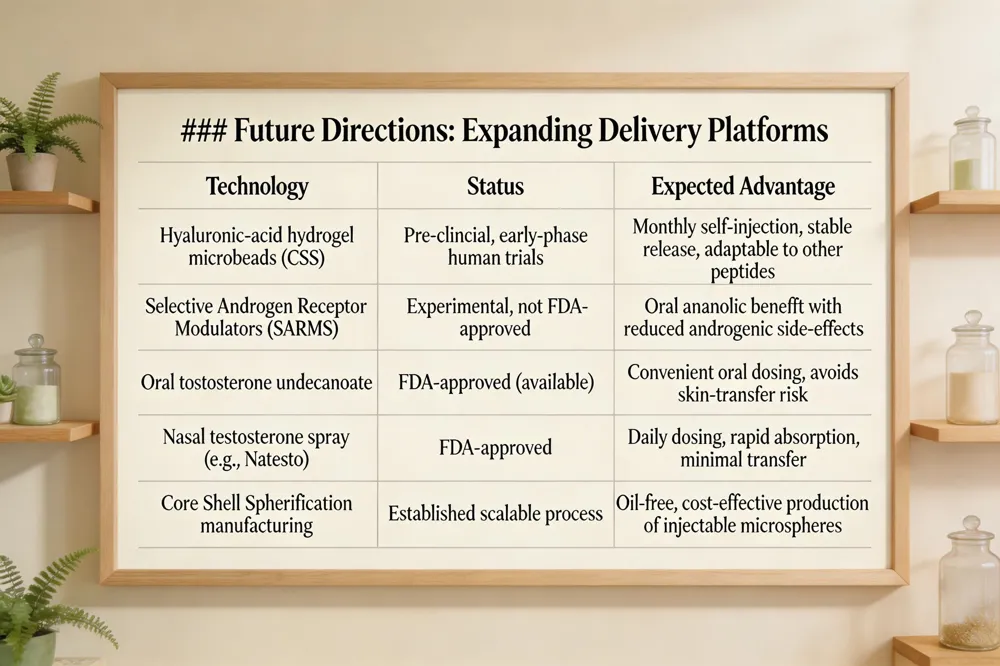 Emerging technologies promise to make hormone replacement more convenient, consistent, and personalized for patients. A leading innovation is the use of hyaluronic‑acid hydrogel microbeads that can be self‑administered subcutaneously once a month; pre‑clinical work shows these beads can release testosterone steadily for weeks and the same platform is being adapted for insulin and other peptide hormones, potentially simplifying diabetes management. At the same time, selective androgen receptor modulators (SARMs) are under investigation as oral agents that may provide anabolic benefits with fewer androgenic side‑effects, though they remain experimental and are not yet FDA‑approved. Newer testosterone formulations such as oral testosterone undecanoate and daily nasal sprays (e.g., Natesto) are already on the market, offering more physiological dosing patterns and reduced skin‑transfer risk compared with gels. The manufacturing breakthrough of Core Shell Spherification (CSS) enables scalable, oil‑free production of injectable hydrogel microspheres, addressing previous cost and consistency barriers. Together, these advances aim to meet the ideal HRT goals of self‑administration, extended release, stable hormone levels, and minimal side‑effects, supporting a more natural, personalized approach to men’s health.
Patient Journey and Practical Considerations
Patient Journey and Practical Considerations
| Step | Action | Frequency/Notes |
|---|---|---|
| 1. Symptom assessment | ADAM questionnaire (men) or menopausal checklist (women) | At initial visit |
| 2. Laboratory confirmation | Two early‑morning testosterone (or estradiol) levels + baseline PSA, hematocrit, lipids, LFTs, SHBG | Prior to therapy start |
| 3. Initiation | Choose formulation (gel, injection, pellet, bioidentical) based on preference, | |
| 5. Ongoing monitoring | Testosterone, PSA every 3–6 months; hematocrit & lipids at 3 months then semi‑annually; annual prostate exam | Ensures safety and efficacy |
| 6. Telemedicine integration | Virtual visits, e‑prescriptions, remote lab orders | Improves access, often reimbursed |
| 7. Cost & insurance | Review formulary, prior‑authorisation for compounded meds; consider out‑of‑pocket for pellets | Discuss with patient before prescribing |
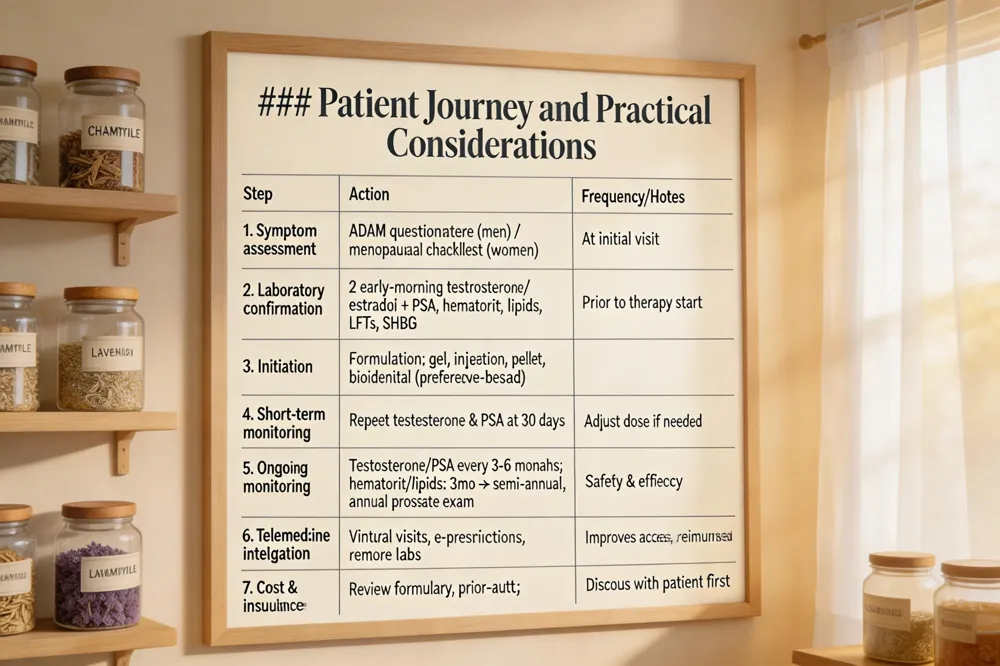 A patient‑centered start to testosterone replacement begins with a thorough symptom assessment, often guided by the ADAM questionnaire, which captures libido, energy, mood, and muscle changes. If the screen is positive, clinicians confirm low testosterone with at least two early‑morning serum tests and add baseline labs—PSA, hematocrit, lipid panel, liver function, and SHBG—to rule out competing conditions.
Once therapy is initiated, a structured monitoring schedule is essential: repeat testosterone and PSA at 30 days, then every 3–6 months; hematocrit and lipid profile at 3 months and semiannually thereafter; and annual prostate exams.
Telemedicine platforms now enable virtual visits, prescription e‑signatures, and remote lab ordering, with most U.S. insurers reimbursing these services for hormone therapy.
Cost varies by formulation—monthly gels ($175–$550), quarterly injections ($100–$1,500 per dose), or pellet implants ($150–$175 plus placement). Many insurers cover FDA‑approved products, while compounded bioidentical options may require out‑of‑pocket payment or prior‑authorisation formulary checks.
Take‑Away Messages
Modern delivery systems such as hyaluronic‑acid hydrogel microbeads, long‑acting injectable esters, and subcutaneous injections give patients the convenience of administration while producing steadier serum hormone levels than daily gels or oral tablets. Recent regulatory actions—including the FDA’s removal of boxed warnings on menopausal estrogen products and updated labeling for testosterone—reflect stronger safety data for therapies started within the first decade after menopause or early in hypogonadism, encouraging clinicians to consider earlier initiation when appropriate. Current guidelines stress individualized dosing based on symptoms and laboratory values, with follow‑up of testosterone, PSA, hematocrit, lipids and bone density. Complementary lifestyle interventions—resistance training, adequate sleep, nutrition, stress reduction and correction of micronutrient deficiencies—can amplify benefits, improve wellness and may allow hormone doses.