Welcome to Integrative Menopause Care
Integrative menopause care blends conventional evaluation with evidence‑based nutrition, botanical therapy, and mind‑body techniques to address the full spectrum of symptoms women experience during the transition. Phytoestrogens such as soy isoflavones, red clover, and flaxseed lignans bind weakly to estrogen receptors and have modestly reduced vasomotor episodes, bone loss, and mood swings in many trials, especially when gut microbiota can convert them to active metabolites. Mindfulness‑Based Stress Reduction (MBSR) lowers cortisol, improves sleep, and eases anxiety, supporting the body’s hormonal balance. Harmony Care offers personalized counseling, high‑quality phytoestrogen products, guided MBSR sessions, and ongoing monitoring for drug‑herb interactions, empowering each woman to choose a safe, natural pathway toward lasting well‑being.
Understanding Phytoestrogens and Their Impact on Women
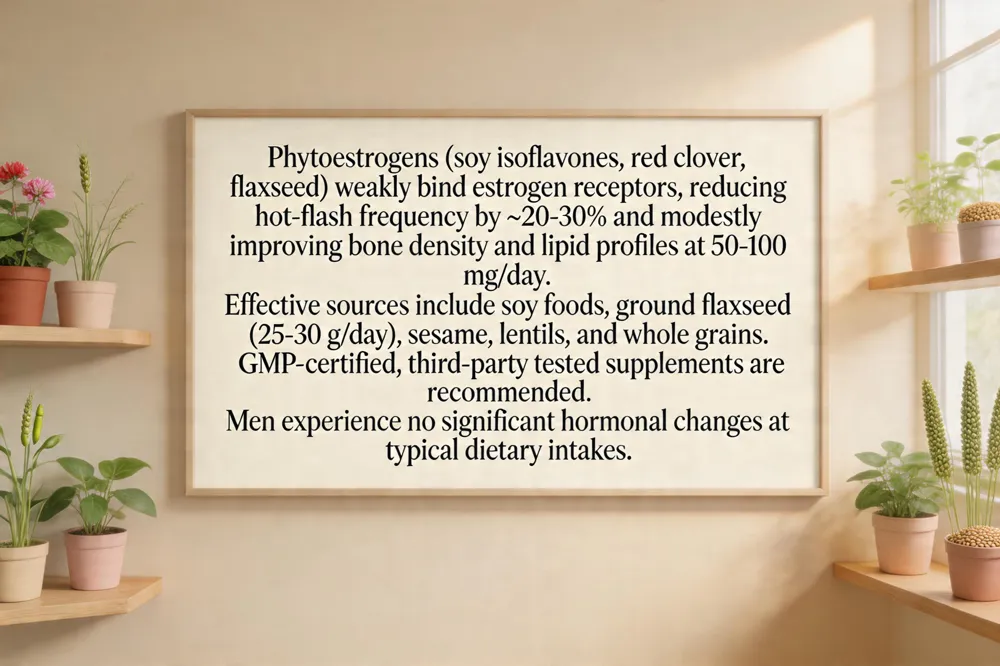 Phytoestrogen effects on women
Phytoestrogens are plant‑derived compounds that weakly bind estrogen receptors, offering modest estrogenic activity that can lessen vasomotor symptoms, modestly improve bone mineral density, and favorably influence lipid profiles. Clinical trials report reductions in hot‑flash frequency (≈20‑30%) and improvements in quality‑of‑life when women consume 50‑100 mg of isoflavones daily, though individual response varies with gut microbiota and equol‑producing capacity.
Best phytoestrogen supplements
Standardized extracts of soy isoflavones, red clover (≈80 mg isoflavones), and ground flaxseed (25‑30 g/day) are the most studied. Choose GMP‑certified, non‑GMO products with third‑party testing for purity. Some formulations blend soy, red clover, and flaxseed to target multiple pathways.
What does phytoestrogen per day for menopause?
A daily intake of 50‑100 mg isoflavones (e.g., 1–2 servings of soy foods or a 40‑60 mg soy supplement) is generally effective. Begin at the lower end, spread doses across meals, and monitor for gastrointestinal discomfort.
Phytoestrogen supplements for menopause
Evidence supports modest relief of hot flashes, night sweats, and mood swings with 40‑80 mg of red clover isoflavones or 1‑2 g ground flaxseed. Supplements should be used under professional guidance, especially in women with estrogen‑sensitive conditions or on anticoagulants.
Phytoestrogens foods list
Rich sources include soy products (tofu, tempeh, soy milk), flaxseeds, sesame seeds, lentils, chickpeas, beans, whole‑grain rye, oats, and barley, as well as berries, apricots, and peanuts.
Phytoestrogens effects on men
Large meta‑analyses show no significant changes in testosterone, estradiol, or SHBG with typical soy consumption, indicating safety for men at dietary levels. Moderate soy intake can be part of a balanced diet without hormonal disruption.
Mindfulness as a Therapeutic Tool for Menopause
 Mindfulness‑Based Stress Reduction (MBSR) programs combine meditation, gentle yoga, and body‑scan techniques to cultivate present‑moment awareness. Clinical trials consistently show that an 8‑week MBSR course lowers perceived stress, improves sleep quality, and reduces anxiety and depressive symptoms in menopausal women; insomnia severity scores drop by an average of five points, and hot‑flash intensity may fall by roughly 15 %.
The three C’s of mindfulness – curiosity, compassion, and calm – form the practice’s core. Curiosity invites open, non‑judgmental attention to sensations; compassion brings kindness toward oneself and others; calm creates a stable inner centre that dampens stress‑induced cortisol spikes.
Impact on sleep, stress, mood, and hot‑flash perception: By reducing cortisol and activating the parasympathetic nervous system, mindfulness enhances sleep onset, deepens restorative sleep, and mitigates mood swings. Even when hot‑flash frequency remains unchanged, the perceived bothersomeness often declines because women learn to observe symptoms without reactivity.
Synergy with Phytoestrogens intake: Phytoestrogens such as soy isoflavones and flaxseed lignans modestly address vasomotor symptoms, while mindfulness tackles the psychological triggers that amplify them. When combined, the physiological effect of weak estrogenic compounds and the stress‑reduction benefits of mindfulness produce a dual‑mechanism approach that improves overall quality of life.
Frequently asked questions
- What are the 3 C's of mindfulness? Curiosity, compassion, and calm – qualities that together foster open, kind, and stable awareness.
- Mindfulness‑based interventions and menopause: MBSR lowers stress, improves sleep, and modestly reduces hot‑flash intensity, enhancing well‑being.
- Can phytoestrogens cause breast growth? No credible evidence supports noticeable breast enlargement from phytoestrogen intake.
- What is the 3‑day menopause reset? A short‑term nutrition plan focusing on three balanced meals, steady blood‑sugar, and low‑glycemic carbs to stabilize energy and mood.
- Creatine for menopause brain fog: Supplementing 3–5 g daily may replenish cellular energy, supporting cognition and mood during estrogen decline.
Integrative Care Models: Combining Nutrition, Mind‑Body, and Functional Medicine
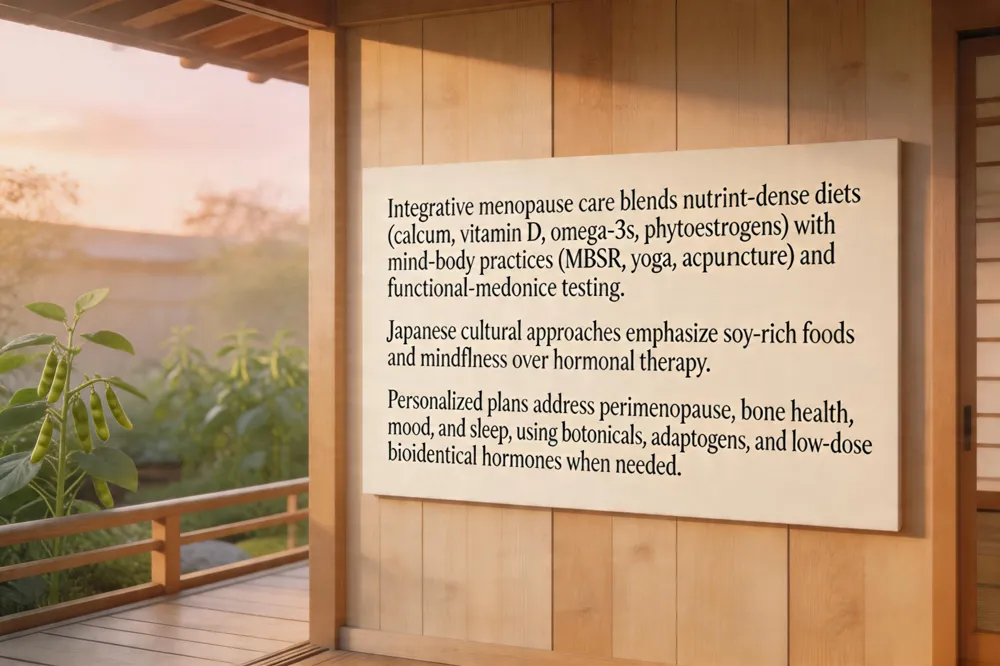 Menopause integrative medicine
Integrative medicine treats menopause as a whole‑person transition, blending conventional care with evidence‑based lifestyle, mind‑body, and botanical strategies. A nutrient‑dense diet rich in calcium, vitamin D, omega‑3s and phytoestrogens (soy, flaxseed, red clover) supports bone health and can modestly lessen vasomotor symptoms. Mindfulness‑Based Stress Reduction (MBSR) combines meditation, yoga, and body awareness to cultivate present‑moment focus and acceptance. Acupuncture and individualized herbal formulas further balance hormonal fluctuations and reduce night sweats. Personalizing nutrition, supplements and stress‑reduction techniques helps women navigate perimenopause and post‑menopause with greater comfort and vitality.
What do Japanese do for menopause?
Japanese women typically experience fewer hot flashes, partly due to a diet rich in soy isoflavones that act as mild estrogen. Culturally, menopause is viewed as a natural life stage rather than a medical problem, encouraging non‑pharmacologic solutions. Traditional Kampo herbal formulas, regular walking, mindfulness meditation and balanced meals (including fermented soy) are common. When symptoms arise, they favor dietary adjustments, acupuncture and mind‑body therapies over hormone replacement therapy.
At what age does the change of life occur?
The “change of life,” or menopause, usually begins between ages 45 and 55, with the average age around 51 years. Perimenopause may start several years earlier, with irregular cycles and early symptoms lasting 4‑8 years before the final menstrual period. Menopause is diagnosed after 12 consecutive months without m.
Perimenopause management
Management blends symptom relief with support for the body’s natural transition. Anti‑inflammatory, phyto‑estrogen‑rich foods (flaxseed, soy, cruciferous vegetables) together with calcium, vitamin D and omega‑3s stabilize hormone fluctuations and bone health. Mind‑body practices—gentle exercise, yoga, meditation, adequate sleep— reduce mood swings, anxiety and insomnia. Targeted botanicals (black cohosh, red clover, adaptogens such as aswagandha) may ease vasomotor symptoms under professional guidance. When needed, low‑dose bioidentical hormone therapy or non‑hormonal medications are considered as part of an individualized, patient‑centered plan.
Current Clinical Options and Emerging Therapies
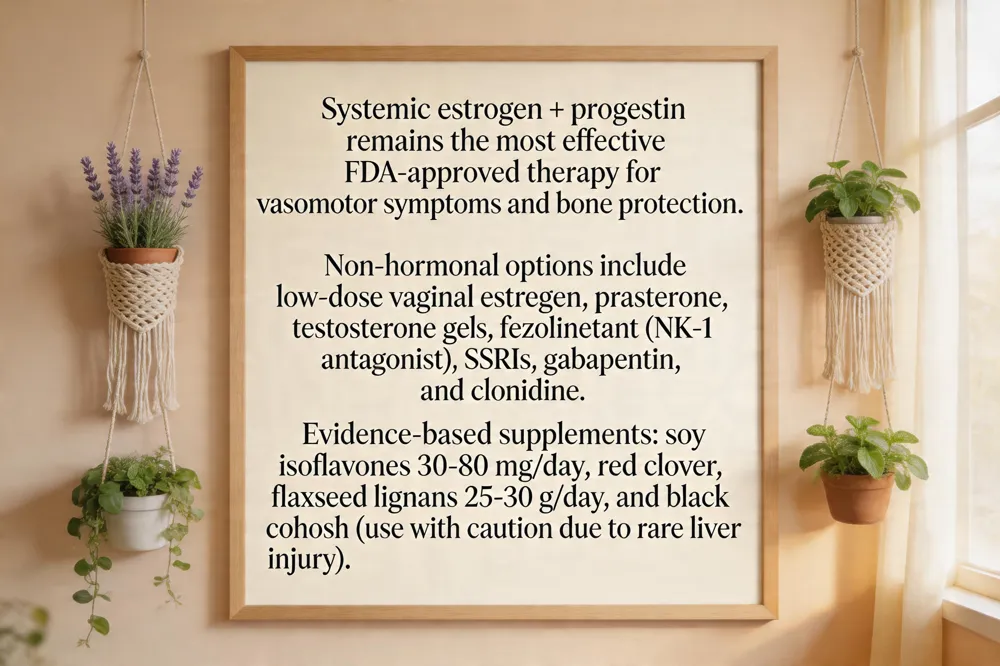 Latest menopause treatments
Systemic estrogen (often combined with progestin) remains the most effective FDA‑approved therapy for vasomotor symptoms and bone protection. Low‑dose vaginal estrogen, prasterone (Intrarosa) and testosterone gels target vaginal dryness and low libido. Non‑hormonal agents such as the neurokinin‑1 antagonist fezolinetant (Veozah), SSRIs, gabapentin and clonidine are also FDA‑approved for hot‑flash reduction and sleep improvement.
Evidence‑based supplements for menopause
Phytoestrogens—soy isoflavones (30‑80 mg/day), red clover extracts, and flaxseed lignans (25‑30 g/day)—show modest reductions in flash‑flash frequency and night‑sweat intensity. Black cohosh is generally safe and may ease vasomotor symptoms, but liver‑injury reports warrant caution. High‑dose isolated isoflavone supplements (>100 mg) should be used under professional guidance.
Black cohosh
Derived from Actaea racemosa, Black cohosh contains triterpene glycosides that may modulate estrogen pathways. Clinical reviews note modest relief of hot flashes, yet evidence for mood or sleep benefits is limited. Rare severe liver injury and product variability mean women with estrogen‑sensitive cancers or on anticoagulants should consult a clinician first.
Alternative therapies for menopause
Mind‑body practices—MBSR, yoga, tai‑chi, hypnosis, CBT—consistently lower perceived stress, improve mood, and enhance sleep quality, though they rarely change hot‑flash frequency directly. Combining Phytoestrogens‑rich foods with daily mindfulness (10‑20 min) offers a dual‑mechanism, integrative approach that addresses hormonal fluctuations and stress‑related triggers.
Practical resources and patient tools
Validated PDFs such as the Johns Hopkins Menopause Toolkit (2022) and the Canadian Menopause Society Pocket Guide provide evidence‑based guidance on hormone and non‑hormonal options, lifestyle changes, and shared decision‑making tools. Clinicians should discuss these resources to empower women in personalized, safe symptom management.
Putting It All Together at Harmony Care
At Harmony Care we craft personalized integrative plans that blend phytoestrogen‑rich nutrition with Mind‑based stress reduction, exercise, and bone‑supporting supplements, tailoring each component to a woman’s hormonal profile, gut microbiome, and symptom priorities. Women should seek professional guidance whenever they experience severe vasomotor episodes, persistent mood changes, or have a history of estrogen‑sensitive conditions, as clinicians can monitor thyroid function, medication interactions, and ensure safe dosing. By providing clear evidence summaries—showing modest hot‑flash reductions from soy or flaxseed and stress‑lowering benefits of MBSR—we empower women to make low‑risk choices that align with their values and health goals and long‑term wellness.