Why Ayurveda Matters for Women Today
Ayurveda treats the body as an interconnected system where physical, mental, and emotional health influence each other, making it a natural fit for women’s life‑stage challenges. Central to this view are the three doshas—Vata, Pitta, and Kapha—each governing aspects of hormonal regulation; imbalances manifest as irregular cycles, PCOS, menopausal symptoms, or mood swings. Recent clinical studies support several Ayurvedic herbs for women: Shatavari boosts lactation and follicular growth, cardamom reduces androgen levels and inflammation in PCOS, curcumin (turmeric) improves insulin resistance and endometriosis markers, while Ashwagandha lowers cortisol and eases climacteric symptoms. When combined with functional‑medicine testing, personalized nutrition, and naturopathic counseling, these botanicals create a tailored, evidence‑based regimen that complements conventional care, offering women a holistic, low‑toxicity option for hormonal balance and overall wellness.
Ayurvedic Herbs that Support Hormonal Harmony
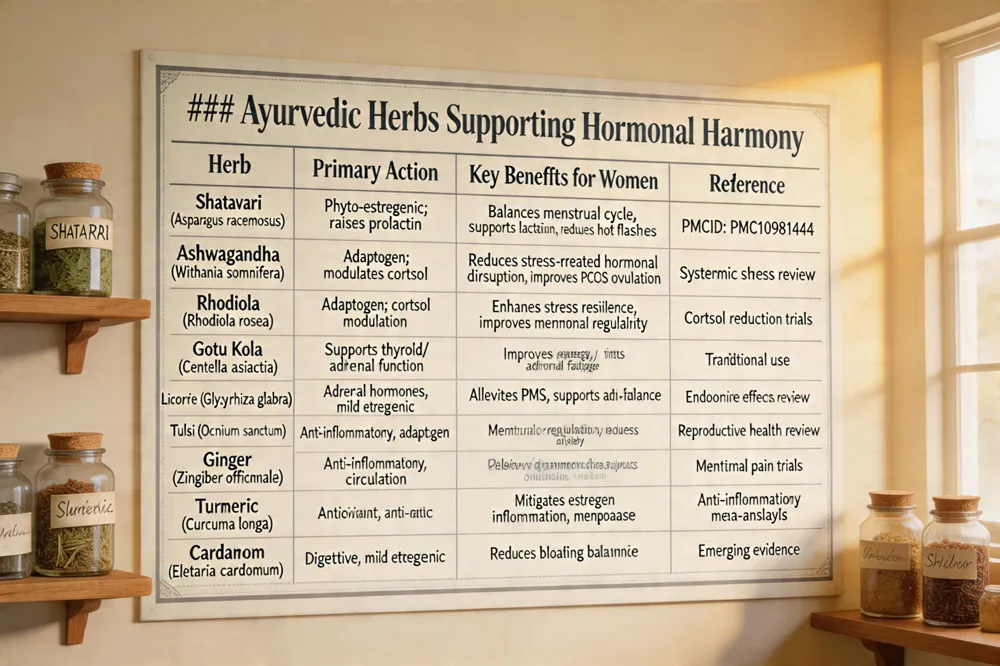
Ayurvedic Herbs Supporting Hormonal Harmony
| Herb | Primary Hormonal/Physiological Action | Key Benefits for Women | Representative Study/Reference |
|---|---|---|---|
| Shatavari (Asparagus racemosus) | Phyto‑estrogenic; raises prolactin | Balances menstrual cycle, supports lactation, reduces menopausal hot flashes | RCT showing follicular growth comparable to clomiphene citrate (PMCID: PMC10981444) |
| Ashwagandha (Withania somnifera) | Adaptogen; modulates cortisol | Reduces stress‑related hormonal disruption, improves ovulation in PCOS | Systematic review of stress‑reduction effects |
| Rhodiola (Rhodiola rosea) | Adaptogen; cortisol modulation | Enhances resilience to stress, may improve menstrual regularity | Small trials on cortisol reduction |
| Gotu Kola (Centella asiatica) | Supports thyroid & adrenal function | Improves energy, mitigates adrenal fatigue, supports menstrual health | Traditional use, limited clinical data |
| Licorice (Glycyrrhiza glabra) | Influences adrenal hormones, mild estrogenic effect | Alleviates PMS symptoms, supports adrenal balance | Review of endocrine effects |
| Tulsi (Ocimum sanctum) | Anti‑inflammatory, adaptogenic | Menstrual regulation, reduces anxiety, hormonal balance | review review of reproductive health |
| Ginger (Zingiber officinale) | Anti‑inflammatory, improves circulation | Relieves dysmenorrhea, supports ovulation | Clinical trials on menstrual pain |
| Turmeric (Curcuma longa) | Antioxidant, anti‑inflammatory | Mitigates estrogen‑dominant inflammation, supports menopause comfort | Meta‑analysis of anti‑inflammatory effects |
| Cardamom (Elettaria cardamomum) | Digestive aid, mild estrogenic | Supports digestion, reduces bloating, may aid hormonal balance | Traditional use, emerging evidence |
 Best Ayurvedic medicine for hormonal imbalance in females – Shatavari (Asparagus racemosus) is the cornerstone herb for women’s hormonal health. Its phyto‑estrogenic compounds raise prolactin for lactation and, in a small RCT, stimulate follicular growth comparable to clomiphene citrate. Complementary adaptogens such as Ashwagandha and Rhodiola modulate cortisol, while Gotu Kola and Licorice support thyroid and adrenal function. Tailored Panchakarma (Virechana for Pitta‑related estrogen excess or Vamana for Kapha‑linked PCOS) restores systemic harmony. What is one herb that every woman should take? – Shatavari, often called the “queen of herbs,” balances hormones, eases menstrual irregularities, supports lactation, and reduces menopausal hot flashes.
Ayurvedic herbal medicines a literature review of their applications in female reproductive health – – Recent reviews cite Tulsi, Ashwagandha, Ginger, Cardamom, Turmeric, and Shatavari for menstrual regulation, PCOS ovulation, fertility, and menopause relief. Mechanisms include hormonal modulation, anti‑inflammatory, and antioxidant effects, though larger trials are needed.
Ayurvedic diet for hormonal imbalance – Emphasize warm, cooked meals with healthy fats (ghee, sesame, coconut), seasonal produce, and spices like turmeric, cinnamon, cumin, and fennel to stabilize blood sugar and reduce inflammation. Avoid processed, cold, or heavy foods that aggravate Vata or Kapha; practice mindful eating to strengthen Agni.
Ayurveda, menstrual cycle moon – The 28‑day cycle mirrors lunar phases: new moon (Vata/Apana) for bleeding, waxing moon (Kapha) for follicular nourishment, full moon (Pitta) for ovulation heat, and waning moon (Kapha) for luteal grounding. Align rest, gentle movement, and meditation with these phases to support hormonal harmony.
Integrative Clinics and Naturopathic Practitioners for Women
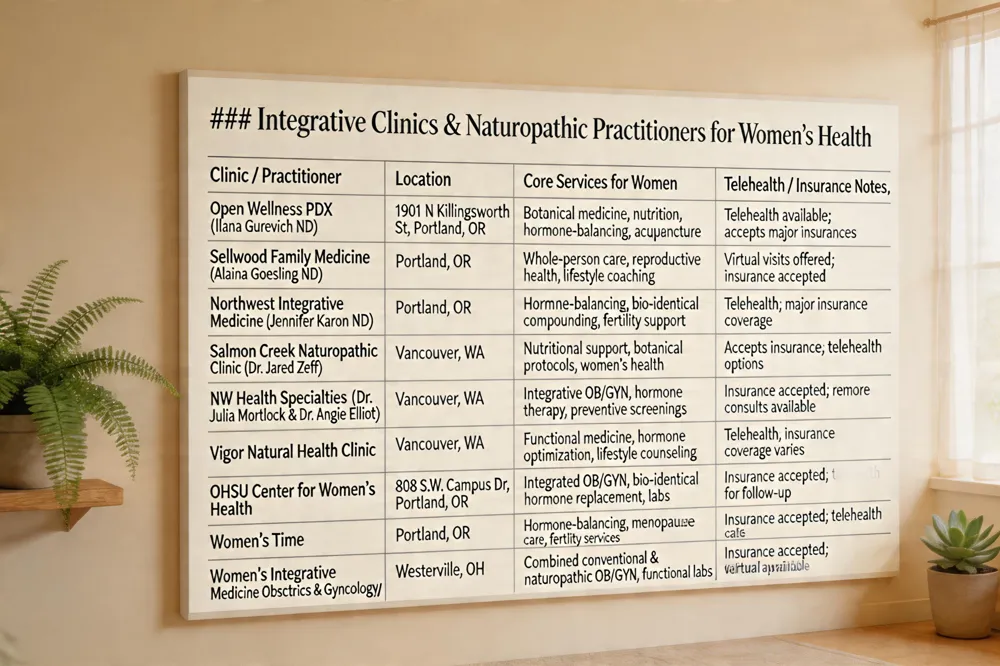
Integrative Clinics & Naturopathic Practitioners for Women’s Health
| Clinic / Practitioner | Location | Core Services for Women | Telehealth / Insurance Notes |
|---|---|---|---|
| Open Wellness PDX (Ilana Gurevich ND) | 1901 N Killingsworth St, Portland, OR | Botanical medicine, nutrition, hormone‑balancing, acupuncture | Telehealth available; accepts major insurances |
| Sellwood Family Medicine (Alaina Goesling ND) | Portland, OR | Whole‑person care, reproductive health, lifestyle coaching | Virtual visits offered; insurance accepted |
| Northwest Integrative Medicine (Jennifer Karon ND) | Portland, OR | Hormone‑balancing, bio‑identical compounding, fertility support | Telehealth; major insurance coverage |
| Salmon Creek Naturopathic Clinic (Dr. Jared Zeff) | Vancouver, WA | Nutritional support, botanical protocols, women's health | Accepts insurance; telehealth options |
| NW Health Specialties (Dr. Julia Mortlock & Dr. Angie Elliot) | Vancouver, WA | Integrative OB/GYN, hormone therapy, preventive screenings | Insurance accepted; remote consults available |
| Vigor Natural Health Clinic | Vancouver, WA | Functional medicine, hormone optimization, lifestyle counseling | Telehealth; insurance coverage varies |
| OHSU Center for Women’s Health | 808 S.W. Campus Dr, Portland, OR | Integrated OB/GYN, bio‑identical hormone replacement, labs | Insurance accepted; telehealth for follow‑up |
| Women’s Time | Portland, OR | Hormone‑balancing, menopause care, fertility services | Insurance accepted; virtual appointments |
| Women’s Integrative Medicine Obstetrics & Gynecology | Westerville, OH | Combined conventional & naturopathic OB/GYN, functional labs | Insurance accepted; telehealth available |
 Portland and Vancouver, WA Naturopathic Doctors
Portland hosts a thriving community of NDs who blend nutrition, botanical medicine, acupuncture and advanced therapies. Clinics such as Open Wellness PDX, Sellwood Family Medicine, and Northwest Integrative Medicine feature providers like Ilana Gurevich ND, Alaina Goesling ND, and Jennifer Karon ND, many focusing on women’s health, hormonal balance and reproductive wellness. Services include in‑person visits at 1901 N Killingsworth St and virtual appointments, with many accepting major insurances. Vancouver, WA offers several experienced ND practitioners: Dr. Jared Zeff (Salmon Creek Naturopathic Clinic), Dr. Julia Mortlock and Dr. Angie Elliot (NW Health Specialties), and Vigor Natural Health Clinic, all emphasizing whole‑person care for women.
Portland and Vancouver, WA Naturopathic Doctors
Portland hosts a thriving community of NDs who blend nutrition, botanical medicine, acupuncture and advanced therapies. Clinics such as Open Wellness PDX, Sellwood Family Medicine, and Northwest Integrative Medicine feature providers like Ilana Gurevich ND, Alaina Goesling ND, and Jennifer Karon ND, many focusing on women’s health, hormonal balance and reproductive wellness. Services include in‑person visits at 1901 N Killingsworth St and virtual appointments, with many accepting major insurances. Vancouver, WA offers several experienced ND practitioners: Dr. Jared Zeff (Salmon Creek Naturopathic Clinic), Dr. Julia Mortlock and Dr. Angie Elliot (NW Health Specialties), and Vigor Natural Health Clinic, all emphasizing whole‑person care for women.
Integrative OB/GYN Services Integrated women’s health clinics routinely combine conventional OB/GYN care with naturopathic, nutrition and lifestyle therapies. The OHSU Center for Women’s Health (808 S.W. Campus Drive) and Women’s Time in Portland provide hormone‑balancing, bio‑identical compounding and personalized counseling. Similar models exist at Women’s Integrative Medicine Obstetrics and Gynecology in Westerville, Ohio, and functional‑medicine programs in Columbus.
Pap‑Smear Availability Yes—integrated clinics include Pap‑smear screening as part of preventive well‑woman visits, offering same‑day counseling and follow‑up if needed.
Insurance Coverage & Telehealth Most practices accept major insurances and offer telehealth options, making personalized, evidence‑based care accessible regardless of location.
Ayurvedic Products, Clinics and Patient Experiences
Ayurvedic Products, Clinics & Patient Experiences
| Product / Clinic | Description & Typical Use | Patient Feedback Highlights |
|---|---|---|
| Divya Raj Pravartini Vati (Patanjali) | Blend of asafoetida, shuddh hing, baans root, gajar beej; 1 tablet BID with lukewarm water starting a week before period | Patients report more regular cycles and reduced dysmenorrhea |
| Women’s Wellness Center of Tampa | OB‑GYN, menopause, fertility, mammography, aesthetic services; integrates functional medicine | 5‑star ratings for caring staff, personalized care, rapid appointments |
| BHRT & IV Therapy (offered at the Tampa clinic) | Bio‑identical hormone replacement, intravenous nutrient infusions | Reported improvements in energy, mood, overall well‑being |
| Patient Review Summary | Across clinics, patients note improved energy, mood, menstrual regularity, and supportive environment | Consistent praise for holistic approach and accessibility |
| Ayurveda for Women (Book) | Recipes balancing doshas: warm spiced oat porridge (Vata), cucumber‑mint raita (Pitta), lentil‑sweet‑potato stew (Kapha) | Readers find meals easy to prepare and helpful for hormonal stability |
 Patanjali Ayurvedic medicine for irregular periods – Divya Raj Pravartini Vati blends asafoetida, shuddh hing, baans root and gajar beej to balance uterine function. Typical dose: one tablet twice daily with lukewarm water, started a week before the period, under guidance.
Women’s Wellness Center of Tampa – Located at 2010 E Fletcher Ave, it offers OB‑GYN care, menopause support, fertility services, mammography and aesthetic wellness, integrating conventional and functional‑medicine approaches with a patient portal and scheduling.
Patient reviews – The clinic consistently receives five‑star ratings for caring doctors, personalized holistic care (BHRT, IV therapy, weight‑loss programs), quick appointments and a supportive environment. Many report improved energy, mood and overall well‑being.
Ayurveda for Women: The power of food as medicine – This book offers recipes that balance the three doshas: warm spiced oat porridge for Vata, cooling cucumber‑mint raita for Pitta, and grounding lentil‑sweet‑potato stew for Kapha, each with healing spices and cooking tips.
Holistic Foundations: Pillars, Needs and Lifestyle Practices
Holistic Foundations: Pillars, Needs & Lifestyle Practices
| Pillar of Health | Key Practices & Benefits |
|---|---|
| Physical Activity | Daily movement, yoga, strength training; improves circulation & hormone metabolism |
| Nutrition | Warm cooked meals, healthy fats (ghee, sesame, coconut), spices (turmeric, cinnamon, cumin, fennel) |
| Sleep | Consistent sleep‑wake schedule, bedtime routine, Abhyanga (oil massage) before sleep |
| Hydration | Warm water, herbal teas; supports Agni and detoxification |
| Stress Management | Pranayama, meditation, guided breathing, yoga; lowers cortisol |
| Social Connection | Community groups, supportive relationships; enhances emotional resilience |
| Mental Health | Mindfulness, counseling, journaling; supports hormonal balance through CNS regulation |
| Holistic Need | Description |
|---|---|
| Physical | Body’s structural health, mobility, strength |
| Social | Relationships, community support, belonging |
| Occupational | Meaningful work, work‑life balance |
| Emotional | Ability to process feelings, emotional regulation |
| Intellectual | Lifelong learning, mental stimulation |
| Environmental | Safe living spaces, exposure to nature |
| Spiritual | Purpose, connection to something larger, practices of gratitude |
 Ayurveda and modern integrative women’s wellness share a common framework of seven pillars of health—physical activity, nutrition, sleep, hydration, stress management, social connection, and mental health and seven holistic needs that span physical, social, occupational, emotional, intellectual, environmental, and spiritual domains.
Daily routines (Dinacharya) & seasonal living (Ritucharya) Warm, cooked meals, regular sleep‑wake times, oil‑massage (Abhyanga), and seasonal food adjustments keep Agni (digestive fire) strong and doshas balanced, supporting menstrual regularity and hormonal harmony.
Mind‑body techniques for stress & sleep Yoga, pranayama, meditation, and guided breathing lower cortisol, improve sleep quality, and reduce PMS or menopausal anxiety.
Integrative women’s wellness models Clinics such as Women‑Hormonal Health & Wellness (Broken Arrow, OK), Ascension Medical Group’s St. John Women’s Health (Bartlesville), and Creative Wellness provide whole‑person care that blends functional‑medicine labs, hormone therapy, Ayurvedic herbs (e.g., Shatavari, Ashwagandha), nutrition counseling, and lifestyle coaching.
FAQs
- What are the 7 types of holistic needs? Physical, social, occupational, emotional, intellectual, environmental, and spiritual.
- What are the 7 pillars of holistic health? Physical activity, nutrition, sleep, hydration, stress management, social connection, and mental health.
- Holistic women’s health near me? Options include Women‑Hormonal Health & Wellness (Broken Arrow, OK); Ascension Medical Group’s St. John Women’s Health (Bartlesville); Creative Wellness’s membership‑based integrative model.
- Women’s Health and Wellness Encompasses physical, emotional, and hormonal well‑being from adolescence through menopause, using functional medicine, naturopathic therapies, personalized nutrition, stress‑management, and targeted screening.
- Holistic Women’s Wellness A 360‑degree view that combines functional medicine, naturopathic principles, therapeutic massage, yoga, meditation, and nutrition planning to address root causes of chronic symptoms, hormonal imbalances, and stress.
Putting It All Together: A Path Forward for Women
Personalized Ayurvedic care begins with a Prakriti assessment that reveals each woman’s dosha pattern, guiding diet, daily routine (Dinacharya) and seasonal adjustments (Ritucharya). By aligning meals, spices such as ginger, turmeric and cardamom, and mindful movement with the menstrual phases, women can stabilize Agni, reduce inflammation and support hormonal harmony. Integrative clinics blend these principles with conventional screenings, laboratory testing and evidence‑based supplements. Herbs such as Shatavari, Ashwagandha, turmeric and cardamom have shown in small trials to increase prolactin, lower androgen levels, improve insulin sensitivity and ease menopausal symptoms, while lifestyle practices—yoga, pranayama, adequate sleep—lower cortisol and improve mood. Empowerment comes from education: clear guidance on safe dosing, drug interactions and the importance of regular follow‑up ensures women make informed choices and sustain lasting wellness through continuous learning and supportive community networks.