Introduction
Hormonal health is the foundation of a woman's energy, mood, menstrual regularity, fertility and overall well‑being. Imbalances often arise from multiple, interrelated factors—diet quality, stress, sleep, body weight, gut microbes, and exposure to endocrine disruptors. A holistic approach recognises that no single food or supplement can "fix" hormones; instead, it blends personalized nutrition, movement, stress‑management, and restorative sleep to create a supportive environment for the endocrine system. Integrative nutrition emphasizes whole, unprocessed foods rich in high‑quality protein, fiber, omega‑3 fats, and phyto‑nutrients, while limiting added sugars, refined carbs, and hormone‑disrupting chemicals. By addressing the body as a whole, women can naturally nurture balanced estrogen, progesterone, cortisol, insulin, and thyroid signaling.
Fundamentals of a Hormone‑Balancing Diet
 A hormone‑balancing diet for women centers on whole, unprocessed foods that supply the vitamins, minerals, and phyto‑nutrients needed for estrogen, progesterone, cortisol, and thyroid health. Include a variety of cruciferous vegetables (broccoli, kale, Brussels sprouts) and leafy greens to support liver‑mediated estrogen detoxification, and pair them with high‑fiber carbs (legumes, whole grains, fruits) to stabilize blood sugar and feed a diverse gut microbiome. Aim for 25–30 g of high‑quality protein at each meal—eggs, lean poultry, fish, lentils, quinoa—to provide amino acids for peptide‑hormone synthesis. Healthy fats from avocados, olive oil, nuts, seeds, and fatty fish supply omega‑3s that reduce inflammation and serve as building blocks for steroid hormones. Micronutrients such as zinc, magnesium, vitamin B6, vitamin D, selenium, and iodine are essential cofactors for ovarian, adrenal, and thyroid function. Hydrate well, limit added sugars, trans‑fat‑laden processed foods, and endocrine‑disrupting chemicals, and complement nutrition with regular moderate exercise, stress‑reduction practices, and 7‑9 hours of restorative sleep for holistic hormone harmony.
Gut Health, Fiber, and Detoxification
 Natural remedies for hormonal imbalance in females focus on whole‑food nutrition , stress reduction and sleep. Leafy greens, cruciferous veg, fruit, avocado, nuts, seeds, and fatty fish supply magnesium, vitamin D, omega‑3s and phytoestrogens that improve insulin sensitivity and estrogen metabolism. Herbal teas such as chamomile and red clover help lower cortisol.
Balancing female reproductive hormones naturally starts with 25‑30 g protein per meal, fats, a weight and moderate exercise to keep insulin and cortisol stable. Probiotic‑rich fermented foods and prebiotic fibers nurture a diverse gut microbiome for estrogen detoxification.
Low progesterone is aided by zinc‑rich pumpkin seeds, magnesium‑dense leafy greens, vitamin B6‑rich turkey, vitamin C‑rich and omega‑3 fats from salmon or flaxseed. Herbs such as chasteberry and red raspberry leaf may boost luteal‑phase progesterone.
To stabilize estrogen, prioritize cruciferous veg, whole grains and fatty fish. Vitamin C‑rich berries aid insulin control and reduce oxidative stress.
Estrogen‑rich foods to avoid include highly processed soy, conventional dairy with added hormones, processed meats, excess alcohol and refined sugars, which can disrupt estrogen metabolism and increase endocrine disruptors.
Lifestyle Pillars: Sleep, Stress, and Movement
 Good sleep hygiene—7‑9 hours of uninterrupted, cool, dark rest—stabilizes insulin, cortisol, melatonin and growth hormone, all of which govern menstrual regularity. Pair bedtime with a screen‑free wind‑down, a consistent schedule, and adequate magnesium‑rich foods (spinach, nuts) to support relaxation.
Stress‑reduction techniques such as daily mindfulness meditation, gentle yoga, deep‑breathing or nature walks lower chronic cortisol, which otherwise suppresses progesterone and disrupts the hypothalamic‑pituitary‑adrenal axis. Incorporate adaptogens like ashwagandha or chasteberry (Vitex) after consulting a clinician.
Regular moderate activity—brisk walking, strength training, or cycling—improves insulin sensitivity, reduces circulating insulin, and keeps body weight in the healthy range, preventing excess aromatase‑driven estrogen conversion. Exercise also boosts luteinizing hormone signaling, supporting progesterone synthesis.
Cortisol management ties these pillars together: balanced meals with 25‑30 g protein, fiber and healthy omega‑3 fats, plus hydration, blunt the stress‑hormone surge and promote overall hormone harmony.
Key Nutrients and Supplements for Progesterone
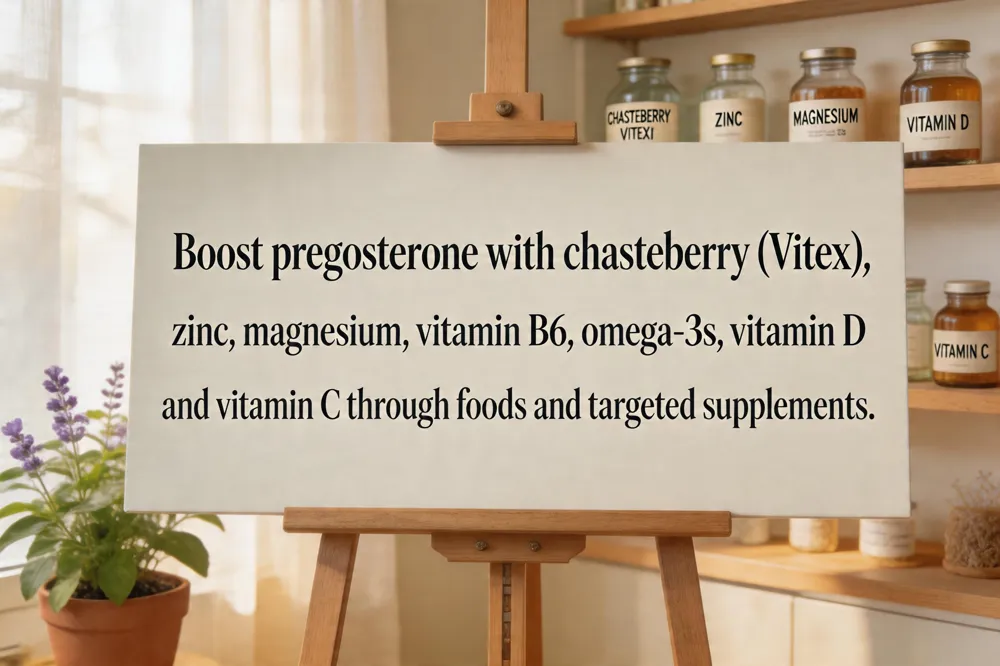 Supplements to increase progesterone naturally
Chasteberry (Vitex agnus‑castus) is the most studied herb for supporting luteal‑phase progesterone; it helps balance LH surge and promote ovarian synthesis. Minerals include zinc (pumpkin seeds, oysters) and magnesium (spinach, nuts, dark chocolate), cofactors for the enzymes that convert cholesterol into progesterone. Vitamin B6 (sunflower seeds, fish, bananas) supports enzymatic pathways and reduces estrogen dominance. Omega‑3 fatty acids from salmon, flaxseed, or algae lower inflammation and improve luteal function. Vitamin D (fish, fortified foods) enhances insulin sensitivity and supports steroid hormone production, while Vitamin C (citrus, bell peppers) protects adrenal glands and aids cortisol regulation.
How to increase progesterone to get pregnant
Track ovulation, eat a diet rich in the nutrients above, maintain a healthy weight, get 7‑9 hours sleep, manage stress with yoga or meditation, and consider chasteberry under professional guidance.
Best female hormone‑balance supplements
A omega‑3 fish oil, magnesium glycinate, vitamin D3, a B‑complex (especially B6), and Vitex are choices; choose tested products and pair them with whole‑food meals, movement, and adequate hydration.
Phytoestrogens and Estrogen‑Rich Foods
 Estrogen‑rich fruits – Berries, pomegranate, strawberries, raspberries, apricots, and dried fruits such as dates and figs supply phytoestrogens (lignans and isoflavones) that can smooth hormonal swings, support bone health, and improve mood during perimenopause and menopause. Their antioxidant flavonoids also protect cardiovascular health.
Flaxseed and lignans – Ground flaxseed is the richest dietary source of lignans, a class of phytoestrogens that bind weakly to estrogen receptors and help balance excess estrogen. A daily two‑tablespoon serving provides 0.5 g of lignans, supports gut health, and offers omega‑3s that reduce inflammation.
Soy and isoflavones – Soybeans, edamame, tofu, tempeh, and soy milk deliver high‑isoflavones (genistein, daidzein). Isoflavones act as mild estrogen agonists/antagonists, easing hot flashes and supporting menstrual regularity when consumed in moderate portions (≈½ cup cooked soy).
Cruciferous vegetables – Broccoli, kale, Brussels sprouts, cauliflower, and cabbage contain indole‑3‑carbinol and sulforaphane, compounds that steer estrogen metabolism toward harmless metabolites and promote liver detoxification.
Berries, pomegranate, dried fruits and seeds – Antioxidant‑rich berries and pomegranate deliver vitamin C and polyphenols; seeds such as sesame, pumpkin, and sunflower add additional lignans and healthy fats, completing a plant‑forward, estrogen‑supportive pattern.
Quick estrogen boost – Pair these foods with adequate healthy fats (avocado, olive oil), regular moderate exercise, stress‑reduction practices, and 7‑9 hours of sleep to optimize natural estrogen synthesis and utilization.
Gut Microbiome, Hydration, and Detoxification
 Probiotic foods such as yogurt, kefir, kimchi, sauerkraut, and kombucha support beneficial gut bacteria that help metabolize estrogen and support its excretion. Pair them with prebiotic fibers found in garlic, onions, bananas, oats, legumes, and whole‑grain breads; these fibers feed the microbiome, increase short‑chain fatty acids, and improve insulin sensitivity. Hydration guidelines recommend at least 8 cups (≈2 L) of water daily, or roughly half of body weight in ounces, to flush toxins, keep blood volume stable, and aid liver detoxification. Detoxifying compounds include sulforaphane and indole‑3‑carbinol from cruciferous vegetables, lignans from flaxseed, and polyphenols from berries and green tea, all of which bind excess estrogen in the gut and promote its removal. Natural remedies focus on whole‑food nutrition, stress‑reduction, adequate sleep, and moderate movement; to raise progesterone naturally prioritize zinc, magnesium, vitamin C, B‑vitamins, healthy fats, restorative sleep, and stress‑reduction. Foods that stabilize estrogen are veg, flaxseed, omega‑3‑rich fish, and probiotic‑rich fermented foods. Hormone‑disrupting foods include excess red meat, refined sugars, high caffeine, and certain soy products.
Lifestyle Integration and Practical Tools
 Sleep hygiene – Aim for 7‑9 hours of uninterrupted sleep; keep bedroom cool, dark, limit screens, and maintain a consistent bedtime. Quality rest regulates cortisol, melatonin, insulin and supports the hypothalamic‑pituitary‑ovarian axis.
Stress management – Daily mindfulness, yoga, deep‑breathing or meditation lowers cortisol, which otherwise suppresses progesterone and disrupts estrogen balance. Herbal adaptogens such as ashwagandha or vitex can be added after professional guidance.
Exercise routines – Moderate cardio, strength training or brisk walking 30 minutes most days improves insulin sensitivity, reduces aromatase activity in fat, and stabilizes luteal‑phase progesterone. Avoid excessive high‑intensity sessions that spike cortisol.
PDF resources – A downloadable guide outlines a hormone‑balancing meal plan, grocery list, sample recipes (quinoa‑kale‑salmon, turmeric lentil soup, flax‑berry smoothie) and tracking sheets for cycle symptoms.
Monitoring and tracking – Use a menstrual‑cycle app or journal to log sleep, stress, meals and symptoms; trends reveal patterns and help clinicians tailor supplements such as magnesium, vitamin D, zinc or B‑complex.
Holistic balance – Combine whole‑food nutrition, regular movement, stress‑reduction and sleep to support estrogen, progesterone, cortisol and thyroid harmony.
Conclusion
Combining a nutrient‑dense diet—high‑quality protein, fiber, omega‑3 fats, cruciferous veg, and phytoestrogens—with regular movement, stress‑reduction practices, and 7‑9 hours of restorative sleep creates a solid foundation for balanced estrogen, progesterone, insulin and cortisol. Targeted supplementation of magnesium, vitamin B6, zinc, vitamin D and omega‑3s can fill gaps and support ovarian, thyroid and adrenal function. Because each woman’s hormonal landscape is shaped by genetics, life stage, gut microbiome and environmental exposures, a personalized plan is essential. At Harmony Care we integrate functional testing, dietary counseling, and lifestyle coaching to tailor interventions to your unique needs. Book a consultation today to start your journey toward sustainable hormone health. Our evidence‑based protocols address sleep hygiene, hydration, and reduction for endocrine disruptors.