Overview
Testosterone naturally peaks in early adulthood and then falls roughly 1 % each year after age 30, a trend seen in both men and women. This gradual decline can contribute to reduced libido, loss of muscle mass, mood changes, and lower bone density, especially when levels drop below the physiologic range. Because the symptoms overlap with many other health issues, clinicians emphasize evidence‑based strategies rather than relying on unregulated “testosterone boosters.” Scientific reviews of over‑the‑counter supplements show that fewer than one‑quarter of their ingredients have any published data supporting a true rise in testosterone, while most products contain doses that exceed safe daily limits. A patient‑centered approach therefore starts with confirming low levels through laboratory testing, addressing modifiable lifestyle factors such as sleep, resistance training, nutrition, and stress management, and only then considering medically supervised hormone therapy when warranted.
The Landscape of Over‑the‑Counter Testosterone Boosters
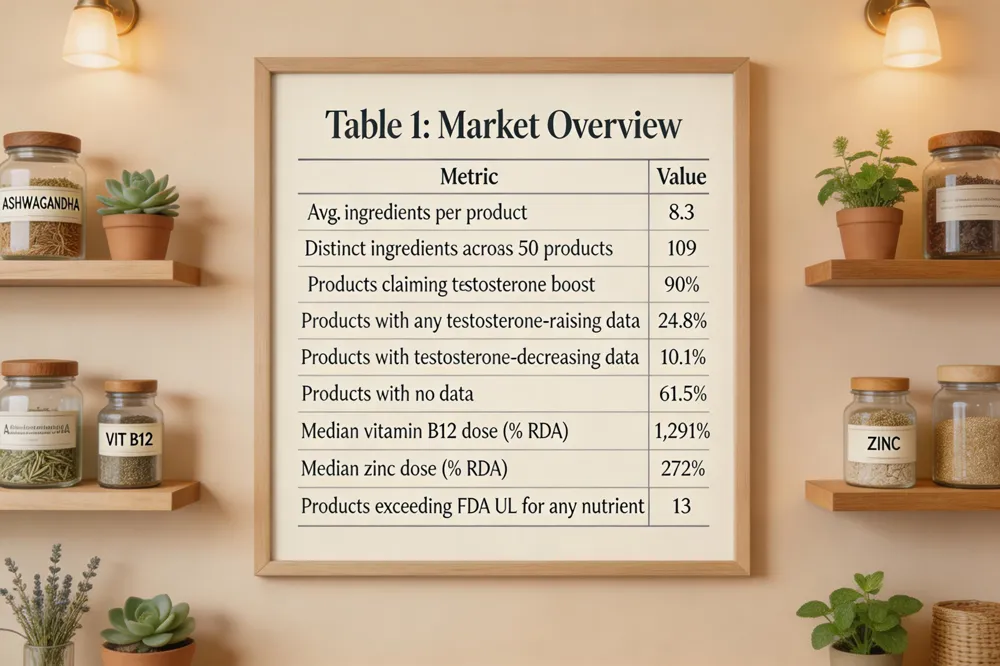
Table 1: Market Overview
| Metric | Value |
|---|---|
| Avg. ingredients per product | 8.3 |
| Distinct ingredients across 50 products | 109 |
| Products claiming testosterone boost | 90% |
| Products with any testosterone‑raising data | 24.8% |
| Products with testosterone‑decreasing data | 10.1% |
| Products with no data | 61.5% |
| Median vitamin B12 dose (% RDA) | 1,291% |
| Median zinc dose (% RDA) | 272% |
| Products exceeding FDA UL for any nutrient | 13 |
 Market prevalence
In the United States, a quick Google search for “testosterone booster” returns dozens of over‑the‑counter products. A 2020 analysis of the first 50 results found an average of 8.3 ingredients per supplement, 109 distinct components across the batch, and that 90 % of the products explicitly claim to raise testosterone or free testosterone.
Common claims
Manufacturers frequently add promises of increased lean muscle (62 %), libido (50 %), strength (48 %), and energy (30 %). However, the scientific record is sparse: only 24.8 % of the 109 ingredients have any published data showing a testosterone‑raising effect, while 10.1 % are linked to a decrease, and 61.5 % have no research at all. Many formulations deliver vitamins and minerals far above the Recommended Daily Allowance—median doses exceed 1,200 % of the RDA for vitamin B12 and 272 % for zinc—and thirteen products surpass the FDA’s Upper Tolerable Intake Level for at least one nutrient.
Regulatory context
The FDA treats dietary supplements as foods, not drugs. Consequently, manufacturers may market “testosterone boosters” without proving safety or efficacy, but they cannot legally claim to treat disease or replace prescription testosterone therapy. This regulatory gap means product quality, purity, and dose consistency vary widely, and adverse events such as pulmonary embolism or liver enzyme elevations have been reported.
Do testosterone boosters actually raise your testosterone?
Most over‑the‑counter boosters lack robust evidence; only about one‑quarter of examined products showed any potential to increase testosterone, while the majority had no supporting data. The high ingredient count and supra‑therapeutic vitamin doses further diminish reliability and raise safety concerns. For individuals concerned about low hormone levels, a personalized evaluation—including serum testing and discussion of evidence‑based options like lifestyle modification or medically supervised testosterone replacement therapy—is the safest path.
Is testosterone booster the same as testosterone?
No. Testosterone is a hormone produced primarily in the testicles (and adrenal glands) and can be prescribed as a medication when deficient. A “testosterone booster” is a dietary supplement containing nutrients, herbal extracts, or amino acids that claim to support the body’s own production. These products are not regulated as drugs, often contain ingredients at doses exceeding recommended limits, and do not replace the hormone itself. Professional guidance is essential before starting any supplement, especially for women, pregnant or nursing individuals, and those on medication.
Top 10 herbs for testosterone
The most studied botanicals include fenugreek, ashwagandha, tribulus terrestris, tongkat ali (Malaysian ginseng), garlic, maca, horny goat weed, saw palmetto, and rhodiola rosea. Clinical trials report modest increases in free testosterone or improvements in libido and muscle strength for several of these herbs, though results are mixed and doses vary. When used in standardized extracts and combined with adequate sleep, resistance training, and a balanced diet, these herbs can form part of a holistic, evidence‑informed strategy to support healthy testosterone levels.
For personalized advice, schedule a consultation with a qualified health professional who can assess hormone status, review potential supplement interactions, and recommend safe, effective interventions.
Ingredient Analysis: What’s Inside the Pills?
Table 2: Most Common Ingredients
| Ingredient | % of products containing |
|---|---|
| Zinc | 64.4% |
| Fenugreek extract | 48.9% |
| Vitamin B6 | 44.4% |
| Tribulus terrestris | 42.2% |
| Magnesium | 37.8% |
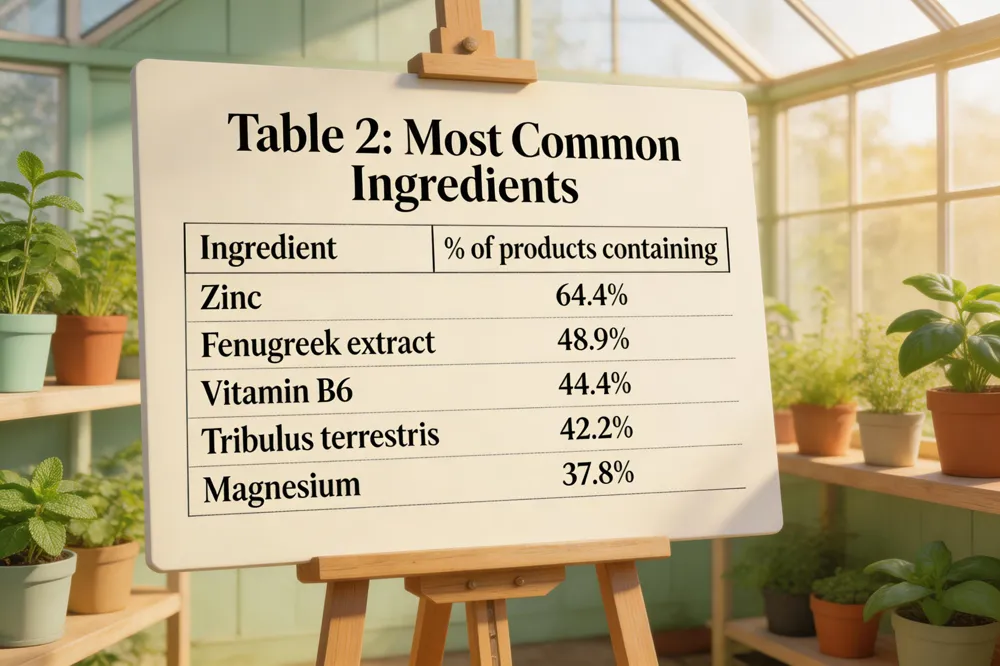 A recent review of the first 50 over‑the‑counter “testosterone boosters” found an average of 8.3 components per product, totaling 109 distinct ingredients across the sample. The most frequently listed agents were zinc (found in 64.4% of the supplements), fenugreek extract (48.9%), vitamin B6 (44.4%), Tribulus terrestris (42.2%) and magnesium (37.8%). While these nutrients and herbs are often marketed as natural ways to raise testosterone, only 24.8% of the 109 individual components have any published data showing a testosterone‑increasing effect. In contrast, 10.1% of the ingredients have evidence of decreasing testosterone, and a striking 61.5% have no scientific evaluation at all.
Dosage analysis revealed that many products deliver vitamin and mineral amounts far above the Recommended Daily Allowance: median levels were 1,291% of the RDA for vitamin B12, 808% for vitamin B6, 272% for zinc, 200% for vitamin B5 and 188% for vitamin B3. Thirteen supplements exceeded the FDA’s Upper Tolerable Intake Level for at least one mineral or vitamin (zinc, niacin, or magnesium), raising concerns about toxicity, copper deficiency, and gastrointestinal or lipid disturbances.
Natural supplements to increase testosterone—such as zinc, vitamin D, magnesium, D‑aspartic acid, fenugreek, and ashwagandhaareadvertised as safe boosters, and modest studies suggest they may modestly raise levels in deficient individuals. However, the majority of commercial boosters contain dozens of ingredients with little or no scientific backing, and many exceed recommended nutrient limits. Large‑scale, well‑controlled trials are lacking, so true efficacy and safety remain uncertain. For most people, optimal nutrition, regular resistance training, adequate sleep, and stress reduction are more reliable ways to support healthy testosterone production. Always discuss any supplement regimen with a qualified healthcare professional, especially if you have underlying health conditions or are taking other medications.
Scientific Evidence: Which Ingredients Actually Work?
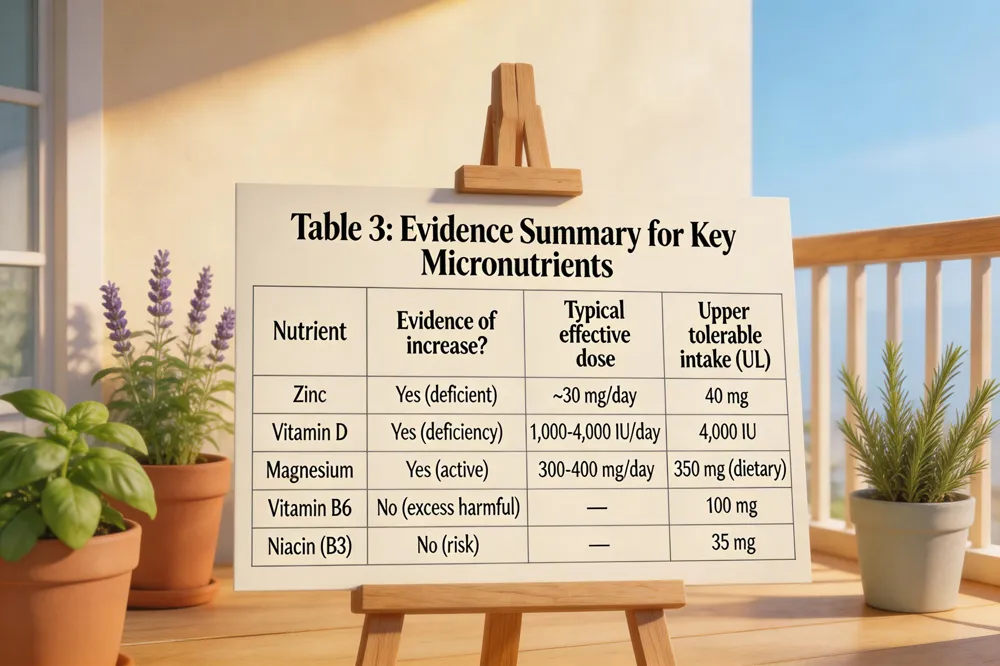
Table 3: Evidence Summary for Key Micronutrients
| Nutrient | Evidence of increase? | Typical effective dose | Upper tolerable intake (UL) |
|---|---|---|---|
| Zinc | Yes (deficient) | ~30 mg/day | 40 mg |
| Vitamin D | Yes (deficiency) | 1,000‑4,000 IU/day | 4,000 IU |
| Magnesium | Yes (active) | 300‑400 mg/day | 350 mg (dietary) |
| Vitamin B6 | No (excess harmful) | — | 100 mg |
| Niacin (B3) | No (risk) | — | 35 mg |
 When you consider an over‑the‑counter “testosterone booster,” the first step is to look at the data behind each ingredient.
Zinc, vitamin D, and magnesium – These three micronutrients appear most often in the 50 products examined, and they have the strongest biological rationale. Zinc is essential for the enzymes that convert cholesterol to testosterone; modest supplementation (≈30 mg daily) can raise serum testosterone in men who are zinc‑deficient, but excess doses above the FDA tolerable intake level (≈40 mg) may cause copper deficiency and gastrointestinal upset. Vitamin D deficiency correlates with lower testosterone, and correcting the deficiency (up to 4,000 IU/day) modestly improves levels in many men, though the benefit disappears when baseline vitamin D is already adequate. Magnesium supports over synthesis and, in active individuals, supplementation (≈300–400 mg daily) has been linked to modest rises in free testosterone.
Herbal extracts – The most common botanicals—fenugreek, ashwagandha, Tribulus, and Tongkat Ali—show mixed results. High‑quality, double‑blind trials report small but statistically significant increases in total or free testosterone for fenugreek (≈500 mg/day) and ashwagandha (≈600 mg/day), likely mediated by reduced cortisol and improved stress resilience. Tribulus and many other “Chinese herbs” (e.g., cistanche, epimedium, schisandra, poria) have only limited animal or small‑scale human data; they may boost libido and energy by supporting blood flow and kidney “essence” in Traditional Chinese Medicine theory, but robust clinical trials are lacking.
Negative evidence – About 10 % of the 109 identified ingredients have published data showing a decrease in testosterone, and 61 % have no data at all. Excessive vitamin B6, high‑dose niacin, and some herbal extracts have even been linked to liver enzyme elevations or rare pulmonary embolism.
Bottom line for patients – Prioritize proven micronutrients (zinc, vitamin D, magnesium) at safe dosages, and use herbal extracts only under professional guidance. Lifestyle changes—regular resistance training, adequate sleep, stress management, and a balanced diet—remain the most reliable, evidence‑based ways to support healthy testosterone levels.
Safety Concerns and Regulatory Oversight
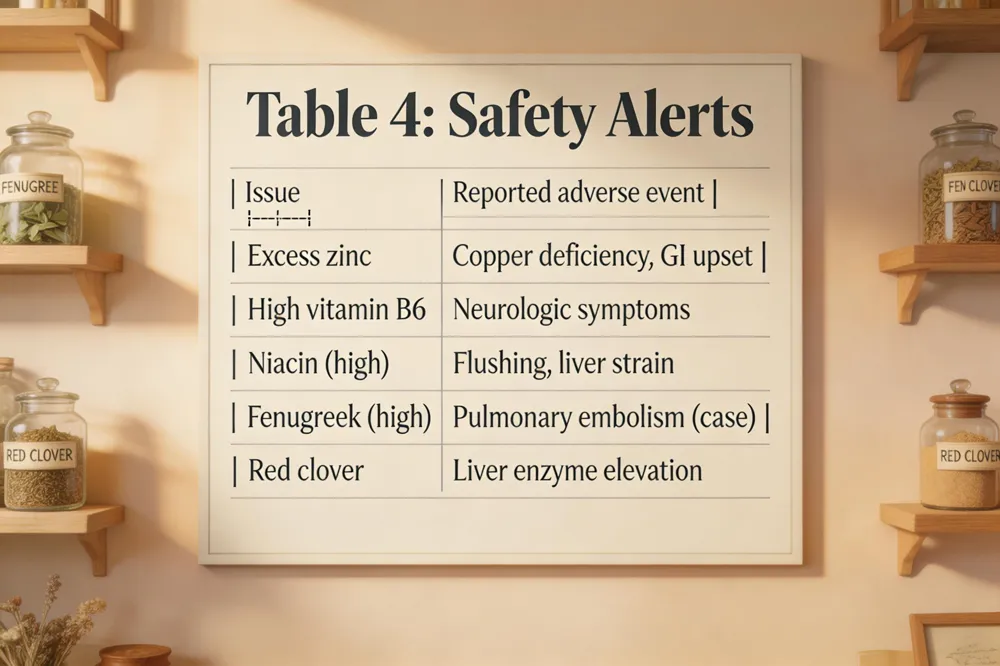
Table 4: Safety Alerts
| Issue | Reported adverse event |
|---|---|
| Excess zinc | Copper deficiency, GI upset |
| High vitamin B6 | Neurologic symptoms |
| Niacin (high) | Flushing, liver strain |
| Fenugreek (high) | Pulmonary embolism (case) |
| Red clover | Liver enzyme elevation |
 The U.S. Food and Drug Administration (FDA) treats over‑the‑counter testosterone boosters as dietary supplements, not drugs. Because they are not approved to treat, diagnose, prevent, or cure disease, manufacturers may not legally claim therapeutic effects such as “boosting testosterone”. This regulatory gap means the FDA does not require pre‑market safety or efficacy testing, leaving consumers to rely on the limited scientific literature and on voluntarily provided label information.
Upper intake levels are frequently exceeded. In a recent analysis of 50 popular boosters, 13 products surpassed the FDA’s Upper Tolerable Intake Level for at least one ingredient—most often zinc, vitamin B3 (niacin), or magnesium. Median doses were dramatically higher than recommended: 1,291 % of the RDA for vitamin B12, 808 % for vitamin B6, and 272 % for zinc. Such supra‑therapeutic amounts can cause gastrointestinal upset, copper deficiency, altered lipid profiles, and neurologic symptoms when high‑dose vitamin B6 is consumed.
Adverse events, though rare, have been documented. A case report linked fenugreek‑containing boosters to bilateral pulmonary embolisms, and other reports note liver enzyme elevations with red‑clover use. These findings underscore that “natural” does not equal safe.
Is synthetic testosterone good for you? Synthetic testosterone should only be used when a qualified clinician confirms a genuine hormonal deficiency (e.g., hypogonadism). While it can improve libido, muscle mass, and bone density, it also carries risks—worsening sleep apnea, acne, cardiovascular events, and potential prostate growth. Routine use in otherwise healthy adults is not recommended.
Supplement safety overview: Thirteen products exceeded FDA ULs; excessive vitamin/mineral doses can cause side‑effects ranging from GI upset to copper deficiency. The FDA’s stance limits therapeutic claims, and the documented adverse events highlight the need for professional guidance before using any testosterone‑boosting supplement.
Gender‑Specific Considerations
Table 5: Herbs & Supplements Used in Women
| Agent | Potential benefit | Key risk |
|---|---|---|
| Tribulus terrestris | Modest testosterone rise, libido | Hirsutism if excess |
| Ashwagandha | Stress reduction, adrenal support | None significant |
| Maca | Libido, mood | Limited data |
| DHEA | Direct androgen precursor | Virilization, hormone imbalance |
| Zinc | Testosterone support | Copper deficiency |
| Vitamin D | Hormone balance | Hypercalcemia if extreme |
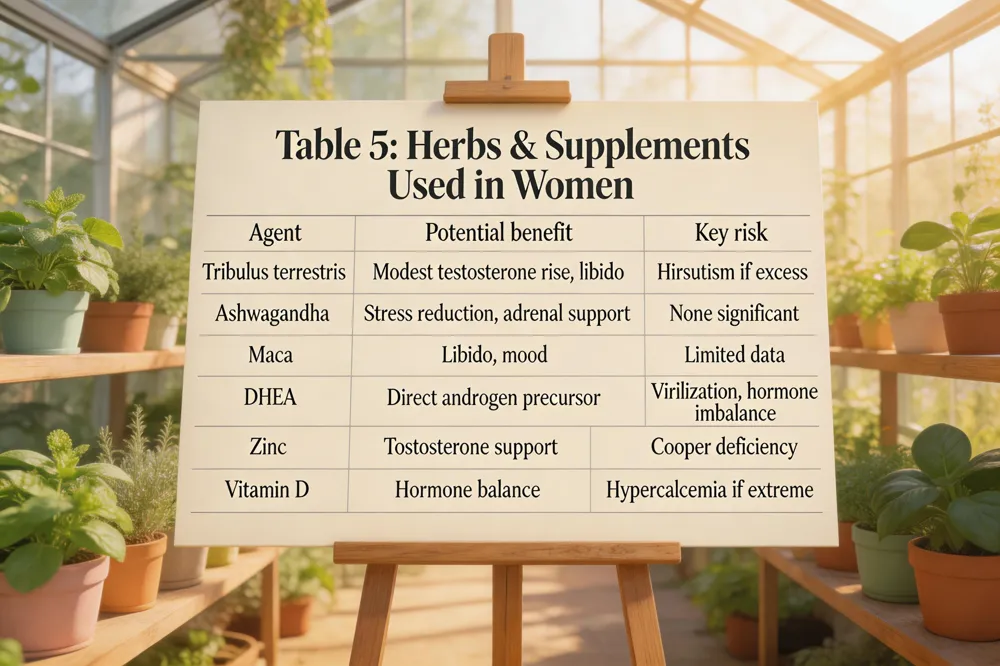 Testosterone is not only a male hormone; women produce it in smaller amounts from the ovaries and adrenal glands, where it contributes to libido, bone density, muscle tone, and overall wellbeing. Levels naturally decline with age and can be affected by stress, nutrition, and chronic illness.
Herbs and supplements for females
- Tribulus terrestris and Ashwagandha (Withania somnifera) have been reported to modestly raise circulating testosterone and improve libido in post‑menopausal women, likely via stress‑reduction and adrenal support.
- Maca and fenugreek are frequently mentioned in anecdotal reports, but high‑quality trials in women are limited.
- DHEA, zinc, vitamin D, and magnesium are sometimes used to support hormone balance; small studies suggest modest testosterone increases, yet results are inconsistent.
Potential risks
Excess testosterone in women can cause unwanted side‑effects such as facial hair growth, voice deepening, acne, and menstrual irregularities. Over‑the‑counter boosters often contain doses far above the Recommended Daily Allowance, and some exceed the FDA’s Upper Tolerable Intake Level, raising concerns about nutrient toxicity (e.g., zinc‑induced copper deficiency). Additionally, 10 % of ingredients identified in commercial boosters have published evidence of decreasing testosterone.
Answers to common questions
- Herbs that increase testosterone in females: Tribulus terrestris and Ashwagandha (Withania somnifera) have shown modest benefits; dosing should be individualized and discussed with a qualified practitioner.
- Supplements to increase testosterone in females: DHEA, zinc, vitamin D, magnesium, fenugreek, Maca, and tribulus may provide modest support, but excess testosterone can cause virilizing effects, so professional guidance is essential.
A personalized, evidence‑based approach that prioritizes lifestyle factors—adequate sleep, regular resistance training, stress management, and balanced nutrition—offers the safest foundation for supporting healthy testosterone levels in women.
Synthetic Testosterone Therapy: When Is It Appropriate?
TRT Indications
Synthetic testosterone replacement therapy (TRT) is reserved for men who have documented hypogonadism—two low morning testosterone measurements (typically <300 ng/dL) accompanied by clinically relevant symptoms such as reduced libido, loss of muscle mass, fatigue, or bone‑density decline. It is not indicated for age‑related testosterone decline in otherwise healthy individuals, and women are only considered for very specific endocrine disorders under specialist supervision.
Benefits and Risks
When appropriately prescribed, TRT can modestly improve sexual function, increase lean muscle mass, and help maintain bone density. However, the therapy carries potential harms: worsening sleep‑apnea, acne, erythrocytosis (elevated red‑blood‑cell count), possible stimulation of existing prostate cancer, breast enlargement, and suppression of natural testosterone production. In women, excess testosterone may cause voice deepening, hirsutism, menstrual irregularities, and heightened cardiovascular risk. Because long‑term safety data for age‑related testosterone decline remain limited, many professional societies advise against routine use.
Monitoring Guidelines
Patients on TRT should have a baseline work‑up (total testosterone, free testosterone, SHBG, CBC, PSA, lipid panel, liver function, and blood pressure) and repeat labs 6‑8 weeks after initiation, then every 3‑6 months. Monitoring focuses on serum testosterone within the normal physiological range, hematocrit, prostate health, and cardiovascular markers.
Is synthetic testosterone good for you? Synthetic testosterone is not inherently “good” for most people; it should only be used when a qualified clinician has identified a genuine hormonal deficiency, such as hypogonadism, and the benefits outweigh the risks. In men, testosterone therapy can improve libido, muscle mass, and bone density, but it also carries potential harms—including worsening sleep apnea, acne, liver stress, cardiovascular events, and stimulation of prostate growth or existing prostate cancer. For women, excess testosterone can cause unwanted side effects like deepening of the voice, facial hair growth, menstrual irregularities, and increased risk of cardiovascular disease. Because the long‑term safety profile of testosterone replacement—especially for age‑related decline in otherwise healthy adults—is still uncertain, many professional societies recommend against routine use. If you are considering synthetic testosterone, discuss a thorough evaluation and monitoring plan with a healthcare provider who practices integrative, personalized medicine.
Integrative Strategies: Lifestyle First
Table 6: Lifestyle Pillars & Expected Testosterone Impact
| Pillar | Typical % increase in serum testosterone (acute) |
|---|---|
| Resistance training (HIIT) | 8‑15% |
| Adequate sleep (7‑9 h) | Restores baseline, prevents cortisol rise |
| Balanced diet (adequate protein, healthy fats) | Supports steroidogenesis |
| Stress management (mindfulness, yoga) | Reduces cortisol suppression |
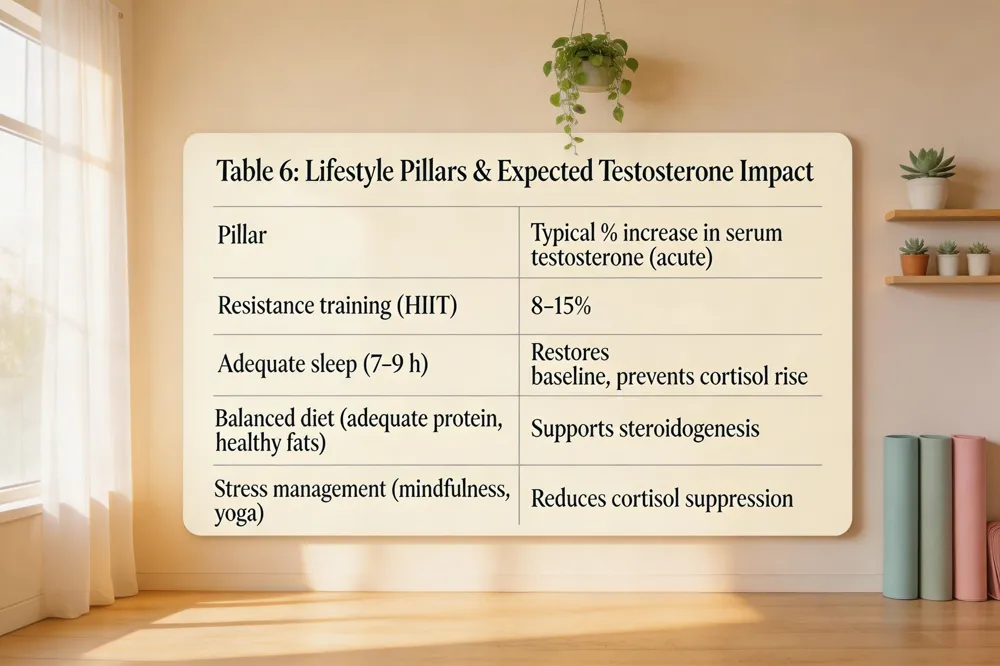 A patient‑centered approach to supporting healthy testosterone begins with lifestyle fundamentals that have the strongest evidence base.
• Exercise – Regular resistance training and high‑intensity interval training (HIIT) acutely raise serum testosterone the 8‑15 % when performed consistently, and long‑term strength programs improve lean muscle mass and body composition.
• Sleep – Aim for 7‑9 hours of uninterrupted sleep each night; chronic sleep loss elevates cortisol, which suppresses Leydig‑cell function and drags testosterone levels down.
• Nutrition – A balanced diet rich in high‑quality protein, healthy fats (monounsaturated and saturated fats from olive oil, avocado, grass‑fed meat), and micronutrients supports steroidogenesis. Key micronutrients are zinc, magnesium, and vitamin D; deficiencies in any of these are linked to lower testosterone, while supplementation can modestly raise levels when a deficit exists. Avoid excessive alcohol and ensure adequate calories to prevent a rise in aromatase activity that converts testosterone to estrogen.
• Stress Management – Chronic psychological stress drives cortisol production, which directly inhibits testosterone synthesis. Incorporating relaxation techniques—mindfulness meditation, deep‑breathing exercises, or yoga—helps keep cortisol in check and indirectly supports testosterone.
Together, these four pillars provide a safe, personalized foundation that outperforms most over‑the‑counter “testosterone boosters”, which often contain multiple ingredients at supra‑nutritional doses, lack robust efficacy data, and can exceed FDA tolerable intake levels. By prioritizing exercise, sleep, nutrition, and stress reduction, patients can naturally maintain testosterone within the normal physiological range while minimizing health risks.
Future Directions and Emerging Formulations
Table 7: Emerging Botanicals & Research Status
| Botanical | Primary proposed mechanism | Current evidence level |
|---|---|---|
| Tongkat Ali (Eurycoma longifolia) | Increases free testosterone, reduces cortisol | Small RCTs |
| Panax ginseng (ginsenosides Rg1/Rb1) | Enhances Leydig cell function | Preliminary |
| Moringa oleifera | Aromatase modulation | Early trials |
| Personalized dosing (genomics) | Tailored nutrient/ herb doses | Conceptual, limited clinical data |
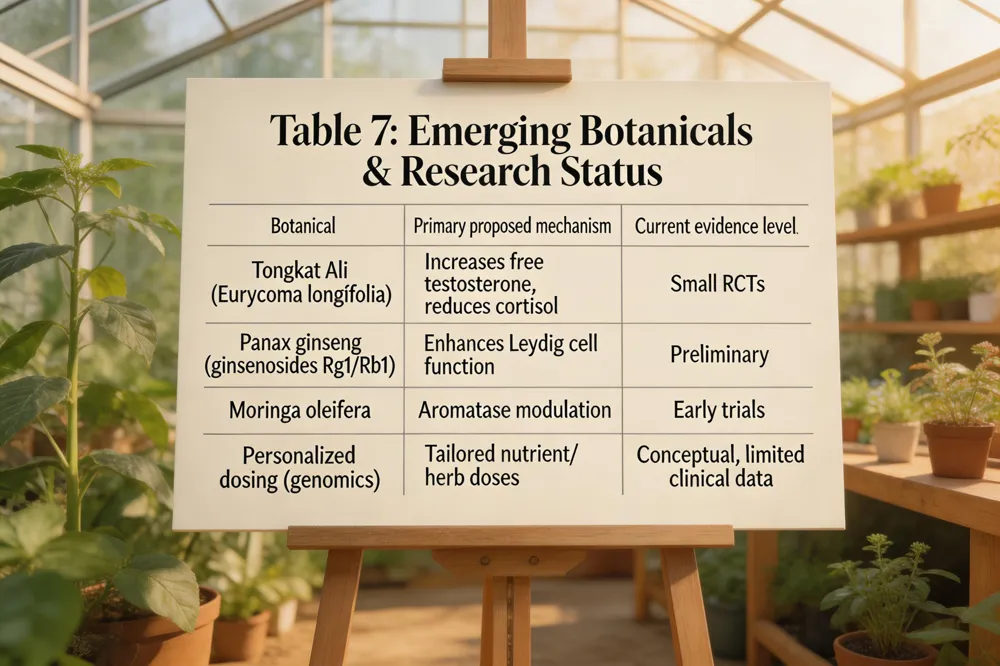 The next wave of testosterone‑support strategies is likely to be driven by three inter‑related trends: the introduction of novel botanical extracts, moves toward personalized dosing, and a clearer articulation of the research gaps that must be filled before new products can be recommended with confidence.
New botanical extracts – Researchers are expanding the pool of plant‑based ingredients beyond the familiar fenugreek, ashwagandha and Tribulus. Early trials have highlighted extracts from Eurycoma longifolia (Tongkat Ali) standardized to a specific bio100‑type profile, Panax ginseng fractions enriched in ginsenosides Rg1 and Rb1, and Moringa oleifera leaf powder that appears to modulate aromatase activity. These botanicals are being evaluated for their ability to raise free testosterone modestly while also improving mood, libido, and recovery. Because many of these studies are small or industry‑sponsored, larger independent trials are needed to confirm efficacy and safety.
Personalized dosing – The “one‑size‑fits‑all” approach of most over‑the‑counter boosters is increasingly viewed as suboptimal. Advances in pharmacogenomics and metabolomics suggest that individual variability in zinc transporters, vitamin D‑binding protein, and androgen receptor polymorphisms may predict who will benefit from a given nutrient or herb. Some clinics now offer baseline hormone panels, serum zinc and magnesium levels, and genetic screening to tailor supplement regimens. This precision‑health model aims to avoid excessive doses that exceed the FDA’s tolerable upper intake levels while delivering the minimal effective dose for each patient.
Research gaps – Despite the growing market, several critical questions remain unanswered. First, most existing studies assess short‑term changes in serum testosterone without linking them to clinically meaningful outcomes such as muscle strength, sexual function, or quality of life. Second, the safety profile of long‑term, high‑dose multicomponent formulas is poorly characterized, especially regarding potential interactions with prescription medications or underlying conditions like cardiovascular disease. Third, there is a lack of head‑to‑head trials comparing botanical blends to evidence‑based testosterone replacement therapy (TRT) in men with confirmed hypogonadism. Addressing these gaps will require rigorously designed, adequately powered randomized controlled trials that adhere to CONSORT guidelines and include diverse age groups.
In practice, clinicians should counsel patients that emerging products may hold promise, but the current evidence base is still limited. A balanced approach—optimizing sleep, resistance training, nutrition, and stress management—remains the most reliable foundation for supporting healthy testosterone levels while new formulations are rigorously evaluated.
Take‑away Messages
Evidence summary: The majority of over‑the‑counter “testosterone boosters” (90% of products) claim to raise testosterone, yet only about one‑quarter of their 109 identified ingredients have any peer‑reviewed data supporting such an effect. More than 60% of components lack any published testosterone research, and some (≈10%) have been shown to lower levels. Many products also deliver vitamins and minerals at doses far exceeding the RDA, with 13 exceeding the FDA’s Upper Tolerable Intake Level for zinc, niacin, or magnesium, raising safety concerns.
Practical recommendations: Prioritize lifestyle strategies with the strongest evidence—regular resistance training or HIIT, adequate sleep (7‑9 h), stress reduction, balanced protein‑rich meals, and sufficient zinc, magnesium, and vitamin D when deficient. If choosing a supplement, limit it to a single, well‑studied ingredient (e.g., zinc 30 mg, vitamin D 2,000‑4,000 IU, or ashwagandha 300‑600 mg) and stay within the RDA/UL.
Professional consultation: Before starting any supplement or considering hormone therapy, obtain a confirmed serum testosterone measurement (two morning draws) and discuss results with a qualified clinician. A healthcare professional can help identify deficiencies, assess risks of excessive nutrient intake, and determine whether prescription testosterone replacement therapy is warranted versus natural optimization.