Introduction: Setting the Context
Bioidentical hormone replacement therapy (BHRT) uses plant‑derived hormones that are chemically identical to estradiol, progesterone and testosterone naturally produced by the body. When prescribed at physiologic doses, BHRT reliably eases vasomotor symptoms, vaginal atrophy, mood swings and sleep disturbances that accompany perimenopause and menopause. Modern practice treats BHRT as one pillar of a broader, holistic wellness plan: clinicians combine personalized hormone dosing with lifestyle strategies—balanced nutrition, regular exercise, stress‑reduction techniques and sleep hygiene—to support overall hormonal balance and reduce the need for higher drug doses. Integrative approaches also encourage regular monitoring (blood work, breast exams, lipid panels) and shared decision‑making, ensuring each woman’s unique health history, risk factors and wellness goals guide therapy. This patient‑centered framework blends evidence‑based hormone science with natural, individualized care to optimize symptom relief and long‑term health.
Chemistry, Sources, and FDA Status of Bioidentical Hormones
 Bioidentical hormones are chemically identical to the hormones your body makes, yet they start from plant‑derived precursors such as diosgenin from wild yams or soy. In a laboratory these raw compounds are converted into estradiol, progesterone, testosterone, DHEA and others, then formulated into pills, patches, creams or gels. Only a few of these products are FDA‑approved, most notably oral and transdermal estradiol (e.g., Estrace, Alora, Climara) and oral micronized progesterone (Prometrium). Estradiol, whether in a tablet or patch, is always bioidentical; the term “synthetic” merely describes its laboratory synthesis, not a different molecular structure. The same holds true for progesterone: the FDA‑approved micronized form is bioidentical, while synthetic progestins like medroxyprogesterone acetate have a distinct structure. Compounded bioidentical preparations use the same chemically identical molecules but lack FDA oversight, leading to possible dose variability and purity concerns. Choosing an FDA‑approved product ensures rigorous testing for safety and potency, while compounded options should be used only when a specific medical need is documented and under close clinician supervision.
Bioidentical vs Synthetic Hormone Therapies: Evidence and Safety
 Molecular differences: Bioidentical hormones are chemically identical to the estrogen, progesterone, and testosterone the body naturally makes, while synthetic hormones have altered structures designed to mimic hormonal effects. Both are laboratory‑produced, but many bioidenticals are custom‑compounded, whereas synthetic products are typically FDA‑approved, standardized drugs.
Clinical evidence: Randomized trials show that both bioidentical and synthetic hormone therapies equally relieve vasomotor symptoms, hot flashes, and vaginal dryness. High‑quality data do not demonstrate superior efficacy for compounded bioidenticals; FDA‑approved bioidentical products (e.g., estradiol patches, micronized progesterone) have robust safety testing.
Risk comparison: Overall safety profiles are similar. Compounded bioidenticals may have batch‑to‑batch dose variability and lack mandatory adverse‑event reporting, potentially increasing risk. FDA‑approved synthetic or bioidentical formulations undergo strict quality control, making them the evidence‑based first choice.
Q: Bioidentical vs synthetic hormones – Bioidentical hormones match endogenous molecular structure; synthetic hormones differ. Neither is proven safer; compounded bioidenticals lack FDA oversight.
Q: Are bioidentical hormones safer? – No. Safety depends on product quality and monitoring, not the bioidentical label.
Q: Bioidentical hormone therapy for men – BHRT for men uses bioidentical testosterone, estrogen, or DHEA to address symptoms of androgen decline. Delivery methods vary (creams, pellets, patches), and therapy is individualized and closely monitored, aiming to improve vitality while minimizing side effects.
Benefits, Risks, and Side Effects of BHRT
 Bioidentical hormone therapy (BHRT) can markedly lessen menopausal symptoms—hot flashes, night sweats, mood swings, and vaginal dryness—by delivering estradiol, progesterone, or testosterone that matches the body’s own molecules. Both FDA‑approved and compounded formulations exist, but only the former have undergone rigorous safety testing; compounded products may vary in dose and purity.
Cancer risk: Systemic BHRT carries a similar risk profile to conventional hormone therapy. Combined estrogen‑progesterone regimens modestly raise invasive breast‑cancer incidence, while estrogen‑only therapy can increase endometrial cancer risk in women with a uterus. Vaginal or low‑dose preparations have minimal systemic absorption and therefore lower cancer risk.
Vascular risk: Oral estrogen raises clotting factors, whereas transdermal or vaginal routes bypass first‑pass liver metabolism and are linked to fewer venous thromboembolisms and strokes. Nonetheless, any estrogen‑containing BHRT still carries a baseline clot risk, especially in older women or those with clotting disorders.
Adverse effects: Common side effects include breast tenderness, bloating, weight gain, acne, and mild headaches. Serious concerns—blood clots, stroke, gallbladder disease, and potential cardiovascular events—mirror those of non‑bioidentical hormone therapy and are more uncertain with compounded products. Regular monitoring, the lowest effective dose, and shared decision‑making with a qualified clinician are essential for safe use.
Compounded Bioidentical Hormones: Quality Concerns and Professional Guidance
 Compounded bioidentical menopausal hormone therapy (cBHT) is custom‑mixed in specialty pharmacies to match a patient’s perceived “bioidentical” profile. Because these products are not FDA‑approved, they escape the rigorous potency‑purity testing required for commercial hormone drugs, leading to batch‑to‑batch dose variability and occasional contamination. Saliva hormone testing, often used to guide cBHT dosing, does not reliably reflect circulating blood levels or symptom severity, and professional societies (Endocrine Society, ACOG, NAMS) advise against its routine use. Major organizations stress that FDA‑approved bioidentical products (e.g., estradiol tablets, micronized progesterone) provide the same chemical molecules with proven safety and efficacy, and should be the first‑line option. Clinicians should discuss the lack of high‑quality evidence for compounded formulations, the potential risks of inconsistent dosing, and the importance of individualized, evidence‑based therapy with any woman considering hormone replacement.
Delivery Methods: Pellets, Patches, Creams – Cost, Efficacy, and Side Effects
 Pellet therapy typically costs $1,200–$2,000 per year, broken into $300–$600 per insertion every 3–5 months; labs, consults and follow‑up add $150–$300 per visit. Local reactions—pain, swelling, bruising, infection—are common, and systemic effects such as headaches, mood swings, fatigue, acne or unwanted hair may appear as hormone levels stabilize. Rare but serious risks include blood‑clot formation, deep‑vein thrombosis, pulmonary embolism, and a modest increase in breast‑cancer or cardiovascular events with combined estrogen‑progestogen pellets. Bioidentical estrogen creams (e.g., estradiol vaginal gel) are usually well tolerated; they can cause local irritation, itching, burning, mild headache, breast tenderness, nausea, and occasional spotting. Creams and transdermal patches deliver hormone more gradually than pills and have a lower clotting risk, while pellets provide the most pronounced relief of hot flashes and night sweats in comparative studies. The “best” BHRT is an FDA‑approved, individualized regimen—whether pellet, patch, gel or oral—chosen after thorough risk assessment and ongoing monitoring.
Personalized Management: Monitoring, Duration, PSA, and Lifestyle Integration
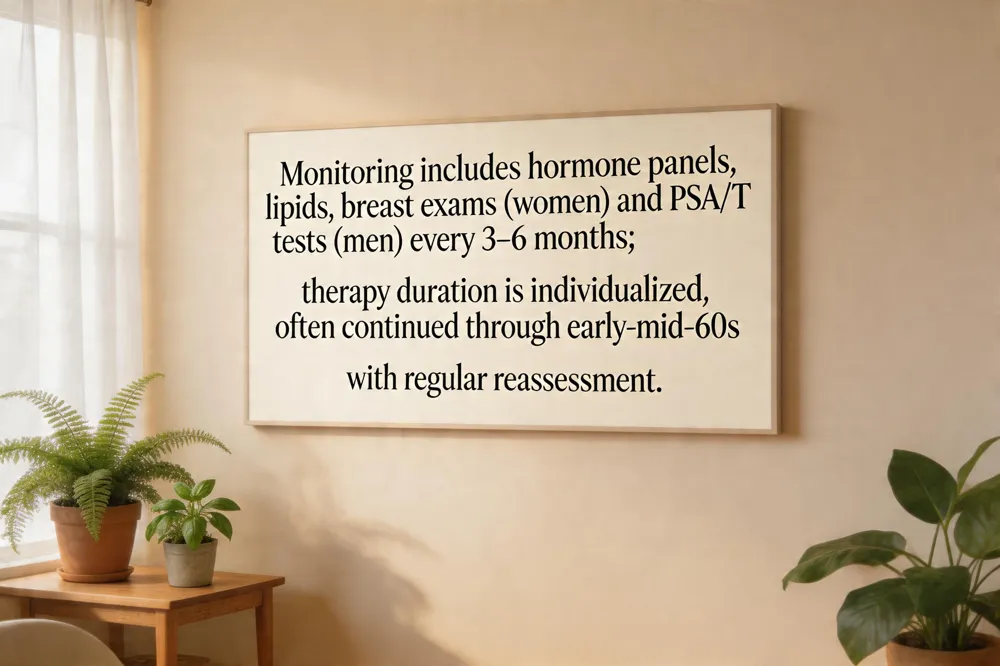 Effective hormone‑therapy care blends regular monitoring with individualized timing and lifestyle support.
Monitoring protocols – Women on bioidentical therapy should have blood hormone levels, lipid panels, and breast exams every 3–6 months; men on testosterone‑based BHRT need PSA checks and testosterone panels at the same interval.
Treatment duration – There is no fixed endpoint; therapy continues as long as symptom relief outweighs risk. Initiating within ten years of menopause can protect bone and heart health, and many women remain on low‑dose regimens for years, reassessing annually.
Does hormone therapy reduce PSA? – Yes. By lowering testosterone, PSA generally falls or stays stable, with regular PSA testing guiding therapy pauses or re‑initiation.
Age considerations – No strict cut‑off exists. Most clinicians find continuing through the early‑to‑mid‑60s (age 60‑64) balances benefit and risk; after that, tapering may be advisable based on personal health history.
Bioidentical therapy for men – BHRT restores testosterone, DHEA, or estrogen to physiologic levels, alleviating fatigue, low libido, mood swings, and muscle loss, while using delivery methods (pellets, patches, creams, injections) that fit each patient’s lifestyle.
Finding Care and Integrative Resources – From Local Clinics to Specialized Guides
 Bioidentical hormone therapy near me – BHRT is offered by certified providers. Use the Biote® Certified Provider list to locate a clinic in your city (e.g., Denver). Integrative practices like Harmony Care pair BHHT with lifestyle counseling for hot flashes and mood swings.
Offseason Cycles with Bioidentical Hormones PDF – This 73‑page guide provides safe, individualized hormone protocols for athletes, covering testosterone, estrogen, aromatase inhibition, and nutrition. It aligns with holistic wellness and is sold at VigorousSteve.com.
Best bioidentical hormone replacement therapy – Evidence‑based BHRT prefers FDA‑approved products (e.g., Estrace®, Prometrium®) for guaranteed purity. Subcutaneous pellets give strong symptom relief, but the optimal route—pellet, patch, gel, or oral—depends on personal health history. Ongoing monitoring with an integrative clinician ensures safety.
Conclusion: Informed Choices for Hormonal Health
Bioidentical hormone therapy (BHT) can relieve hot flashes, night sweats, mood swings and vaginal dryness, but its safety profile depends on the product used. FDA‑approved bioidentical preparations (e.g., Estrace®, Prometrium®) undergo rigorous testing, whereas custom‑compounded formulations lack consistent potency, purity and adverse‑event reporting. Risks such as venous thromboembolism, stroke and hormone‑sensitive cancers are similar to conventional hormone therapy when physiologic doses are used, especially in women with prior clotting or cancer history. Shared decision‑making—reviewing personal risk factors, preferences, cost and insurance coverage—ensures the lowest effective dose for the shortest needed duration. Future research should focus on large, long‑term randomized trials comparing compounded versus FDA‑approved products, refining delivery routes (transdermal vs oral), and integrating lifestyle interventions to reduce required hormone doses. Empowered, evidence‑based choices will optimize symptom relief while minimizing harm.