Why Saliva Testing Matters
Saliva testing offers a truly patient‑centered way to monitor hormone health. Because the sample is collected by passive drool at home, it is completely non‑invasive and eliminates the stress of a needle, making it especially suitable for women who are pregnant, perimenopausal, or simply prefer a gentle approach. The assay measures the free, bioavailable fraction of estrogen, progesterone, testosterone and cortisol – the hormones that actually interact with tissues – providing a clearer picture of what the body is using. This convenience aligns perfectly with integrative, personalized care, allowing clinicians to adjust bioidentical hormone regimens in real time while keeping the process natural, safe and evidence‑based.
Understanding Hormone Testing Options
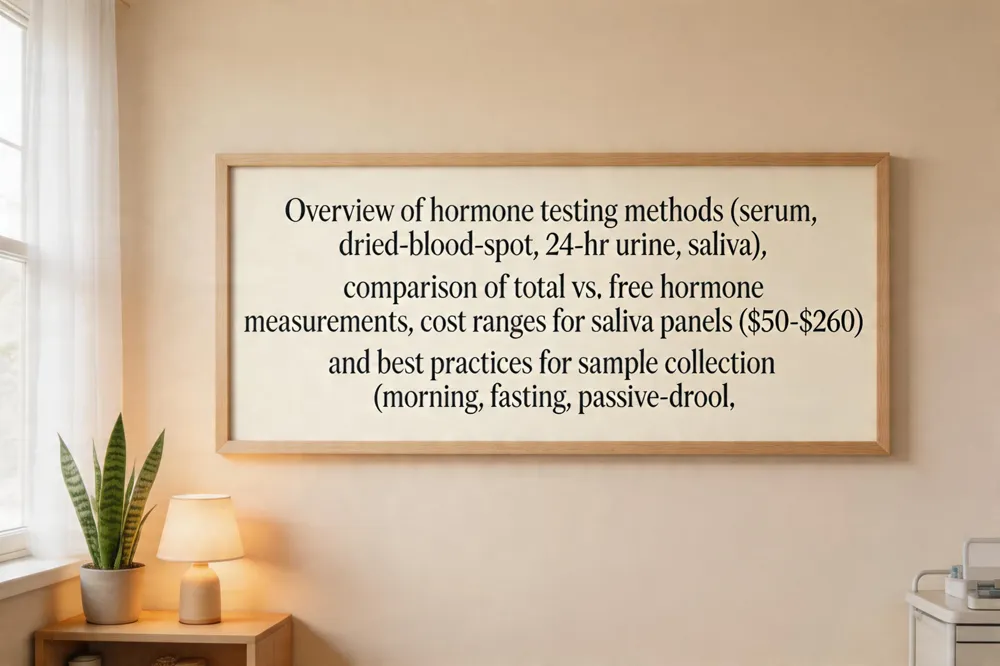 When you begin exploring hormone health, the first step is to know which hormones are most relevant for women. A typical female hormone panel includes the three major estrogens (estrone E1, estradiol E2, estriol E3), progesterone, testosterone, luteinizing hormone (LH), follicle‑stimulating hormone (FSH), dehydroepiandrosterone sulfate (DHEA‑S), sex‑h‑binding globulin (SHBG), prolactin, and thyroid‑stimulating hormone (TSH) with free T4/T3. Many labs add a cortisol or adrenal panel and anti‑Müllerian hormone (AMH) for ovarian reserve. These tests can be performed via serum blood draw (the gold standard), dried‑blood‑spot, 24‑hour urine, or saliva, with cycle‑mapping protocols that capture hormone changes across the menstrual cycle.
Blood versus saliva panels – Blood tests measure total hormone levels, most of which are bound to carrier proteins and not immediately available to tissues. Saliva testing measures the free, bioavailable fraction that actually reaches cells. Because salivary testosterone the unbound hormone, it can provide a clearer picture of hormonal activity that drives symptoms such as mood swings, weight changes, or hot flashes. Saliva collection is non‑invasive, stress‑free, and can be done at home multiple times a day, whereas blood draws require a clinic visit and give only a single snapshot.
Cost considerations – Saliva hormone testing ranges from about $50 for a single‑hormone panel up to $260 for comprehensive multi‑hormone kits. Basic tests (estradiol, progesterone, testosterone, DHEA‑S, cortisol, estriol) are typically $50 each. More extensive panels that combine several sex steroids and adrenal markers cost $170‑$260, and bundled "Hormone Trio" or "Adrenal Stress" kits are available for $125‑$175, offering cost‑effective options for women seeking integrative wellness insights.
Interpretation of saliva results – A saliva hormone test reports the free, biologically active hormone that has diffused into the mouth, reflecting what tissues actually experience. Results are most reliable when collected with a validated passive‑drool device, in the morning (to capture the daily peak), and after a 30‑minute fast from food, drink, or oral hygiene. Laboratories such as ZRT employ liquid‑chromatography tandem mass spectrometry (LC‑MS/MS) to quantify low‑concentration hormones accurately. Clinicians combine these numbers with your symptom diary and other labs to fine‑tune bioidentical hormone therapy, ensuring doses are neither too low (under‑replacement) nor too high (over‑replacement), and to support personalized, evidence‑based care.
Bioidentical Hormone Therapy: Safety and Efficacy
 Bioidentical Hormones and Cancer Risk
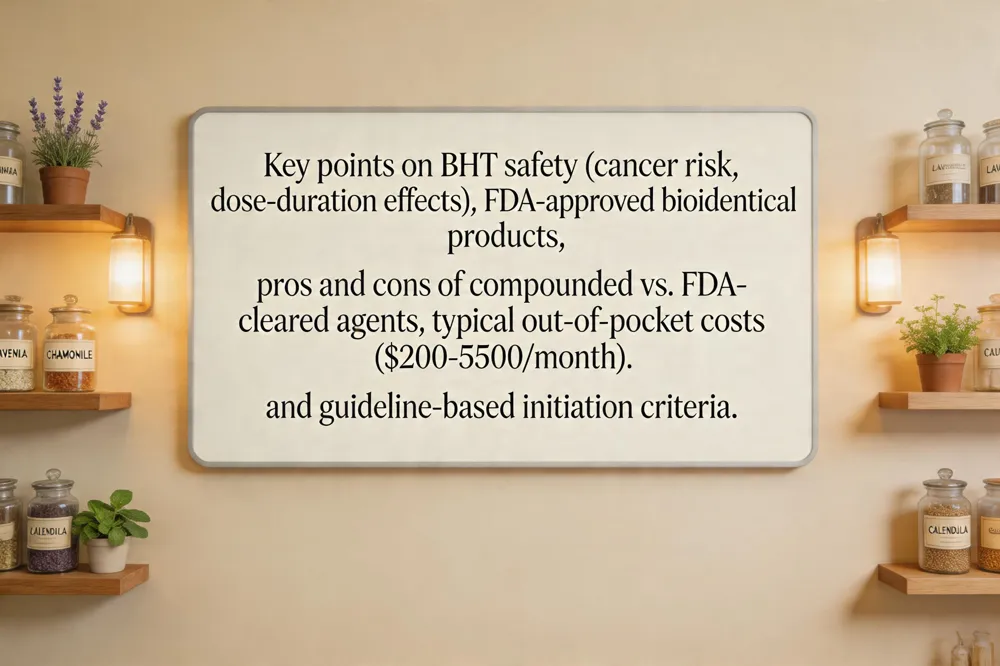
Bioidentical hormone therapy (BHT) delivers the same estrogen and progesterone molecules that have been linked to modestly increased breast‑cancer (≈3 extra cases per 1,000 women/5 years) and endometrial cancer when estrogen is unopposed. Risk rises with higher systemic doses, longer duration, and oral or transdermal routes, regardless of the “bioidentical” label. Low‑dose, short‑term, or locally applied products (e.g., vaginal creams) have lower systemic exposure and thus a smaller cancer signal. Individual history and family risk must guide decisions.
Bioidentical Hormones and Cancer Risk
Bioidentical hormone therapy (BHT) delivers the same estrogen and progesterone molecules that have been linked to modestly increased breast‑cancer (≈3 extra cases per 1,000 women/5 years) and endometrial cancer when estrogen is unopposed. Risk rises with higher systemic doses, longer duration, and oral or transdermal routes, regardless of the “bioidentical” label. Low‑dose, short‑term, or locally applied products (e.g., vaginal creams) have lower systemic exposure and thus a smaller cancer signal. Individual history and family risk must guide decisions.
List of FDA‑Approved Bioidentical Hormones The FDA has cleared several bioidentical products: oral estradiol (Estrace), transdermal patches (Climara, Vivelle‑Dot), gels (EstroGel), vaginal rings/creams (Estring, Vagifem), estrone tablets, and vaginal estriol (Ogen). Micronized progesterone (Prometrium) is approved in oral capsules and vaginal inserts. These are the only FDA‑cleared bioidentical hormones in the U.S.
Bioidentical Hormones: Pros and Cons Pros: chemically identical to endogenous hormones, multiple delivery formats, effective relief of hot flashes, night sweats, and vaginal dryness. Cons: “natural” or custom‑made claims do not guarantee safety; compounded products lack FDA oversight and may vary in potency; overall hormone‑related risks (clots, cardiovascular events, cancer) remain similar to conventional HRT.
Bioidentical Hormone Therapy Cost Typical out‑of‑pocket cost ranges $200–$500 / month. FDA‑approved tablets sit at the lower end; compounded creams or pellets can be higher. Add‑on expenses include initial consultations ($150–$450) and periodic lab testing. Insurance often covers FDA‑approved agents but excludes compounded preparations; HSAs/FSA’s can offset costs.
Bioidentical Hormone Pellets Pellets are subcutaneously placed, slowly releasing estradiol, progesterone, or testosterone over 3–6 months, reducing dosing frequency. They are compounded, so purity varies; working with a certified compounding pharmacy is essential. Benefits include stable levels and symptom relief, but risks mirror those of systemic hormone exposure.
Hormone Replacement Therapy Guidelines Current guidelines advise initiating HRT in symptomatic women <60 years or within 10 years of menopause, using the lowest effective dose and shortest duration. Women with a uterus require concurrent progestin. Systemic routes treat vasomotor symptoms; low‑dose vaginal products address genitourinary issues. Annual re‑evaluation and lifestyle support (diet, exercise, stress management) are recommended.
Finding Bioidentical Hormone Therapy Near You Patients can locate integrative providers through networks such as Harmony Care, which connects to specialists in New Jersey and other states offering personalized BHRT plans, lab‑guided dosing, and ongoing monitoring.
Interpreting Test Results in Women's Health
 Female hormone blood test results explained
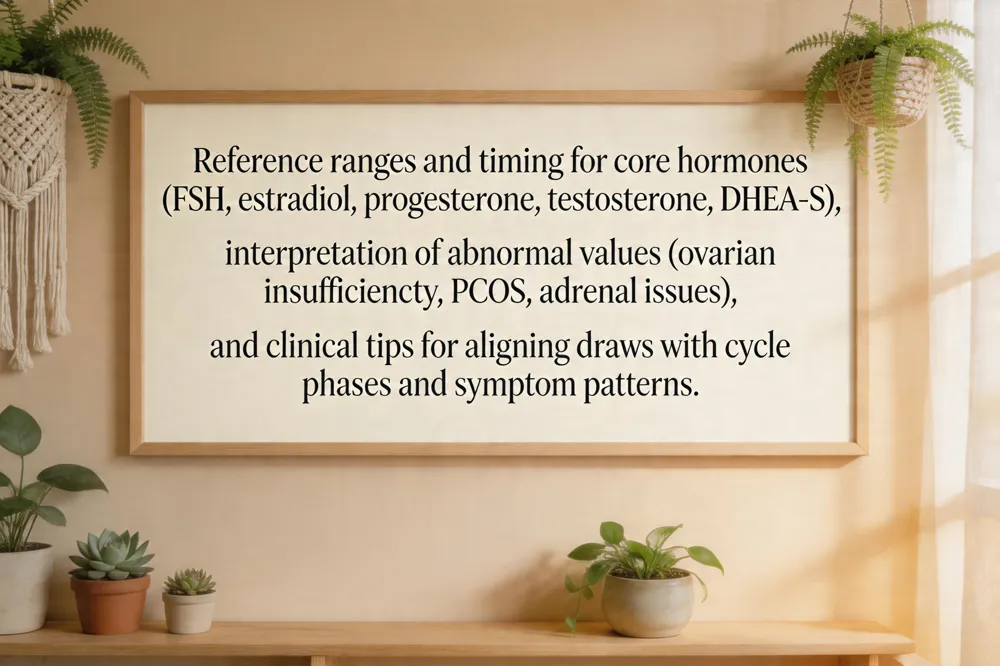
A typical panel measures FSH, estradiol, progesterone, testosterone, and DHEA‑S. FSH rises sharply after menopause (≈25‑135 IU/L) but stays low in the follicular (3.5‑12.5 IU/L) and luteal (1.7‑7.7 IU/L) phases; high FSH in a younger woman may signal ovarian insufficiency. Estradiol peaks around ovulation (≈177‑1153 pmol/L) and falls below 183 pmol/L after menopause—low levels suggest PCOS or low body fat, while high values can indicate estrogen‑producing tumors or hormone therapy. Progesterone checked around day 21 should exceed 30 nmol/L to confirm ovulation; values <5 nmol/L point to an anovulatory cycle. Testosterone (0‑1.8 nmol/L) and DHEA‑S (0.26‑11 µmol/L) reveal adrenal and ovarian androgen output, with elevations linked to PCOS, hirsutism, or adrenal hyperplasia.
Female hormone blood test results explained
A typical panel measures FSH, estradiol, progesterone, testosterone, and DHEA‑S. FSH rises sharply after menopause (≈25‑135 IU/L) but stays low in the follicular (3.5‑12.5 IU/L) and luteal (1.7‑7.7 IU/L) phases; high FSH in a younger woman may signal ovarian insufficiency. Estradiol peaks around ovulation (≈177‑1153 pmol/L) and falls below 183 pmol/L after menopause—low levels suggest PCOS or low body fat, while high values can indicate estrogen‑producing tumors or hormone therapy. Progesterone checked around day 21 should exceed 30 nmol/L to confirm ovulation; values <5 nmol/L point to an anovulatory cycle. Testosterone (0‑1.8 nmol/L) and DHEA‑S (0.26‑11 µmol/L) reveal adrenal and ovarian androgen output, with elevations linked to PCOS, hirsutism, or adrenal hyperplasia.
5 signs of hormonal imbalance Irregular or missed periods, unexpected hair thinning or excess facial/body hair, sudden acne or oily skin, mood‑sleep disturbances (anxiety, irritability, insomnia), and unexplained abdominal weight gain are common red flags.
Best time to test for hormone imbalance For most women, draw estrogen, FSH, and LH on day 3 of the cycle; progesterone is most accurate in the mid‑luteal phase (≈day 21). Early‑morning samples capture cortisol and thyroid peaks. Irregular cycles may be tested any day, but aligning draws with symptom patterns improves interpretation.
Can MTHFR cause hormonal imbalance? Certain MTHFR polymorphisms impair methylation, hindering estrogen, progesterone, and testosterone metabolism. Accumulated “un‑methylated” estrogen can produce estrogen‑dominant symptoms, mood swings, and other hormonal complaints. Supporting methylation with natural folate, B12, and lifestyle measures can help.
Does hormone therapy reduce PSA? Prostate‑targeted hormone therapy lowers testosterone, which typically drives PSA down. A rising PSA despite therapy may signal disease progression and the need for treatment adjustment.
Hormone levels female Estradiol ranges 30‑400 pg/mL (follicular) to 200‑800 pg/mL (pre‑ovulation); progesterone rises to 5‑20 ng/mL after ovulation. Female testosterone is 15‑70 ng/dL; LH surges 20‑100 IU/L before ovulation. Tracking these with symptoms guides personalized care.
Can low estrogen raise A1c? Estrogen supports insulin sensitivity; its decline can modestly increase fasting glucose and A1c, especially in women with existing diabetes risk factors.
Female hormone test list menopause Core menopause panels include FSH, estradiol, LH, and progesterone; many clinicians add TSH, testosterone, DHEA, and SHBG for a fuller endocrine picture.
Female hormone test at home At‑home kits let you collect a finger‑prick blood or saliva sample, send it to a CLIA‑certified lab, and receive results online within days. Morning, day 3‑7 collection avoids hormonal contraceptives and supplements for accuracy.
Female hormone saliva test Saliva reflects the free, bioavailable hormone fraction. Home kits (e.g., ZRT, Genova) capture estradiol, progesterone, testosterone, cortisol, DHEA, and melatonin, allowing multiple collections across the cycle for trend analysis.
Do you test for hormones at home? Yes—non‑invasive saliva or finger‑prick blood kits provide a convenient, cost‑effective first step for uncovering hormonal contributors to menstrual irregularities, menopausal symptoms, fatigue, mood changes, or fertility concerns, supporting a personalized, integrative treatment plan.
Practical Guidance for Patients
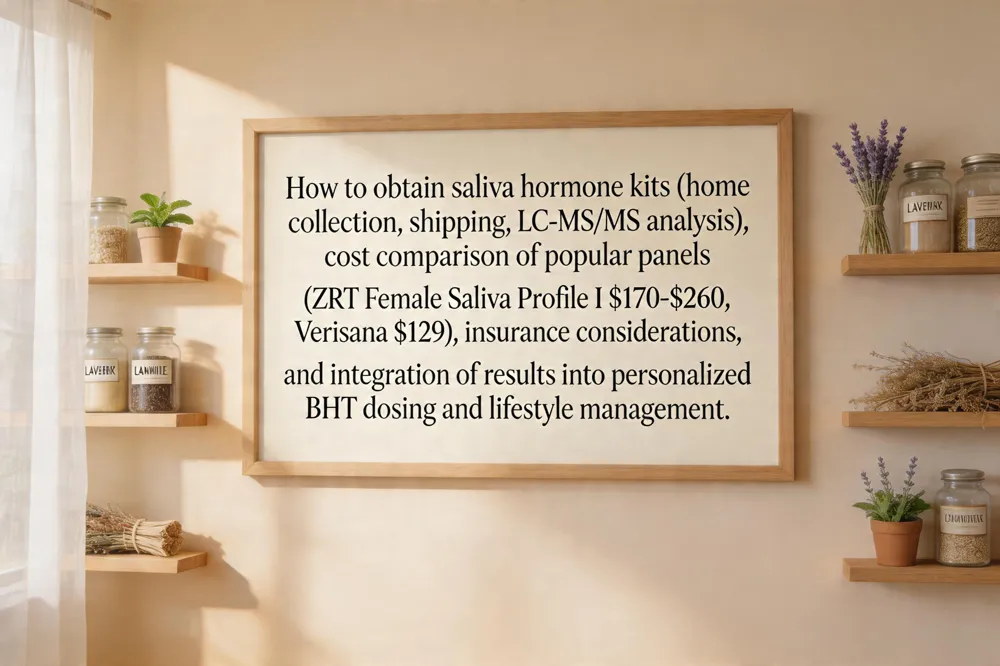 If you’re looking for a saliva test for hormones near you, many integrative clinics (e.g., Moundsville Pharmacy, Harmony Care) can ship a home‑collection kit directly to your door or refer you to a nearby accredited laboratory such as LifeLabs, ZRT Laboratory, or a local naturopathic practice. A single morning sample—collected after an overnight fast and before any oral hygiene—captures the free, bio‑available fraction of cortisol, estradiol, progesterone, testosterone, and DHEA‑S. Because these hormones are not bound to carrier proteins, saliva reflects the amount that actually reaches tissues, making it a useful window into stress, menstrual health, and the effect of topical bioidentical preparations (Du et al., 2013; O’Leary et al., 2000).
Saliva hormone testing kit – The kit includes a sterile tube, clear step‑by‑step instructions, a prepaid shipping label, and a secure online portal for results. Modern laboratories (e.g., ZRT, Access Medical Labs) employ liquid‑chromatography‑tandem mass spectrometry (LC‑MS/MS) and extraction steps to accurately quantify low‑concentration hormones such as estradiol in men and children (ZRT Laboratory. Results are typically returned within 5‑10 business days and are reviewed by an integrative health provider to guide personalized dosing of bioidentical hormone therapy (BHT).
Best saliva hormone test kit – For a comprehensive female panel, ZRT’s “Female Saliva Profile I” (E2, Pg, T, DHEA‑S, cortisol) offers a full picture for $170‑$260 and is widely used by functional‑medicine clinicians. The Verisana Essential Hormone Test (E2, Pg, T) provides a cost‑effective option at $129, with age‑ and cycle‑specific reference ranges.
Cost and insurance – Many insurers will cover saliva testing when ordered by a qualified practitioner; clinics can assist with verification and billing. For patients paying out‑of‑pocket, kits range from $50 for a single estradiol test to $260 for a full profile, making regular monitoring affordable and non‑invasive.
Clinician integration – Results are interpreted alongside symptom tracking, lifestyle assessment, and, when needed, serum or urine studies. This holistic approach aligns with evidence‑based, patient‑centered care, allowing timely adjustments to BHT, minimizing side effects, and supporting overall wellness.
Integrating Saliva Testing into Holistic Care
Saliva testing offers a painless, at‑home way to track the free, active hormones that affect tissues, especially after topical bioidentical creams, helping clinicians fine‑tune doses while reducing blood‑draw stress. Patients should discuss timing, avoid contamination, and schedule repeat tests every 3–6 months to guide personalized BHRT adjustments.