Introductory Overview
Bioidentical hormone replacement therapy (BHRT) uses hormones that are chemically identical to the estrogen, progesterone, and testosterone our bodies naturally produce. These plant‑derived molecules are processed in laboratories so the body can recognize and metabolize them just like its own hormones, helping to relieve menopausal symptoms such as hot flashes, night sweats, vaginal dryness, mood swings, sleep disturbances, and low libido.
There are two main categories of bioidentical hormones. FDA‑approved products are manufactured by pharmaceutical companies, undergo rigorous safety, efficacy, and quality‑control testing, and are available in standardized forms such as oral tablets, transdermal patches, gels, sprays, and vaginal rings. Compounded bioidentical hormones, on the other hand, are custom‑mixed by specialty pharmacies according to an individual’s prescription. Because they are not subject to the same FDA pre‑market review, compounded preparations can vary from batch to batch in dose and purity, and they lack the extensive safety data that support FDA‑approved options.
Integrative and functional medicine clinics often incorporate BHRT because they emphasize personalized, whole‑person care. By combining detailed symptom assessment, comprehensive laboratory testing, lifestyle counseling, and evidence‑based hormone optimization, these practices aim to tailor therapy to each woman’s unique hormonal profile and health goals. This patient‑centered approach seeks to maximize symptom relief while carefully monitoring risks, aligning with the broader integrative health philosophy of natural, individualized, and scientifically grounded treatment.
Core Concepts: What BHRT Is and How It’s Made
| Aspect | Details |
|---|---|
| Definition | Bioidentical hormones are chemically identical to endogenous estrogen, progesterone, testosterone, DHEA, and cortisol. |
| Source | Plant‑derived precursors (soybean, wild yam, other yams, cactus) provide the phytosterol diosgenin. |
| Synthesis | Diosgenin is isolated and chemically converted through a series of reactions into the target hormone. |
| Formulations | Pills, patches, creams, gels, sprays, vaginal inserts, injections, sub‑cutaneous pellets. |
| FDA‑approved vs. compounded | FDA‑approved: estradiol, transdermal patches/gels, micronized progesterone, testosterone gels, combination tablets. Compounded: custom mixes, not FDA‑approved, batch‑to‑batch variability. |
 Bioidentical hormones are chemically identical to the estrogen, progesterone, testosterone, DHEA, and cortisol that our bodies produce. They are not "natural" extracts; instead they are laboratory‑synthesized molecules that match the human hormone’s molecular structure. The process begins with plant‑derived precursors—most commonly soybeans or wild yam (and other yams and cactus) that contain the phytosterol diosgenin. Diosgenin is isolated from the plant roots and then chemically converted through a series of reactions into the desired hormone. Although the starting material is botanical, the final product is a synthetic compound that the body recognizes as its own hormone, and it can be formulated into pills, patches, creams, gels, sprays, vaginal inserts, injections, or sub‑cutaneous pellets.
FDA‑approved versus custom‑compounded preparations
The FDA has rigorously evaluated several bioidentical products for safety, efficacy, and purity. Approved options include oral estradiol (Estrace), transdermal estradiol patches/gels (Estraderm), micronized progesterone capsules (Prometrium), and transdermal testosterone gels (AndroGel, Testim, Axiron). Combination tablets such as estradiol/levonorgestrel (Activelle) are also FDA‑approved. In contrast, custom‑compounded bioidentical hormones are mixed in specialty pharmacies to fit an individual’s reported symptoms or saliva test results. These compounded products are not FDA‑approved, lack standardized quality‑control testing, and may vary batch‑to‑batch in dose and purity. For most patients, the evidence‑based choice is an FDA‑approved bioidentical hormone, while compounded preparations should be considered only when a specific medical need cannot be met by approved options and after a thorough risk‑benefit discussion with a qualified healthcare provider.
Therapeutic Benefits and Typical Uses
| Benefit | Typical Use | Evidence / Timing |
|---|---|---|
| Menopausal symptom relief | Hot flashes, night sweats, sleep disruption, mood swings, vaginal dryness | Symptom reduction within weeks; full benefit ~3 months, comparable to conventional HT. |
| Bone health | Prevention of osteoporosis, maintenance of bone mineral density | Estrogen restoration reduces fracture risk when started near menopause. |
| Sexual health & QoL | Improved vaginal lubrication, libido, mood, sleep | Adequate estrogen/testosterone linked to higher sexual satisfaction and mood stability. |
| Custom dosing routes | Pills, patches, creams, gels, pellets allow individualized delivery | Compounded products offer flexibility but lack FDA approval and long‑term safety data. |
| Risk considerations | Cardiovascular, breast/ endometrinal cancer risk similar to other HT | Higher risk in clotting disorders, heart disease, hormone‑sensitive cancer history. |
 Bioidentical hormone replacement therapy (BHRT) is a form of hormone replacement that uses estrogen, progesterone, and testosterone molecules identical to those the body naturally makes, usually derived from plant sources and then chemically processed. It is prescribed to treat the classic perimenopausal and menopausal symptom cluster—hot flashes, night sweats, sleep disruption, mood swings, and vaginal dryness.
Menopausal symptom relief – Both FDA‑approved and compounded BHRT can lessen vasomotor events within weeks, with full benefit typically emerging after three months. The relief mirrors that of conventional hormone therapy.
Bone health and osteoporosis prevention – Restoring estrogen levels helps maintain bone mineral density, reducing the risk of osteoporotic fractures, especially when therapy is started near menopause.
Sexual health and quality‑of‑life improvements – Adequate estrogen and testosterone improve vaginal lubrication, libido, and overall sexual satisfaction, while also supporting mood stability and better sleep.
Pros and cons – The chemical identity of bioidentical hormones promotes effective symptom control and allows for customized dosing routes (pills, patches, creams, gels, pellets). However, compounded products lack FDA approval, leading to batch‑to‑batch variability, higher cost, and limited long‑term safety data. Even FDA‑approved versions carry the same cardiovascular and breast‑cancer risks as other hormone therapies, especially in women with clotting disorders, heart disease, or a history of hormone‑sensitive cancers. Individualized dosing, regular monitoring, and shared decision‑making with a qualified clinician are essential for safe, effective use.
Safety Profile, Side Effects, and Risk Management
| Side Effect | Frequency | Management / Monitoring |
|---|---|---|
| Weight gain, bloating, breast tenderness, acne, facial hair | Common, mild, early‑treatment | Dose adjustment, lifestyle counseling. |
| Headaches, fatigue, mood swings, spotting | Common, transient | Re‑evaluate dose after 4–6 weeks; serum hormone testing. |
| Venous thromboembolism, stroke, gallbladder disease, hormone‑sensitive cancers | Rare but serious | Lowest effective dose, annual risk assessment, contraindication screening. |
| Excess progesterone (fatigue, drowsiness, irritability, spotting) | Indicative of over‑dose | Reduce progesterone dose; monitor symptoms and serum progesterone. |
| Compounded product variability | Undetermined (depends on pharmacy) | Choose reputable compounding labs; consider FDA‑approved alternatives when possible. |
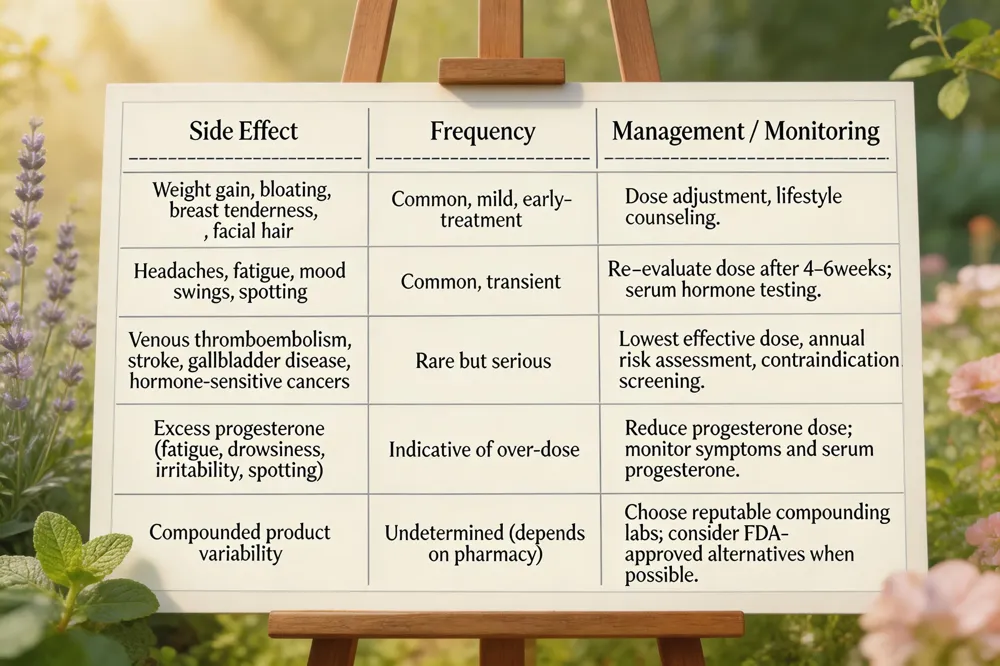 Bioidentical hormone replacement therapy side effects
BHRT can cause mild, short‑term symptoms such as weight gain, bloating, breast tenderness, acne, and increased facial hair. Women often notice headaches, fatigue, mood swings, and occasional spotting or irregular bleeding during the first few weeks of treatment. These effects usually subside as the body adjusts, but they signal the need for dose fine‑tuning.
Bioidentical hormone replacement therapy side effects
BHRT can cause mild, short‑term symptoms such as weight gain, bloating, breast tenderness, acne, and increased facial hair. Women often notice headaches, fatigue, mood swings, and occasional spotting or irregular bleeding during the first few weeks of treatment. These effects usually subside as the body adjusts, but they signal the need for dose fine‑tuning.
What are the side effects of bioidentical hormone therapy? Beyond the common complaints above, more serious complications—though less frequent—include an elevated risk of venous thromboembolism, stroke, gallbladder disease, and hormone‑sensitive cancers (breast or endometrial) when estrogen is not balanced with a progestogen in women with an intact uterus. Compounded, non‑FDA‑approved preparations may carry additional uncertainty about purity and potency, increasing safety concerns.
Signs of too much bioidentical progesterone Excess progesterone often presents as persistent fatigue, drowsiness, mood swings, irritability, breast tenderness, bloating, unexplained weight gain, headaches, dizziness, and a foggy mental state. Spotting, irregular vaginal bleeding, and reduced libido are also red flags indicating the dose may be too high.
Monitoring strategies and dose optimization Regular follow‑up with a qualified clinician, using the lowest effective dose, and periodic serum hormone testing help balance symptom relief with safety. Adjustments based on symptom response, side‑effect profile, and individual risk factors (e.g., clotting disorders, cardiovascular disease, cancer history) are essential for long‑term well‑being.
Duration of Therapy and Individualized Treatment Planning
| Phase | Typical Duration | Key Considerations |
|---|---|---|
| Initial trial | 3–6 months | Evaluate symptom relief, side‑effects, serum levels. |
| Maintenance | Variable (2–5 years typical) | Annual review of bone health, cardiovascular risk, cancer family history. |
| Early/premature menopause | Until age ≈ 51 years | Preserve estrogen’s protective effects on bone & cardiovascular system. |
| Post‑60 years | Taper or switch to local vaginal estrogen | Higher thrombotic and cancer risk; aim for lowest effective systemic dose. |
| Long‑term planning | Shared decision‑making with clinician | Individual risk profile, quality‑of‑life goals, and lab‑driven adjustments guide duration. |
 Guidelines for treatment length emphasize that bioidentical hormone therapy (BHRT) is not a one‑size‑fits‑all prescription. Most clinicians advise a minimum of one annual review, during which symptom relief, bone health, and any emerging risk factors—such as a personal or family history of breast cancer, cardiovascular disease, or clotting disorders—are reassessed. The goal is to keep the regimen in place only as long as the benefits outweigh the risks. For women who enter early or premature menopause, experts often recommend continuing BHRT until the average natural menopause age of about 51 years to preserve estrogen’s protective effects on bone and cardiovascular health. After age 60, the balance typically shifts toward higher thrombotic and cancer risks, so many providers taper the dose, switch to the lowest effective amount, or move to local vaginal estrogen if vasomotor symptoms persist. In practice, many women use BHRT for 2–5 years, but the exact duration is individualized through shared decision‑making with a qualified practitioner.
Why don’t doctors prescribe bioidentical hormones? A major reason is that most bioidentical products are compounded and lack FDA approval, meaning they have not undergone the rigorous safety, efficacy, and quality‑control testing required for conventional hormone therapies. Batch‑to‑batch variability in potency and purity can lead to inconsistent dosing, making it difficult to predict therapeutic outcomes and increasing the risk of under‑ or over‑treatment. Limited long‑term safety data, especially for formulations that include additional agents such as DHEA or pregnenolone, further discourage mainstream physicians. Liability concerns and the absence of standardized, insurance‑covered options also play a role, prompting many clinicians to favor FDA‑approved hormone products with established dosing guidelines and regulatory oversight.
Accessing BHRT: Finding Providers and Practical Logistics
![| Step | Description |
|----------|-----------------|
| Search | Use “bioidentical hormone replacement therapy + [city/ZIP]” to locate specialized clinics. |
| Professional directories | American Association of Naturopathic Physicians, International Society for Women’s Health, National Center for Integrative Medicine. |
| Consultation | Virtual or in‑office visit to discuss symptoms, health history, preferred delivery method. |
| Functional medicine clinics (TN example) | Knox Wellness (Knoxville), Forum Health (Knoxville), Alive & Well Health (Goodlettsville). |
| Cost | FDA‑approved: $100‑$300 / month; compounded: $200‑$500 / month. Insurance rarely covers BHRT; budget for labs & follow‑ups ($150‑$300 / yr). |
| Financial tips | Use HSAs/FSA, compare compounding rates, inquire about payment plans. |](https://rank-ai-generated-images.s3-us-east-2.amazonaws.com/5722ffd0-9f26-4ff9-8584-5d27aa2914fc-banner-a4c99933-160a-46bc-9a82-fb080539c1fc.webp) Finding bioidentical hormone replacement therapy (BHRT)
Finding bioidentical hormone replacement therapy (BHRT)
Begin with a focused online search. Type “bioidentical hormone replacement therapy + [city or ZIP]” into a search engine and look for clinics that specialize in women’s integrative or functional medicine. Professional directories such as the American Association of Naturopathic Physicians, the International Society for Women’s Health, and the National Center for Integrative Medicine list vetted providers. Once a shortlist is identified, call the office or schedule a virtual consult to discuss your symptoms, health history, and preferred delivery method (pill, patch, cream, or pellet).
Functional Medicine in Tennessee
Tennessee offers several integrative practices that combine BHRT with lifestyle counseling. Examples include Knox Wellness in Knoxville, Forum Health in Knoxville, and Alive & Well Health in Goodlettsville. These clinics use comprehensive lab testing, personalized dosing, and may offer adjunct services such as nutrition coaching, IV nutrient therapy, and stress‑management programs. The aim is to address root‑cause factors while delivering hormone relief.
Cost and Insurance
BHRT costs vary. FDA‑approved products typically run $100‑$300 per month, whereas custom‑compounded formulas can range $200‑$500. Most insurance plans do not cover BHRT, but a few may reimburse FDA‑approved options when prescribed by a qualified clinician. Patients should also budget for initial consultations, lab work, and follow‑up visits (often $150‑$300 annually). Using HSAs/FSA accounts, comparing compounding pharmacy rates, and asking about payment plans can help manage out‑of‑pocket expenses.
Integrative Health Context: Whole‑Person Wellness and Complementary Resources
| Pillar / Resource | Description |
|---|---|
| Nutrition | Whole‑food diet rich in phytonutrients, adequate protein, healthy fats to support hormone synthesis. |
| Stress Management | Mind‑body techniques (meditation, yoga, breathwork) to lower cortisol and improve endocrine balance. |
| Physical Activity | Regular weight‑bearing and resistance exercise for bone health and metabolic regulation. |
| Sleep | Prioritize 7–9 hours/night; sleep hygiene reduces hormonal disruption. |
| Holistic Oncologist (Knoxville) | Integrates high‑dose vitamin C, IV ozone, acupuncture, massage with conventional cancer care; monitors hormone balance throughout treatment. |
| Holistic Pediatrician (Knoxville) | Combines routine pediatric care with nutrition, gut health, herbal formulas, gentle bodywork; emphasizes family wellness education. |
| Restorative Functional Medicine | Uses comprehensive labs (hormone panels, inflammatory markers) to craft individualized plans including diet, supplements, stress tools, and low‑dose bioidentical hormones. |
 Integrative Health Context: Whole‑Person Wellness
What are the four pillars of integrative medicine? Integrative medicine rests on nutrition, stress management, physical activity, and sleep. Each pillar supports the body’s innate healing; together they address root causes of chronic illness and promote lasting wellness. When any pillar is neglected, treatment effectiveness may decline.
Holistic oncologist in Knoxville, TN Knoxville’s holistic oncologists blend conventional cancer care with modalities such as high‑dose vitamin C, IV ozone, acupuncture, massage, and stress‑reduction techniques. These aim to lessen chemo‑ and radiation‑related side effects, support immune function, and improve sleep. They collaborate with oncologists to ensure hormone balance throughout diagnosis, treatment, and recovery.
Holistic pediatrician in Knoxville, TN Holistic pediatricians combine pediatric care with functional approaches that include nutrition counseling, gut‑health optimization, herbal formulas, and lifestyle coaching. They address the child’s body, mind, using gentle therapies like craniosacral work while maintaining immunizations and routine check‑ups. Family education and wellness plans foster resilience and development.
Restorative Functional Medicine Restorative Functional Medicine uses labs—hormone panels, nutrient and inflammatory markers—to create individualized plans that may include diet, supplements, stress‑management, and low‑dose bioidentical hormones. By viewing the body as an interconnected system, it targets the gut‑brain axis, thyroid, adrenal, and imbalances, emphasizing prevention and root‑cause treatment, especially for women’s hormonal health.
Final Takeaways
Bioidentical hormone replacement therapy canBHRT) offers a natural‑feeling way to ease the classic menopause symptoms—hot flashes, night sweats, vaginal dryness, mood swings, sleep disruption, and declining bone density. When estrogen, progesterone, or testosterone are chemically identical to the hormones the body creates, many women report faster symptom relief and improved quality of life. However, BHRT is not a magic bullet; the same risks that accompany conventional hormone therapy—blood clots, stroke, gallbladder disease, heart disease, and a modest increase in breast or endometrial cancer—remain, especially with long‑term or high‑dose use. The safest path is an individualized, monitored regimen. A qualified clinician should review medical history, perform baseline labs, and choose the lowest effective dose and the most appropriate delivery route (patch, gel, cream, pellet, or oral). Regular follow‑up visits and periodic blood testing help fine‑tune dosing, catch side effects early, and ensure the therapy stays within therapeutic windows. Finally, BHRT works best when it is part of an integrative plan that includes nutrition, exercise, stress‑management, and sleep hygiene. By blending evidence‑based hormone replacement with lifestyle optimization, women can achieve balanced hormonal health while minimizing risk.