Understanding Bioidentical Hormone Therapy
Bioidentical hormone therapy uses hormones that are chemically identical to the estrogen naturally produced by the body. The most frequently prescribed bioidentical hormones are estradiol (the primary estrogen), micronized progesterone, and testosterone, each addressing specific menopausal or androgen‑deficiency symptoms. FDA‑approved bioidentical products undergo rigorous safety, efficacy, and potency testing and are available in standardized forms such as estradiol patches, oral micronized progesterone capsules, and transdermal gels. In contrast, compounded bioidentical preparations are custom‑mixed by pharmacies according to a clinician’s prescription; they lack FDA oversight, which can lead to dose variability and purity concerns. Delivery options are diverse: oral pills, transdermal patches or gels, topical creams, sub‑cutaneous pellets that release hormone over 3‑6 months, and injections. The choice of formulation and route is individualized to match a patient’s symptoms, health history, and lifestyle preferences.
What Is Bioidentical Hormone Replacement Therapy?
 Bioidentical hormone replacement therapy (BHRT) uses hormones that are chemically identical to the body’s own estrogen, progesterone, testosterone, and, in some cases, DHEA. These molecules are derived from plant sterols—most often soy or wild‑yam extracts—that are chemically converted in a laboratory to match the exact molecular structure of endogenous hormones.
Two pathways exist for obtaining bioidentical hormones. FDA‑approved products, such as oral estradiol tablets, transdermal estradiol patches or gels, vaginal rings, micronized progesterone capsules or gels, and transdermal testosterone gels, are manufactured under strict quality‑control standards, have documented dosing, and have been shown to relieve hot flashes, night sweats, vaginal dryness, and bone loss. Custom‑compounded BHRT is mixed by specialty pharmacies to an individual’s perceived needs, but because it lacks FDA oversight its dose consistency, purity, and safety are less certain.
Typical delivery forms include oral pills, skin patches, topical gels, creams, sprays, vaginal inserts, injections, and sub‑cutaneous pellets, each offering different absorption profiles.
Current evidence shows that bioidentical hormones are not inherently safer or more effective than conventional hormone therapy; they share similar risks such as blood clots, stroke, and certain cancers. Women should discuss benefits, risks, and alternatives with a qualified healthcare provider before starting BHRT.
Safety, Risks, and Cancer Concerns
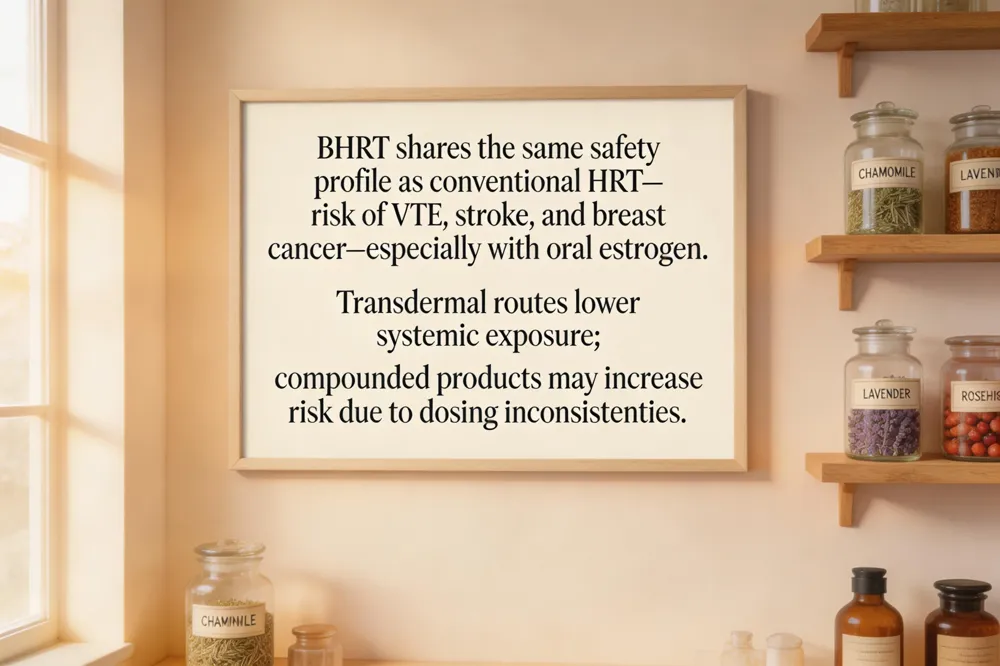 Bioidentical hormone replacement therapy (BHRT) follows the same safety profile as FDA‑approved conventional HRT. Combined estrogen‑plus‑progestogen regimens modestly raise breast‑cancer risk—about three extra cases per 1,000 women over five years—especially with oral preparations. Transdermal or low‑dose routes lower systemic exposure and may reduce this risk, but long‑term data remain limited. The two most severe adverse outcomes are breast cancer and venous thromboembolism (VTE). Estrogen promotes clotting factors, increasing the odds of deep‑vein thrombosis, pulmonary embolism, stroke, and, indirectly, heart disease.
Side‑effect profiles differ by delivery method. Creams and gels can cause local irritation, itching, breast tenderness, spotting, or mild fluid retention; systemic forms (pills, patches) carry higher VTE risk, while pellets, implanted subcutaneously, may provoke insertion‑site pain, swelling, bruising, temporary mood swings, acne, or unwanted hair growth. Because pellets release a fixed dose for 3‑6 months, dosage spikes or lows can occur if metabolism changes.
Compounded BHRT lacks FDA oversight, leading to batch‑to‑batch variability in hormone concentration and purity. Inconsistent dosing can heighten both thrombotic and cancer risks, making FDA‑approved products the safer choice for most patients. Shared decision‑making with a qualified clinician, using the lowest effective dose for the shortest duration, remains essential.
Prescribing Practices and Physician Perspectives
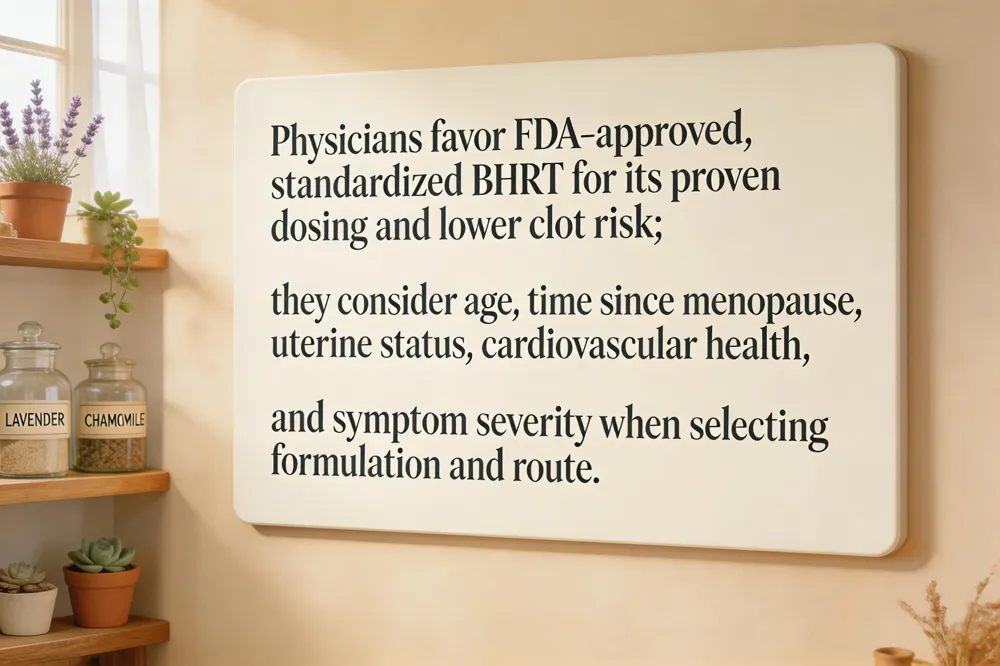 Clinicians weigh several factors before recommending hormone therapy. Regulatory and quality‑control concerns: Most compounded bioidentical hormones are not FDA‑approved, so dose accuracy, purity and safety cannot be guaranteed. Professional societies therefore favor FDA‑regulated products that have undergone rigorous testing. Evidence base for safety and efficacy: Large trials (e.g., WHI) showed that bioidentical formulations are not more effective or safer than conventional HRT; claims of a “natural” or “personalized” advantage lack solid data. When clinicians prefer FDA‑approved products: Approved transdermal estradiol patches, oral micronized progesterone and other standardized doses provide consistent delivery, lower clot risk, and clear labeling, making them the default choice for most patients. Patient‑specific factors influencing prescription: Age (<60 y), timing within ten years of menopause, a uterus (requiring progestogen protection), cardiovascular health, history of clotting or cancer, and personal symptom severity all guide individualized dosing and route selection.
Why don't doctors prescribe bioidentical hormones? Because compounded versions lack FDA oversight, may vary in potency, and have no proven superiority; clinicians prioritize safety and evidence‑based options.
Why are doctors against hormone therapy? Oral estrogen can raise clotting factors and cardiovascular risk, especially when started late; clinicians therefore assess timing, dose and route carefully.
What are the signs that you need hormone replacement therapy? Persistent hot flashes, night sweats, vaginal dryness, mood swings, sleep disruption, low libido, or early bone loss often signal a need for treatment.
What is the most effective hormone replacement therapy for women? Systemic estradiol‑based therapy (oral, patch, gel, or spray) combined with progesterone when a uterus is present provides the most robust relief of vasomotor and genitourinary symptoms, especially when initiated before age 60 or within ten years of menopause.
Pros, Cons, and Choosing the Best Regimen
 Bioidentical hormones are chemically identical to the estrogen, progesterone, and testosterone that the body naturally makes, which allows them to fit the endocrine system with fewer "foreign"‑molecule concerns. Because they can be formulated as creams, gels, patches, pills, injections or sub‑cutaneous pellets, clinicians can tailor the route to a woman’s lifestyle and symptom profile, often achieving relief from hot flashes, night sweats, mood swings and vaginal dryness.
However, many bioidentical products are custom‑compounded in pharmacies and lack FDA approval. Compounded preparations can vary in potency and purity from batch to batch, carry higher cost, and have limited long‑term safety data. In contrast, FDA‑approved bioidentical hormones—such as estradiol tablets, patches, gels, micronized progesterone capsules, and transdermal testosterone—are manufactured under strict quality‑control standards, providing consistent dosing and documented safety.
Guideline‑based recommendations favor the lowest effective dose for the shortest duration needed. For most women with an intact uterus, a low‑dose transdermal 17β‑estradiol patch combined with nightly micronized progesterone offers effective vasomotor symptom control while minimizing clotting and breast‑cancer risk compared with oral estrogen. Women whose primary issue is vaginal dryness may benefit from low‑dose local estrogen (cream, tablet or ring) that limits systemic exposure.
Choosing the best regimen is an individualized decision that balances symptom relief, health history, route preference and cost. A qualified integrative‑medicine clinician can use symptom assessments and, when appropriate, serum hormone testing to fine‑tune therapy, ensuring safety and optimal quality of life.
Bioidentical hormones are chemically identical to the estrogen, progesterone, and testosterone that the body naturally makes, which allows them to fit the endocrine system with fewer "foreign"‑molecule concerns. Because they can be formulated as creams, gels, patches, pills, injections or sub‑cutaneous pellets, clinicians can tailor the route to a woman’s lifestyle and symptom profile, often achieving relief from hot flashes, night sweats, mood swings and vaginal dryness.
However, many bioidentical products are custom‑compounded in pharmacies and lack FDA approval. Compounded preparations can vary in potency and purity from batch to batch, carry higher cost, and have limited long‑term safety data. In contrast, FDA‑approved bioidentical hormones—such as estradiol tablets, patches, gels, micronized progesterone capsules, and transdermal testosterone—are manufactured under strict quality‑control standards, providing consistent dosing and documented safety.
Guideline‑based recommendations favor the lowest effective dose for the shortest duration needed. For most women with an intact uterus, a low‑dose transdermal 17β‑estradiol patch combined with nightly micronized progesterone offers effective vasomotor symptom control while minimizing clotting and breast‑cancer risk compared with oral estrogen. Women whose primary issue is vaginal dryness may benefit from low‑dose local estrogen (cream, tablet or ring) that limits systemic exposure.
Choosing the best regimen is an individualized decision that balances symptom relief, health history, route preference and cost. A qualified integrative‑medicine clinician can use symptom assessments and, when appropriate, serum hormone testing to fine‑tune therapy, ensuring safety and optimal quality of life.
Natural Approaches, Lifestyle, and Complementary Strategies
 Phytoestrogens such as soy isoflavones and red‑clover provide a mild, plant‑derived estrogenic stimulus that may ease mild hot flashes, mood swings, or vaginal dryness, but they are not a reliable substitute for prescription‑strength estrogen when symptoms are moderate to severe. Bioidentical estradiol, derived from plant precursors and chemically identical to endogenous estrogen, can be prescribed in pills, creams, gels, or vaginal inserts for more robust symptom control; both options require individualized dosing and monitoring for clot, cardiovascular, or cancer risks.
Integrative techniques—balanced nutrition, regular exercise, stress‑reduction practices (mindfulness, yoga), and adaptogenic herbs like ashwagandha—support overall endocrine health and can enhance the benefits of hormone therapy. Clinics such as Modern Medicine in Dallas and Forney combine BHRT with lifestyle counseling, using blood work and health‑coach evaluations to tailor treatment and monitor outcomes.
Evidence shows that non‑pharmacologic measures (dietary phytoestrogens, stress management, adequate sleep) may modestly improve vasomotor symptoms and mood, but they are most effective when used alongside physician‑based BHRT rather than as stand‑alone therapies.
Natural estrogen replacement therapy – Refers to phytoestrogens and bioidentical estradiol from plant sources; offers milder estrogenic activity but still carries the same safety considerations as prescription estrogen.
Natural hormone replacement therapy – Uses plant‑derived, chemically identical hormones; FDA‑approved products are safe and effective, while compounded “natural” preparations lack rigorous testing and may vary in potency.
Positive effects of bioidentical hormones – Relief of hot flashes, night sweats, mood swings, improved sleep, vaginal lubrication, stronger hair/nails, and maintained bone density, leading to a smoother menopausal transition and better quality of life.
Access, Cost, Reviews, and Finding a Provider
 Bioidentical hormone therapy (BHRT) is widely available through integrative clinics such as Modern Medicine in Dallas (5000 Belt Line Rd., Suite 900) and Forney (992 E US Hwy 80, Suite C). To find BHRT near you, start with online directories that filter by specialty and distance, ask your primary‑care or naturopathic physician for referrals, and consider tele‑medicine options that connect you with board‑certified hormone specialists. Patient testimonials consistently highlight rapid relief of hot flashes, night sweats, mood swings, and improved sleep—often within weeks—though some users need dose tweaks and may face higher out‑of‑pocket costs. Typical pricing ranges from $200‑$500 per month, varying by hormone type, delivery method (creams, patches, pellets), and whether the product is FDA‑approved or custom‑compounded. Insurance may cover FDA‑approved formulations but rarely compounded ones; using an HSA/FSA or clinic‑payment plans can reduce expenses. Regular labs, symptom tracking, and follow‑up visits are essential for safe, personalized care.
Personalized Care and Future Directions
Integrating BHRT with lifestyle medicine emphasizes that hormone replacement works best when paired with nutrition, exercise, stress reduction, and sleep hygiene. Modern clinics such as Modern Medicine in Dallas and Forney combine bioidentical prescriptions with health‑coach evaluations, personalized diet plans, and regular monitoring of weight, mood, and bone health. Ongoing research supports the “window‑of‑opportunity” concept: initiating therapy within ten years of menopause or before age 60 yields greater symptom relief and lower cardiovascular risk, while later start increases adverse events. Shared decision‑making is essential—patients review their symptom burden, medical history, and personal preferences with a qualified clinician, choosing the lowest effective dose, route, and duration. Continuous follow‑up and adjustments ensure optimal outcomes and safety.