Introducing a Patient‑Focused Approach to Natural Healing
Across the United States, more patients are seeking integrative and naturopathic care that blends evidence‑based natural therapies with conventional medicine. Core concepts of holistic health—addressing physical, mental, emotional, social and spiritual dimensions—are paired with patient empowerment, where the practitioner acts as a teacher and the individual actively co‑creates a personalized wellness plan. This patient‑centered model shifts the focus from merely suppressing symptoms to identifying and removing root causes, using modalities such as acupuncture, herbal medicine, functional lab testing, mind‑body techniques, and lifestyle counseling. By fostering collaboration, education and shared decision‑making, outcomes improve: adherence rises, chronic inflammation drops, and women experience lasting relief from hormonal imbalances and overall enhanced well‑being.
Understanding Integrative and Holistic Foundations
 Integrative medicine blends conventional care with evidence‑based complementary therapies with nutrition counseling, Acupuncture, yoga, and botanical medicine, creating a whole‑person plan that targets root causes rather than isolated symptoms. It is especially useful in women’s health, where hormonal balance, lifestyle, and stress intersect. Holistic health rests on five interrelated dimensions—physical wellness (nutrition, exercise, sleep, environment), mental/intellectual wellness (cognitive clarity, purposeful thinking), emotional wellness (recognizing and expressing feelings), social wellness (supportive relationships and community), and spiritual wellness (purpose and connection). This definition emphasizes the interconnectedness of body, mind, spirit, social ties, culture, and environment. The seven pillars of holistic wellness—physical, emotional, spiritual, intellectual, social, environmental, and nutritional health—guide personalized interventions. Integrative medicine’s four pillars—nutrition, sleep, movement, and relaxation (mind‑body stress‑management)—provide a structured framework for clinicians and patients to co‑create sustainable, evidence‑based wellness plans.
The Naturopathic Doctor: Training, Scope, and Professional Standards
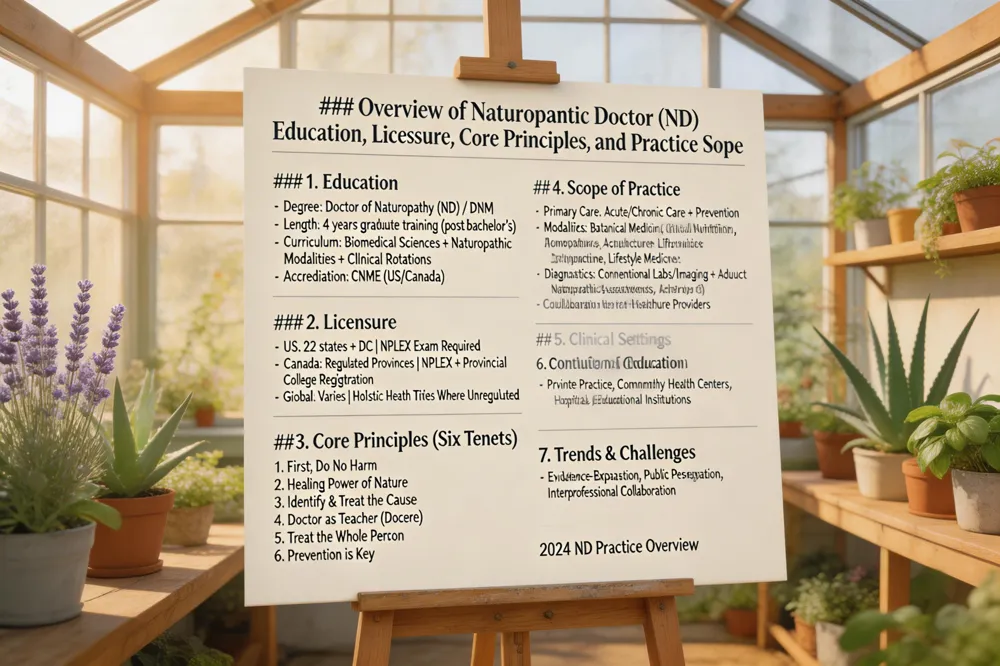 Naturopathic doctors (NDs) in the United States must earn a Doctor of Naturopathic Medicine degree from an accredited four‑year program (≥4,100 hours of classroom and clinical training) and pass the NPLEX exams. Licensure is granted in 26 jurisdictions—including 23 states, the District of Columbia, Puerto Rico and the U.S. Virgin Islands—allowing NDs to diagnose, treat, and prevent illness using natural‑based therapies such as nutrition counseling, botanical and homeopathic medicines, Acupuncture, and mind‑body techniques. Many states also permit IV therapy, minor gynecologic procedures, and primary‑care practice, while prescribing controlled substances is generally prohibited. The six core principles—First Do No Harm, Healing Power of Nature, Identify & Treat the Cause, Treat the Whole Person, Prevention, and Doctor as Teacher—guide every encounter and reinforce the patient‑centered, education‑focused model. Naturopathy is recognized as a legitimate health‑care profession across all 50 states, supported by accredited education, licensure, and growing evidence for chronic‑condition management. Salary expectations vary widely; most NDs earn $80,000‑$150,000 annually, with a median around $103,000 and top earners exceeding $190,000, especially in private practice or specialized clinics.
Evidence, Research, and Insurance: Supporting Patient‑Centric Care
 What does current research say about naturopathic medicine?
Studies show naturopathic care improves hypertension, diabetes, obesity and mental‑health outcomes when nutrition, lifestyle coaching, and stress‑reduction are added to conventional treatment. NIH/WHO list it as a recognized integrative model.
What does current research say about naturopathic medicine?
Studies show naturopathic care improves hypertension, diabetes, obesity and mental‑health outcomes when nutrition, lifestyle coaching, and stress‑reduction are added to conventional treatment. NIH/WHO list it as a recognized integrative model.
Do insurance plans cover integrative medicine services? Coverage varies. Many plans partially reimburse acupuncture, chiropractic, massage and some naturopathic visits; Medicare Part B covers limited acupuncture for chronic back pain. Supplements and many coaching services are often excluded unless bundled with a qualified provider’s bill. Verify network status, visit limits and out‑of‑pocket costs with your insurer.
Naturopathy vs. Homeopathy – key differences Naturopathy is a system that blends nutrition, botanical medicine, lifestyle counseling and hydrotherapy to address root causes. Homeopathy uses highly diluted substances based on “like cures like.” Naturopathic doctors complete four‑year graduate training and may use homeopathic remedies among many tools; homeopathic practitioners focus almost exclusively on remedy selection.
What is naturopathy? Naturopathy is a patient‑centered approach that works with the body’s innate healing force. It emphasizes individualized nutrition, botanical and mind‑body therapies, sleep, exercise, stress management and sunlight exposure, guided by six core principles that empower long‑term wellness.
Practical Applications: Common Modalities and Specific Conditions
 Holistic health practices include acupuncture, yoga, meditation, mindfulness‑based stress reduction, chiropractic and osteopathic manipulation, massage, Tai chi, nutritional counseling, herbal medicine, supplements, Reiki and arts therapies.
A naturopath can assess cortisol using salivary or urinary kits that capture the diurnal rhythm, and may order a serum test through a partner lab. The results guide lifestyle, nutritional and botanical interventions, with physician coordination for any disease diagnosis.
For diabetic neuropathy, NDs prioritize blood‑sugar control through low‑glycemic diets, omega‑3s, alpha‑lipoic acid, B‑complex and vitamin D, plus acupuncture, capsaicin topicals and guided exercise to support nerve health. Care is shared with a physician.
A naturopath can screen for celiac disease by ordering anti‑tTG‑IgA and EMA serology; a positive result is referred for an intestinal biopsy for confirmation, after which the ND advises a gluten‑free diet and monitors autoimmune status.
Aboriginal traditions cite seven healing ways: crying, talking, shaking, sweating, yawning, yelling and laughing—each releasing tension and restoring balance between body and spirit.
Women’s Health and Lifestyle: Tailored Holistic Practices
 Holistic health practices for women blend mind‑body techniques, nutrition, and gentle physical therapies to support hormonal balance and overall vitality. Common modalities include yoga or Pilates for flexibility and stress reduction, mindfulness meditation and deep‑breathing to calm the nervous system, and regular aerobic or strength training to enhance circulation and metabolism. Nutritional counseling emphasizes whole‑food, anti‑inflammatory diets rich in iron, calcium, folic acid, omega‑3s and targeted supplements, while herbal agents such as chasteberry (Vitex) or maca are used to regulate menstrual cycles and ease menopausal symptoms. Acupuncture, pelvic‑floor physical therapy, and massage (including Shiatsu or Indian head massage) address pelvic pain, fertility concerns, and musculoskeletal tension. Patient‑centered care is the cornerstone: practitioners conduct thorough history‑taking, collaborate on personalized treatment plans, and educate women to become active partners in their health. Integrative approaches—combining functional laboratory testing, lifestyle counseling, and evidence‑based natural therapies—enable root‑cause identification and sustainable wellness for women at every life stage.
Closing Thoughts: The Power of Patient‑Centered Naturopathy
Throughout this guide we have highlighted seven patient‑centered practices that form the backbone of naturopathic women’s health: individualized nutrition and functional lab testing; lifestyle counseling that includes sleep, stress, and movement; mind‑body techniques such as meditation, breathwork and guided imagery; gentle physical modalities like acupuncture, massage, and PEMF; botanical and herbal medicine chosen to support hormone balance; integrative hormone‑balancing protocols, including bioidentical therapy when needed; and collaborative goal‑setting with shared decision‑making.
Education lies at the heart of the ND’s “doctor as teacher” role, empowering women to understand their own physiology, track progress, and make informed choices that sustain health beyond the clinic.
Looking ahead, integrative women’s health will likely expand through tele‑health platforms, broader insurance coverage for evidence‑based complementary therapies, and research into personalized light‑based and microbiome‑driven interventions. By keeping the patient at the center of every decision, naturopathy will continue to bridge natural resilience with scientific rigor, fostering lasting wellness for women of all ages.