Why Personalization Matters in Weight Management
Obesity affects 42.4 % of U.S. adults, a statistic that underscores the urgency for tailored weight‑management solutions. Generic diets often neglect the unique metabolic, hormonal, and genetic factors that drive each woman’s weight trajectory. Personalized nutrition—grounded in functional‑medicine testing, gut‑microbiome analysis, and hormonal profiling—delivers diet and lifestyle recommendations that align with an individual’s biology, improving adherence and long‑term success. Integrative approaches combine evidence‑based nutrition with stress‑reduction practices, sleep optimization, and mindful movement, addressing the interconnected systems that influence weight in women. By leveraging tools such as metabolic assessments, AI‑driven meal planning, and holistic counseling, women receive a patient‑centered plan that not only promotes healthy weight loss but also supports overall wellness. These programs incorporate regular monitoring, community support, and flexible adjustments to sustain progress and empower women to maintain health beyond the scale.
Foundations of Personalized Nutrition
Foundations of Personalized Nutrition
| Component | Description | Example |
|---|---|---|
| Genetic Markers | DNA variants that influence metabolism and nutrient needs. | PPARG variant → plant‑forward, iron‑enhancing menu. |
| Gut‑Microbiome | Profile of gut bacteria that affect digestion and inflammation. | High Bifidobacteria → fermented foods, prebiotic fiber. |
| Blood Biomarkers | Lab values for vitamins, minerals, hormones, glucose, lipids. | Low iron absorption → vitamin‑C paired meals, iron‑rich foods. |
| Demographics | Age, sex, health history, lifestyle. | 42‑year‑old woman, hormonal cycle considerations. |
| Goals & Preferences | Weight, hormone balance, food likes/dislikes. | Aim for 1‑2 lb/week loss, avoid saturated fats. |
| Tools | Apps & platforms for tracking & coaching. | Nootric (coach‑guided plans), Cronometer (micronutrient tracking). |
| Outcome | Practical roadmap: what, how much, when to eat. | Whole‑food choices, portion control, timing for blood‑sugar stability. |
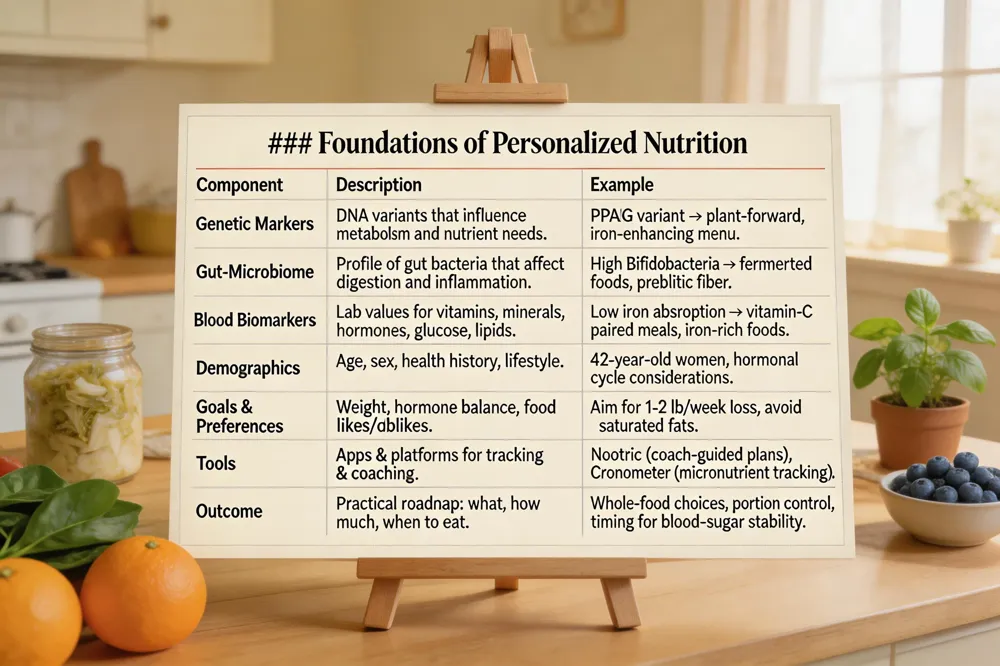 Personalized nutrition is an evidence‑based approach that tailors dietary advice to an individual’s unique biology and lifestyle. By integrating genetic markers, gut‑microbiome profiles, blood biomarkers, age, sex, health history, and personal goals, clinicians can predict how specific foods will affect metabolism, hormone balance, and satiety. A nutrition plan translates these insights into a practical roadmap—what foods to eat, how much, and when—using whole‑food choices, appropriate portion sizes, and timing that supports blood‑sugar stability and hormonal cycles. For example, a 42‑year‑old woman with a PPARG variant and low iron absorption might receive a plant‑forward, iron‑enhancing menu rich in omega‑3s, fermented foods, and vitamin‑C paired meals, while limiting saturated fats. Tools such as the Nootric app (coach‑guided meal plans, real‑time chat) and Cronometer (lab‑verified micronutrient tracking) make daily personalization easy and secure. To get started, visit Harmony Care’s Resources page and download the free "Personalized Nutrition" PDF, which walks you through self‑assessment, goal‑setting, and tracking tips for a science‑backed, women‑focused wellness plan.
Integrative Health Coaching: Careers, Certification, and Salary
Integrative Health Coaching: Careers, Certification, & Salary
| Credential | Hours/Requirements | Typical Salary Range | Notable Markets |
|---|---|---|---|
| Integrative Nutrition Health Coach (INHC) | 500+ hours coursework + final exam (IIN) | $45,000‑$80,000 (median $60,000) | Nationwide |
| National Board Certified Health and Wellness Coach (NBC‑HWC) | NBHWC‑approved program + exam | $50,000‑$75,000 (median) | Nationwide |
| Board‑Certified Functional Nutritionist (CFN) | Specialized functional‑medicine training | $80,000‑$100,000+ | San Francisco, New York City, Washington, DC |
| Experienced Tele‑Wellness Coach | 5+ years experience + niche services | $80,000‑$120,000+ | High‑cost urban markets |
Roles: wellness centres, corporate health programmes, private practice. |
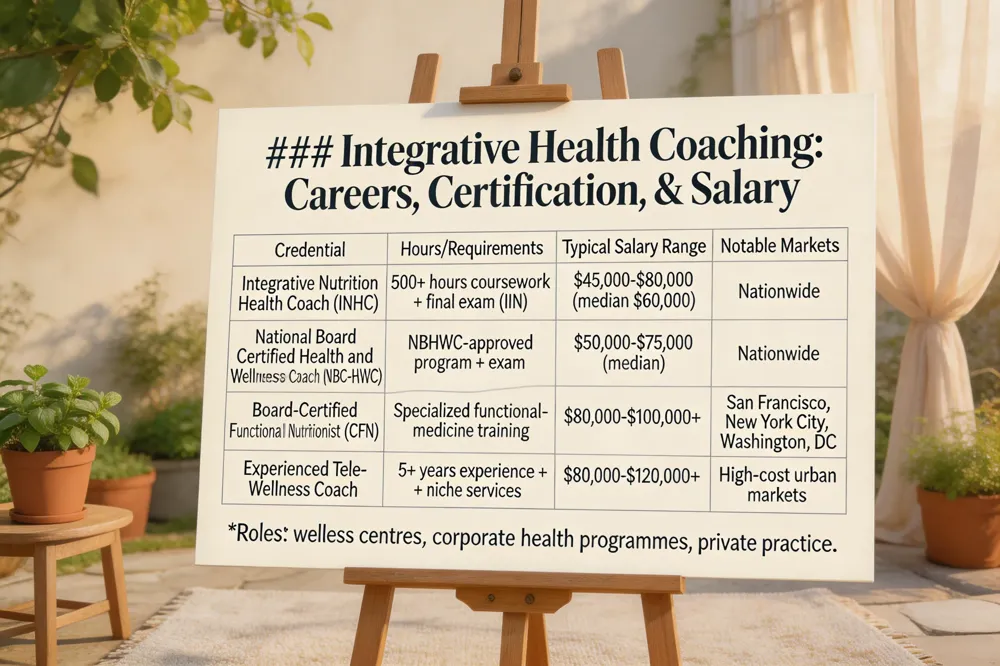 Integrative health coaches blend evidence‑based nutrition, functional‑medicine insights and holistic lifestyle counseling to support women’s hormone health, weight management, and overall wellness. In the United States, typical annual earnings range from $45,000 to $80,000, with a median around $60,000. Highly experienced or board‑certified coaches—especially in high‑cost markets such as San Francisco, New York City, and Washington, DC—can command $80,000 to $100,000 or more, particularly when they offer niche services like personalized nutrition planning or virtual tele‑wellness.
The most recognized credential is the Integrative Nutrition Health Coach (INHC) certification from the Institute for Integrative Nutrition, which includes 500+ hours of coursework and a final exam. Another respected pathway is the National Board Certified Health and Wellness Coach (NBC‑HWC) designation, earned through NBHWC‑approved programs. Both certifications demonstrate mastery of functional‑medicine concepts, coaching methodology, and personalized nutrition.
Job outlook is strong, with roles in wellness centres, corporate health programmes and private practice. Median salaries for these positions hover between $50,000 and $75,000, reflecting growing demand for clinicians who can address root causes of weight gain, hormonal imbalances, and chronic disease through individualized, whole‑person care.
Integrative nutrition health merges conventional nutrition science with a broader view of psychological, physiological, and environmental factors, creating customized plans that include whole‑food choices, targeted supplements, and lifestyle adjustments. This patient‑centered approach empowers women to achieve sustainable weight loss, balanced hormones, and lasting vitality.
Access, Insurance, and Cost Considerations for Functional Nutrition
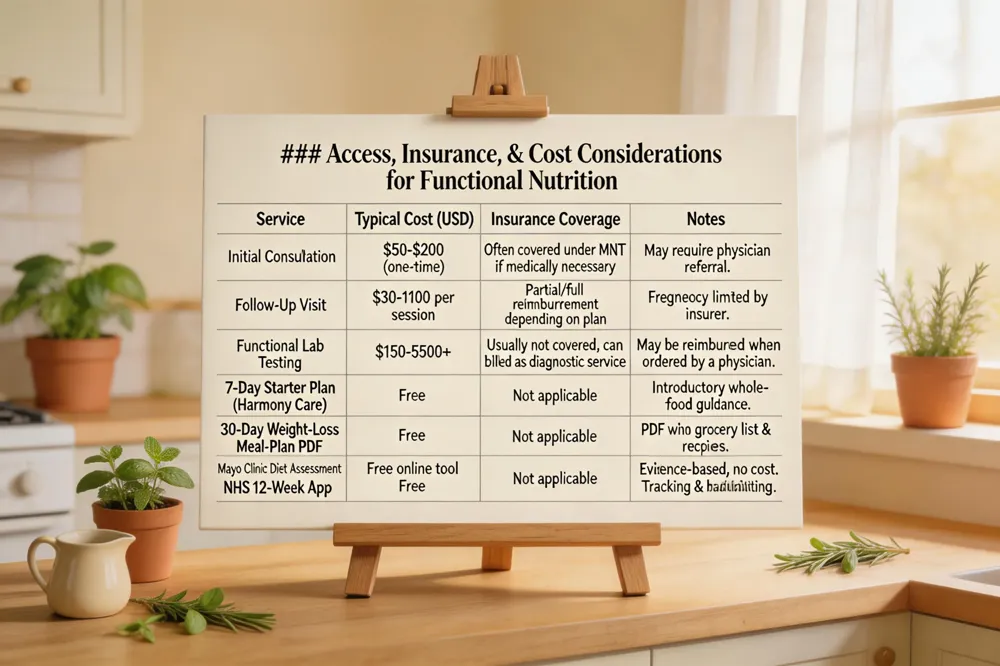
Access, Insurance, & Cost Considerations for Functional Nutrition
| Service | Typical Cost (USD) | Insurance Coverage | Notes |
|---|---|---|---|
| Initial Consultation | $50‑$200 (one‑time) | Often covered under Medical Nutrition Therapy (MNT) if medically necessary | May require physician referral. |
| Follow‑Up Visit | $30‑$100 per session | Partial or full reimbursement depending on plan | Frequency limited by insurer. |
| Functional Lab Testing | $150‑$500+ | Usually not covered; can be billed as diagnostic service | May be reimbursed when ordered by a physician. |
| 7‑Day Starter Plan (Harmony Care) | Free | Not applicable | Introductory whole‑food guidance. |
| 30‑Day Weight‑Loss Meal‑Plan PDF | Free | Not applicable | PDF with grocery list & recipes. |
| Mayo Clinic Diet Assessment | Free online tool | Not applicable | Evidence‑based, no cost. |
| NHS 12‑Week App | Free | Not applicable | Tracking & habit‑building. |
 When you explore a personalized nutrition plan, the first step is to understand how insurance may help. Many major carriers—including Aetna, UnitedHealthcare, Blue Cross Blue Shield, Cigna, and Humana—provide coverage for nutrition services that are delivered by a licensed dietitian or a credentialed functional nutritionist. This is usually tied to Medical Nutrition Therapy (MNT) benefits, which the Affordable Care Act mandates for preventive care and chronic‑condition management such as diabetes, kidney disease, or obesity. Coverage varies: some plans pay the full visit cost, while others require a copay, limit the number of sessions, or ask for a physician referral. Always verify your plan’s in‑network status and documentation requirements.
A personalized nutrition plan typically begins with a one‑time consultation ranging from $50 to $200, with follow‑up visits adding $30‑$100 each. Prices differ by region and practitioner expertise, and many insurers will reimburse when the service is deemed medically necessary.
For budget‑friendly options, Harmony Care offers a complimentary 7‑day starter plan, a free 30‑day weight‑loss meal‑plan PDF, and links to the Mayo Clinic Diet assessment and NHS 12‑week app—each delivering evidence‑based, whole‑food guidance without cost. These resources let women begin a sustainable, holistic weight‑management journey while they assess insurance coverage or plan for personalized professional support.
Holistic Weight‑Management Programs and Services at Harmony Care
Holistic Weight‑Management Programs & Services at Harmony Care
| Service | Description | Duration / Key Features |
|---|---|---|
| One‑on‑One Nutrition Counseling | Personalized diet based on labs, hormones, lifestyle. | Ongoing, session‑based |
| Functional Lab Testing | Blood, stool, hormone panels to guide nutrition. | One‑time or periodic |
| Group Workshops | Mindful eating, seasonal detox, holistic cooking. | Weekly or monthly |
| Telehealth Follow‑Ups | Remote accountability & plan adjustments. | As needed |
| 12‑Week Integrative Journey | Combines nutrition, hormone adjustments, yoga, meditation, breathwork. | 12 weeks, 1‑2 lb/week target |
| Holistic Weight‑Loss Supplements | Vitamin D, magnesium, probiotics, green‑tea extract, MCT oil, berberine, omega‑3s. | Dosed per individual lab results |
| 7‑Day Diet Plan | ~1,500 kcal/day, ≥80 g protein, 30 g fiber. | 7 days, sample meals provided |
| 14‑Day Holistic Diet | Reset (days 1‑7) → Rebuild (days 8‑14). | 14 days, phased food re‑introduction |
| Customized Diet Plan | Intake questionnaire, metabolic testing, calorie/macronutrient calculation. | Ongoing monitoring |
| Holistic Strategies for Women | Hormone‑balanced diet, strength training, stress reduction, sleep, labs. | Lifestyle integration |
| Holistic Food List | Leafy greens, cruciferous veg, whole grains, wild‑caught salmon, etc. | Core pantry items |
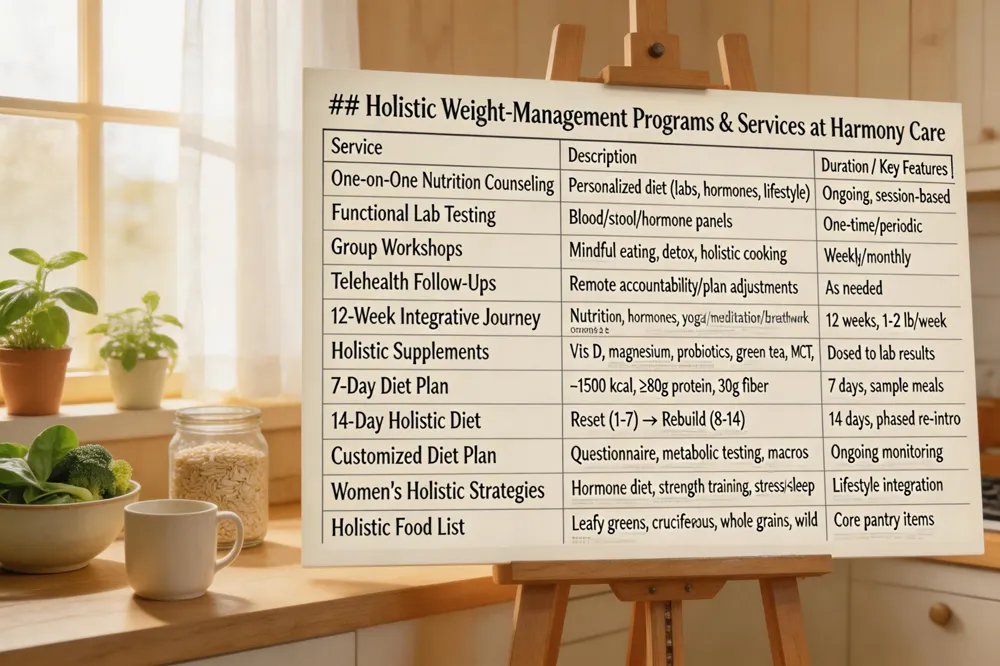 Services offered by Integrative Nutrition & Healing
Harmony Care delivers one‑on‑one nutrition counseling, functional lab testing, and personalized meal‑plan creation that address hormonal, gut‑health, and stress factors. Group workshops teach mindful eating, seasonal detox, and holistic cooking, while telehealth follow‑ups keep clients accountable.
Services offered by Integrative Nutrition & Healing
Harmony Care delivers one‑on‑one nutrition counseling, functional lab testing, and personalized meal‑plan creation that address hormonal, gut‑health, and stress factors. Group workshops teach mindful eating, seasonal detox, and holistic cooking, while telehealth follow‑ups keep clients accountable.
Holistic weight loss program A 12‑week integrative journey combines tailored nutrition, hormone‑guided adjustments, yoga, meditation, and breathwork. Weekly lifestyle coaching targets sleep, stress, and activity, aiming for a safe 1‑2 lb weekly loss that is maintainable long‑term.
Holistic weight loss supplements Evidence‑based options include vitamin D, magnesium, high‑quality probiotics, green‑tea extract, MCT oil, berberine, and omega‑3s. Dosage and interactions are personalized with a practitioner.
7‑day diet plan for weight loss ≈1,500 kcal/day with ≥80 g protein and 30 g fiber. Meals feature Greek yogurt with berries, salmon‑quinoa salads, apple‑almond butter snack, and lean protein with veggies. Hydration includes 8 cups water plus herbal tea.
14‑day holistic diet Days 1‑7 reset: eliminate processed foods, dairy, gluten, alcohol; focus on lean proteins, leafy greens, cruciferous veg, avocado, olive oil, nuts, seeds. Days 8‑14 rebuild: add fermented foods, probiotic‑rich yogurt, turmeric, ginger, legumes, chia/flaxseed. Aim for 2‑3 L water daily.
Customized diet plan for weight loss Starts with intake questionnaire, blood work, metabolic testing. Calculates individualized calorie target, macronutrient ratios, and meal timing to support blood‑sugar stability, thyroid function, and gut health. Ongoing monitoring ensures adjustments.
Holistic weight loss strategies for women Emphasize hormone‑balanced whole‑food diet, regular strength training, stress‑reduction (meditation, yoga), restorative sleep, and functional lab‑guided care.
Holistic diet food list Leafy greens, cruciferous veg, whole grains (quinoa, brown rice), legumes, wild‑caught salmon, pasture‑raised poultry, avocado, olive oil, nuts, seeds, fermented foods, berries, and spices for micronutrients and gut health.
Evidence‑Based Dietary Strategies for Women
Evidence‑Based Dietary Strategies for Women
| Strategy | Key Features | Sample Application |
|---|---|---|
| Mediterranean‑Style Whole‑Food | Lean protein, fiber‑rich veg, low‑glycemic carbs, unsaturated fats. | 1,500–1,800 kcal/day, olive oil, nuts, fish. |
| Moderate Calorie Restriction | 500–1,000 kcal deficit, balanced macros. | 1,500 kcal for a 42‑year‑old woman aiming 0.5 kg/week loss. |
| Low‑Carb / Keto (short‑term) | ≤50 g carbs/day, 70‑80 % fat, moderate protein. | 2‑week keto phase with micronutrient monitoring. |
| Intermittent Fasting (16:8) | Eating window 8 h, fasting 16 h. | First meal at 10 am, last at 6 pm. |
| High‑Protein Emphasis | 20–30 g protein per meal, supports satiety & muscle. | Oatmeal with Greek yogurt, cottage cheese snack. |
| Habit‑Based Mindful Eating | Mayo Clinic “five healthy habits”, portion awareness. | Slow eating, no distractions, chew 20‑30 times. |
| Daily Movement | ≥30 min moderate activity (walk, yoga, strength). | 45‑min brisk walk + 15‑min strength circuit. |
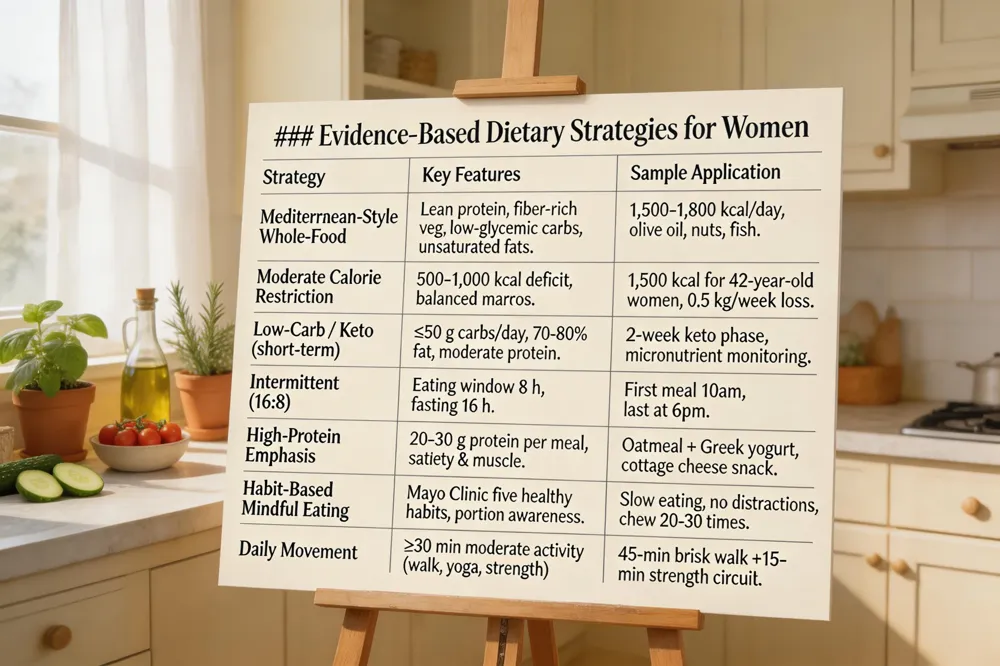 What diet is best for weight loss for women?
A balanced, whole‑food plan that emphasizes lean protein, fiber‑rich vegetables, whole‑grain or low‑glycemic carbs, and healthy unsaturated fats (olive oil, nuts, avocado) offers the most sustainable results. The Mediterranean pattern—rich in plant foods, fish, poultry, and limited added sugars—aligns with hormonal balance and has strong evidence for reducing weight gain (Mayo Clinic Diet, ZOE studies). Incorporating habit‑based strategies from the Mayo Clinic Diet (mindful eating, portion awareness, 30 min daily movement) turns healthy choices into lasting lifestyle changes.
Best diets for fast weight loss
Rapid, safe loss can be achieved with moderate calorie restriction (≈500–1,000 kcal deficit) combined with a low‑carb, moderate‑protein or Mediterranean‑style diet. Short‑term very‑low‑calorie (≤800 kcal) or meal‑replacement programs produce 3–5 lb/week but require medical supervision. Intermittent fasting (16:8) and high‑protein intake further boost satiety and preserve muscle.
Keto diet to lose weight
Keto (≤50 g carbs/day, 70‑80 % fat, moderate protein) can prompt quick loss via glycogen depletion and appetite suppression. Women should personalize keto under functional‑medicine guidance to ensure micronutrient adequacy, hormonal balance, and monitor ketones/electrolytes. It may be useful short‑term when paired with stress‑reduction, sleep hygiene, and tailored supplementation.
Effective weight‑management diet plan
Aim for 1,500–1,800 kcal/day, 20–30 g protein per meal, abundant fiber, and a Mediterranean‑style emphasis on plant foods, lean proteins, and healthy fats. Use habit‑building (mindful eating (Mayo Clinic’s “five healthy habits”), food‑and‑exercise journaling, and weekly review with a health coach to achieve 0.5–1 kg/week loss.
Effective weight‑management diet meal plan
Sample day: oatmeal with berries and chia for breakfast; cottage cheese‑cucumber snack; lunch of mixed greens, grilled salmon, quinoa; afternoon apple‑almonds; dinner of baked fish, roasted broccoli, sweet potato; hydrated with 8‑10 cups water. Pair with ≥30 min daily movement for optimal results.
Behavioral, Lifestyle, and Practical Tools for Sustainable Success
Behavioral, Lifestyle, & Practical Tools for Sustainable Success
| Tool | How to Implement | Benefits |
|---|---|---|
| Comprehensive Health Assessment | Collect medical history, hormones, gut markers, lifestyle. | Baseline for personalized plan. |
| Macro‑Balanced Plate Model | ½ plate veg/fruits, ¼ lean protein, ¼ whole grains/starchy veg. | Simplifies portion control, nutrient density. |
| Weekly Meal‑Prep Calendar | Batch‑cook staples, schedule meals, create grocery list. | Reduces stress, ensures consistency. |
| Hunger Cue Monitoring | Pause before eating, rate hunger 1‑10, adjust portions. | Prevents overeating, improves satiety awareness. |
| Habit‑Tracking Worksheet | Log eating, movement, sleep, stress‑management daily. | Visual progress, identifies patterns. |
| Free Starter Plans | 7‑day starter, 30‑day meal‑plan PDF, Mayo Clinic assessment. | Low‑cost entry point, builds confidence. |
| At‑Home Holistic Practices | Mindful meditation, journaling, yoga, breathing exercises. | Low stress, supports hormone balance. |
| Hydration Goal | 2‑3 L water + herbal tea daily. | Improves metabolism, satiety, skin health. |
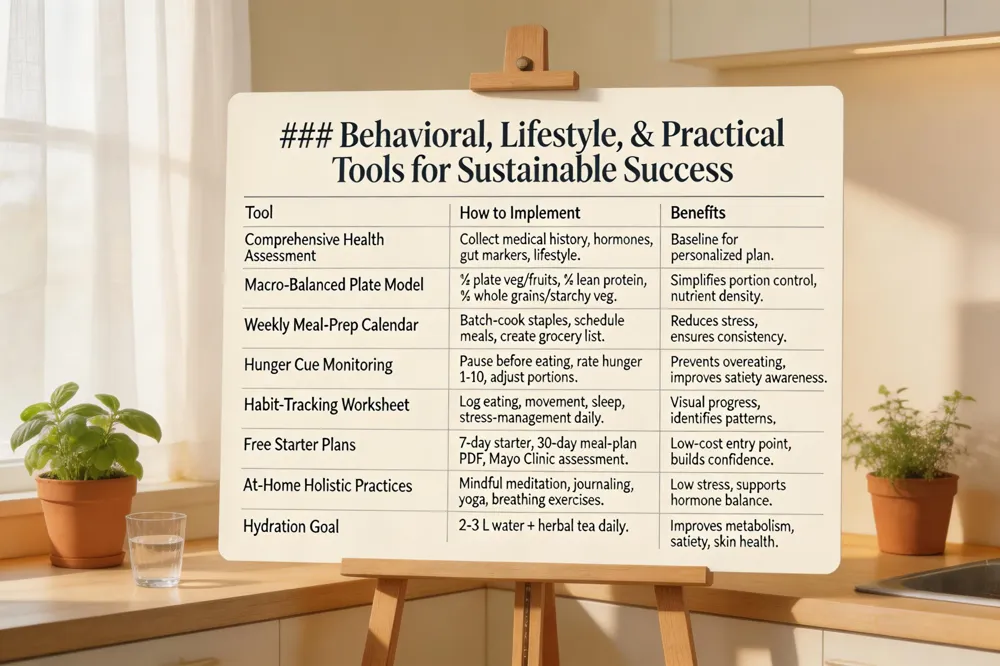 How to design a diet plan Start with a comprehensive health assessment that includes medical history, hormonal status, gut‑health markers, and lifestyle patterns. Calculate daily energy needs using a basal metabolic rate estimate plus an activity factor, then aim for balanced macro ratios—approximately 40 % complex carbs, 30 % high‑quality protein, and 30 % healthy fats. Fill half the plate with colorful vegetables and fruits, a quarter with lean protein (e.g., fish, eggs, tofu), and a quarter with whole grains or starchy veg. Create a flexible weekly schedule that allows meal prep, portion control, and social events, and review blood‑sugar and hormone levels every four weeks to keep the plan aligned with integrative wellness.
How to build a meal plan Determine personal calorie and nutrient needs based on age, weight, activity level, and goals. Choose whole‑food staples for each macro, map meals onto a simple weekly chart, and generate a focused grocery list. Batch‑cook or prep ingredients in bulk to make weekday cooking stress‑free, then adjust portions by listening to hunger cues.
Beginner diet plan for weight loss for female Eat three balanced meals plus two snacks daily, targeting 30 g of lean protein per meal and 5‑7 servings of vegetables. Use whole‑grain carbs (brown rice, quinoa, oats) and modest healthy fats (nuts, avocado, olive oil). Pair nutrition with at least 150 minutes of moderate activity weekly.
Free weight loss plans Harmony Care offers a complimentary 7‑day starter plan; the Mayo Clinic Diet provides a free personalized assessment; the NHS app delivers a 12‑week plan with tracking tools.
Holistic weight loss strategies at home Practice mindful eating, incorporate daily movement you enjoy, manage stress with meditation or journaling, prioritize 7‑9 hours of sleep, stay hydrated, and track progress with a habit‑monitoring worksheet.
Free 30‑day meal plan for weight loss PDF Download Harmony Care’s 1,200‑calorie daily menu PDF, which includes weekly grocery lists, simple recipes, and a habit‑tracking worksheet to support sustainable, whole‑food‑focused weight loss.
Resources, Education, and Further Learning
Resources, Education, & Further Learning
| Resource | Type | Access Details |
|---|---|---|
| Institute for Integrative Nutrition (IIN) | Health‑coach training school (online, cohort‑based) | 6‑12 months, accredited, global alumni network. |
| Integrative Nutrition (Joshua Rosenthal) | Book (256 pages) | Practical recipes, hormone‑balance insights. |
| Personalized Nutrition Definition | Concept overview | Tailors advice to genetics, microbiome, biomarkers, lifestyle. |
| Personalized Meal Planning (EatThisMuch) | Online tool | Generates nutrient‑dense recipes, budget‑friendly shopping list. |
| Nootric App | Coaching platform | Coach‑guided meal plans, real‑time chat. |
| Cronometer | Micronutrient tracker | Lab‑verified nutrient tracking. |
| Mayo Clinic Diet Assessment | Free online assessment | Evidence‑based, whole‑food guidance. |
| NHS 12‑Week App | Free mobile app | Tracking, habit‑building, progress monitoring. |
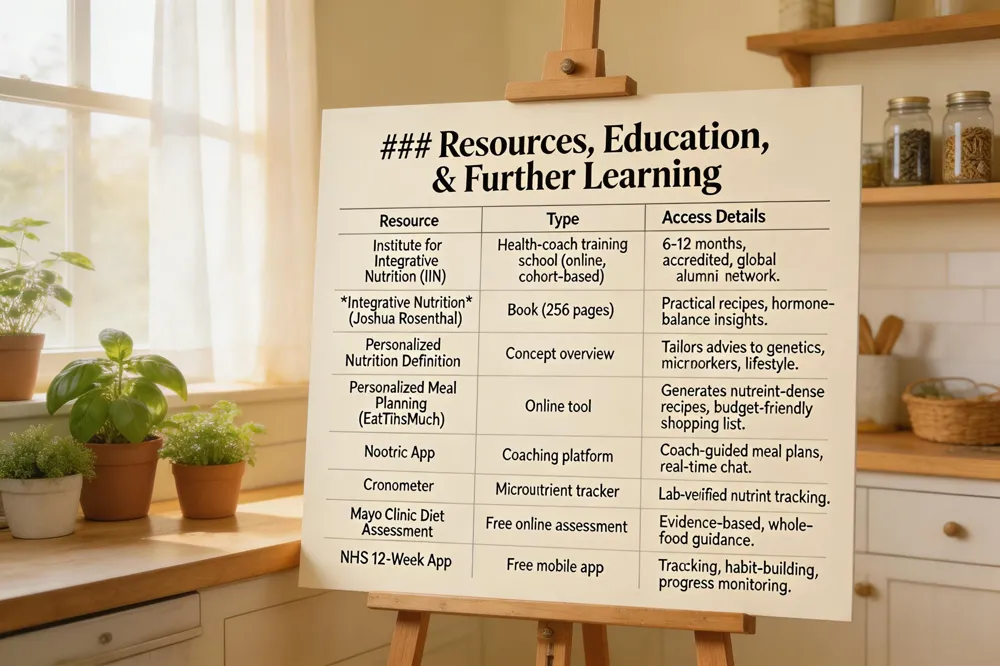 Integrative Nutrition institute
The Institute for Integrative Nutrition (IIN) is the world’s largest health‑coach training school. Its online, cohort‑based program blends nutrition science, functional medicine, and business entrepreneurship, and is accredited by the National Board for Health & Wellness Coaching. Students complete the curriculum in 6‑12 months while maintaining work or family commitments, joining an alumni network in over 150 countries.
Integrative Nutrition book
Joshua Rosenthal’s Integrative Nutrition: Feed Your Hunger for Health and Happiness is a 256‑page guide that mixes functional nutrition, mind‑body science, and practical lifestyle strategies. It offers evidence‑based insights on how food influences hormonal balance, digestion, and overall well‑being—especially relevant for women seeking holistic health solutions. The book includes step‑by‑step recipes and actionable tips for busy lifestyles.
Personalized nutrition definition
Personalized nutrition tailors dietary recommendations to an individual’s unique biology and lifestyle—genetics, microbiome, blood biomarkers, age, sex, and health history. By moving beyond one‑size‑fits‑all guidelines, it provides precise food, timing, and portion advice that aligns with hormonal balance, metabolic needs, and long‑term health goals.
Personalized nutrition and meal planning
Combining lab data, hormone profiles, gut health markers, and daily routines, a personalized meal plan offers nutrient‑dense, culturally appropriate recipes, flexible portion guidance, and a budget‑friendly shopping list. Ongoing monitoring ensures the plan evolves with your body’s signals, supporting sustainable weight management, increased energy, and overall vitality.
Empowering Women Through Personalized, Integrative Nutrition
Personalized nutrition addresses each woman’s unique genetic makeup, gut microbiome, hormonal fluctuations, lifestyle and health history, leading to higher adherence, greater satiety and more sustainable weight loss. By tailoring macronutrient ratios, meal timing and food choices, it reduces post‑prandial glucose spikes, supports thyroid and insulin balance, and mitigates stress‑related cortisol surges that promote abdominal fat. A holistic weight‑management plan combines this science‑driven nutrition with regular movement, mindful eating, sleep hygiene and stress‑reduction practices, creating a synergistic environment for lasting wellness. Harmony Care offers integrative services—functional testing, hormone‑focused counseling, personalized meal planning and supportive coaching—designed to empower women to achieve their health goals with confidence. Explore our resources today and begin a personalized journey toward balanced vitality. Our team provides workshops on mindfulness, sleep optimization, and yoga to reinforce your progress.