Why Personalization Matters
One‑size‑fits‑all diets often ignore individual genetics, hormonal status, gut microbiome, and lifestyle, leading to poor adherence and modest results. Studies show personalized nutrition—tailored to age, sex, activity level, and metabolic profile—improves weight‑loss outcomes by 30% or more. Integrative and functional medicine builds on this by assessing root causes such as thyroid function, insulin resistance, vitamin deficiencies, and stress levels before prescribing food choices. The approach blends whole‑food, anti‑inflammatory eating with targeted supplements, mindfulness, sleep hygiene, and movement that match a woman’s unique needs. Core pillars of sustainable weight loss include: (1) realistic SMART goals and regular self‑monitoring, (2) balanced macronutrients with adequate protein and fiber, (3) consistent aerobic and strength training, (4) sleep, stress management, and hydration, and (5) ongoing professional coaching to adjust the plan as the body adapts. Together these elements create a flexible, evidence‑based roadmap that supports long‑term health and weight‑management success.
Foundations of a Tailored Nutrition Plan
Foundations of a Tailored Nutrition Plan
| Component | Details |
|---|---|
| Goal Setting | SMART (Specific, Measurable, Achievable, Relevant, Time‑bound) milestones |
| Baseline Assessment | Fitness, diet, sleep, stress, medical conditions |
| Cost | Consultation $50‑$200 (one‑time); follow‑up $30‑$100; many insurers now cover |
| Free Options | Self‑assessment questionnaire (Mayo Clinic), AI tools (Eat This Much), free PDFs (holistic diet) |
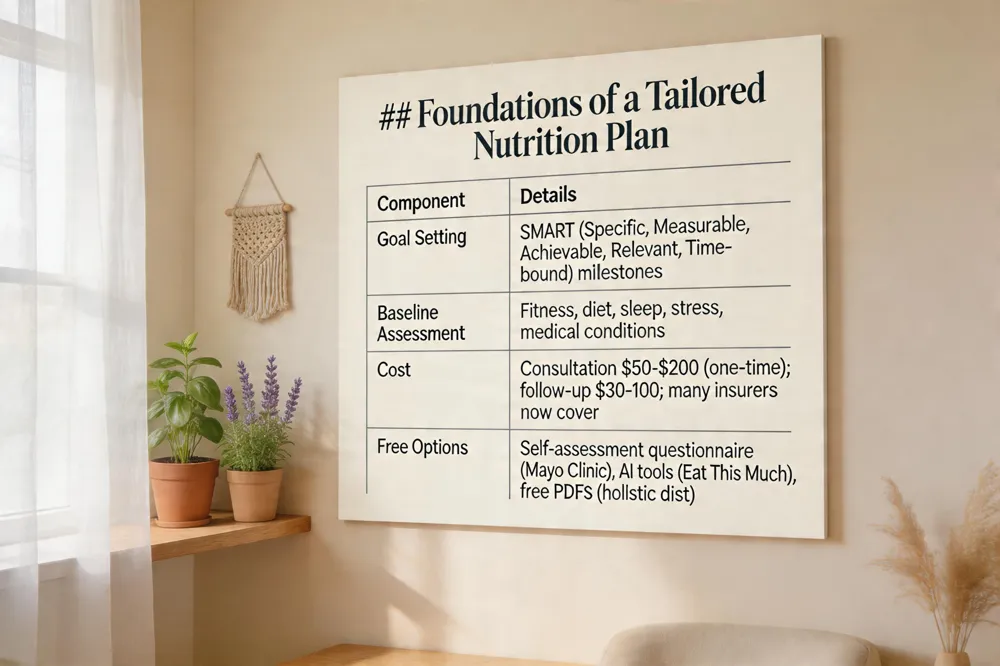 A tailored nutrition plan is a personal roadmap that reflects your body type, lifestyle, health goals, taste preferences, and even hormonal status. It begins with a clear, individualized goal—whether it’s losing 5‑10 % of weight, building muscle, or improving energy—followed by a baseline fitness and diet assessment that captures strength, endurance, flexibility, current eating habits, sleep, stress, and any medical conditions. From this data you set SMART (Specific, Measurable, Achievable, Relevant, Time‑bound) milestones and schedule regular progress reviews to keep motivation high and avoid plateaus.
Cost varies: a one‑time consultation often ranges $50‑$200, with follow‑ups $30‑$100 each; many insurers now cover nutrition counseling and some practitioners offer package discounts.
Free options start with a self‑assessment questionnaire (e.g., Mayo Clinic Diet) and use AI‑driven tools like Eat This Much or open‑source meal planners to generate weekly menus that respect your health conditions, budget, and preferences.
A complimentary 30‑day holistic diet PDF and a free personalized diet plan are available through reputable integrative health sites, offering whole‑food, plant‑forward meals, mindful‑eating cues, and stress‑reduction tips to support sustainable weight loss.
Whole‑Food Nutrition Strategies for Women
Whole‑Food Nutrition Strategies for Women
| Strategy | Key Points |
|---|---|
| Mediterranean / Plant‑Forward | Vegetables, fruits, whole grains, legumes, nuts, olive oil, fish |
| Macro Split | ~30 % protein, 40 % carbs, 30 % fats |
| Protein Intake | 1.0‑1.5 g/kg body weight to preserve muscle |
| Anti‑Inflammatory Foods | Turmeric, ginger, fermented probiotics |
| Weight‑Loss Guideline | 500‑750 kcal deficit + 150 min weekly activity |
| Rules | 5‑4‑3‑2‑1, 30‑30‑30, 3‑3‑3 |
| Supplements | Fiber, green‑tea extract, modest caffeine (third‑party tested) |
| Home Remedies | Whole‑food low‑carb diet, daily moderate activity, strength sessions, label reading, clothing‑fit tracking |
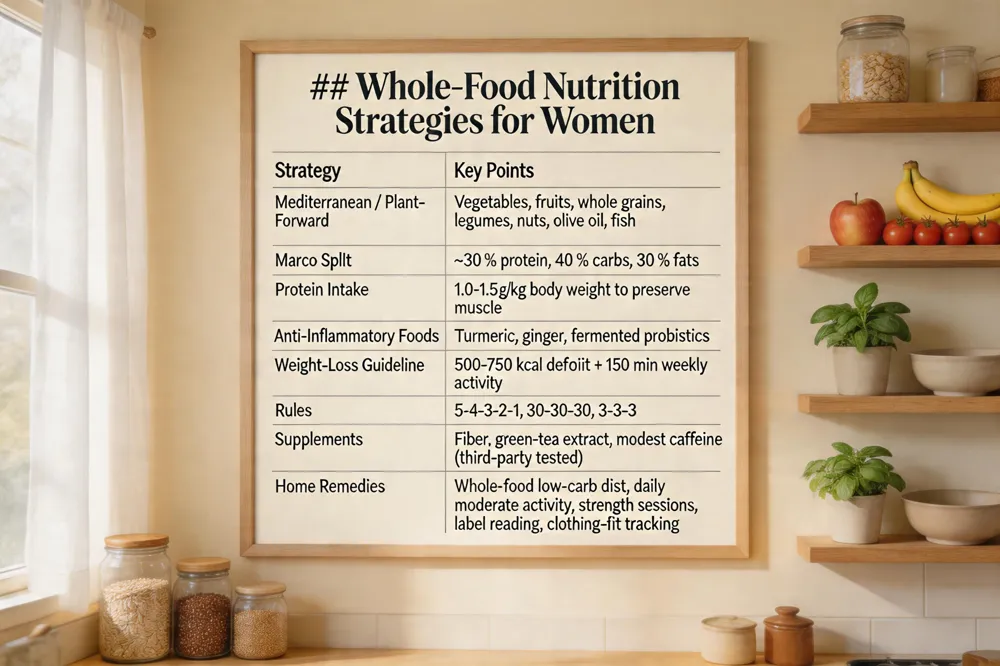 Mediterranean and plant‑forward meals—vegetables, fruits, whole grains, legumes, nuts, olive oil, fish—provide fiber, polyphenols and healthy fats that reduce inflammation and improve insulin sensitivity. Aim for a balanced split (~30 % protein, 40 % carbs, 30 % fats); protein 1.0‑1.5 g/kg preserves muscle. Anti‑inflammatory foods like turmeric, ginger and fermented probiotics support gut health.
How to lose weight fast naturally and permanently – Whole‑food diet, 500‑750 kcal deficit, 150 min weekly activity, stress control, 7‑9 h sleep, SMART goals.
Sustainable weight loss rate kg – 0.5‑1 kg per week (2‑4 kg per month) with modest deficit.
Sustainable weight loss per week – 0.5‑1 kg (1‑2 lb) weekly.
Sustainable weight loss per month – 2‑4 kg (4‑8 lb) monthly.
Best holistic way to lose weight – Whole‑food nutrition, enjoyable movement, adequate sleep, mindfulness, professional support.
5‑4‑3‑2‑1 rule – 5 veg/fruits servings, 4 glasses water, 3 low‑fat dairy, ≤2 h screen, 1 h exercise daily.
30‑30‑30 rule – 30 g protein within 30 min of waking, breakfast within 30 min, 30 min low‑intensity activity.
3‑3‑3 rule – 3 balanced meals, ~3 L water, 3 h activity weekly.
Sustainable weight‑loss supplements – Fiber, green‑tea extract, modest caffeine; third‑party tested, professional guidance.
Weight‑loss home remedies for females – Whole‑food low‑carb diet, daily moderate activity, strength sessions, label reading, clothing‑fit tracking, supportive community.
Digital Tools & Free Resources for Meal Planning
Digital Tools & Free Resources for Meal Planning
| Resource | Description |
|---|---|
| AI Diet‑Maker | Enter age, activity, allergies, functional‑medicine notes (thy hormone, PCOS) → daily whole‑food menus |
| Free PDF Plans | Mount Sinai 30‑Day Healthy Lifestyle, DASH low‑sodium guide, LiveHealth 1,500‑calorie plan |
| 30‑Day Weight‑Loss PDF | Mount Sinai PDF with recipes, exercise, mood tracking |
| Mayo Clinic + Eat This Much | Free health questionnaire → calorie & macro goals → weekly menu & grocery list |
| NHS 12‑Week App | Weekly goals, meal ideas, activity tracker, BMI calculator (free) |
| Personalized Diet & Workout | Mayo assessment + open‑source Strongr Fastr workout database for tailored strength & cardio |
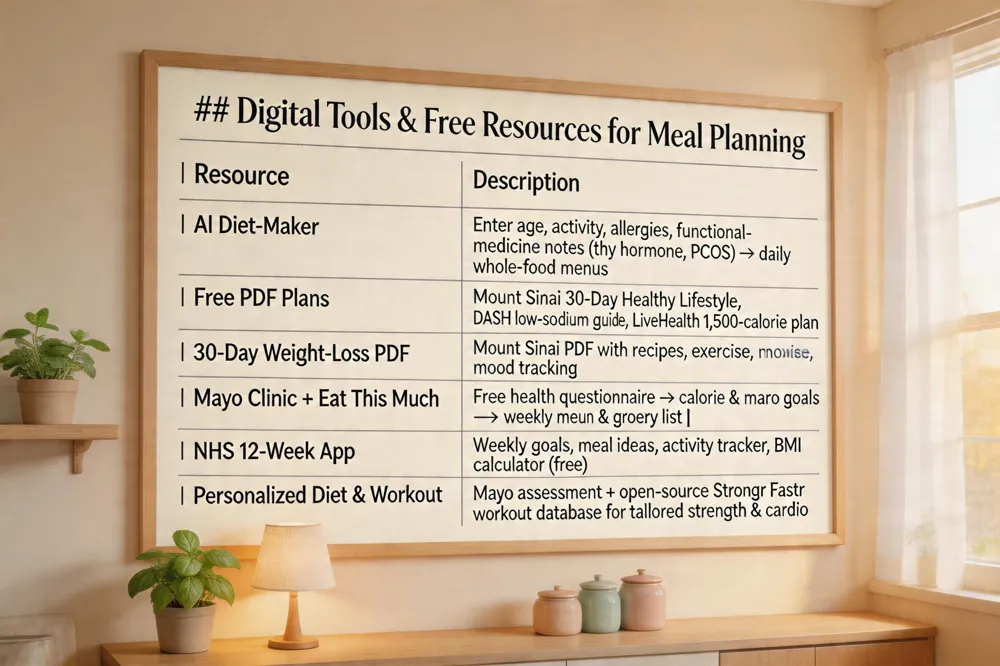 Digital tools let women create personalized, evidence‑based meal plans that respect hormonal balance, gut health and lifestyle.
Diet plan maker for weight loss
Enter age, activity, allergies and functional‑medicine notes (thyroid, PCOS). The AI builds daily menus of whole‑food, seasonal veg, lean proteins and healthy fats.
Free diet plans pdf
Mount Sinai’s 30‑Day Healthy Lifestyle PDF, DASH low‑sodium weekly guide, and LiveHealth’s 1,500‑calorie plan PDF give printable, balanced meals that fit naturopathic wellness.
Free 30‑day meal plan for weight loss PDF
Download Mount Sinai’s 30‑day weight‑loss PDF with Greek‑yogurt parfaits, quinoa bowls, shrimp‑spaghetti squash, for meals, exercise and mood tracking.
Free diet plan free
Complete the Mayo Clinic free health questionnaire, then use Eat This Much to set calorie and macro goals, generating a weekly menu and grocery list at no cost.
Free weight loss plan no subscription
The NHS 12‑week Weight‑Loss app offers weekly goals, meal ideas, activity tracking and BMI calculator, all free of charge.
Personalized diet and workout plan free
Pair the Mayo Clinic free assessment with the open‑source Strongr Fastr workout database, which tailors strength and cardio routines to your equipment and progress; log daily to refine AI suggestions.
Movement, Exercise, and Everyday Activity
Movement, Exercise, and Everyday Activity
| Activity | Details |
|---|---|
| 7‑Day Walking Routine | Mon 15 min easy, Tue 20 min, Wed 25 min + 1‑min brisk intervals, Thu yoga, Fri 30 min steady, Sat 35 min hills, Sun 20 min mindful stroll |
| Jogging Guidelines | 30 min most days, ~150 min/week, 5 mph ≈ 300 kcal burned for a 160‑lb woman |
| Strength Training | Twice weekly to preserve lean muscle and boost metabolism |
| Goal Setting | Define personal “why”, set SMART goals (e.g., 5‑10 % weight loss) |
| Tracking | Log food, activity, sleep, stress with apps (MyFitnessPal, Habitica, Mayo tracker) |
| Lifestyle Tips | 30 min moderate movement daily, restorative sleep, mindfulness (yoga) |
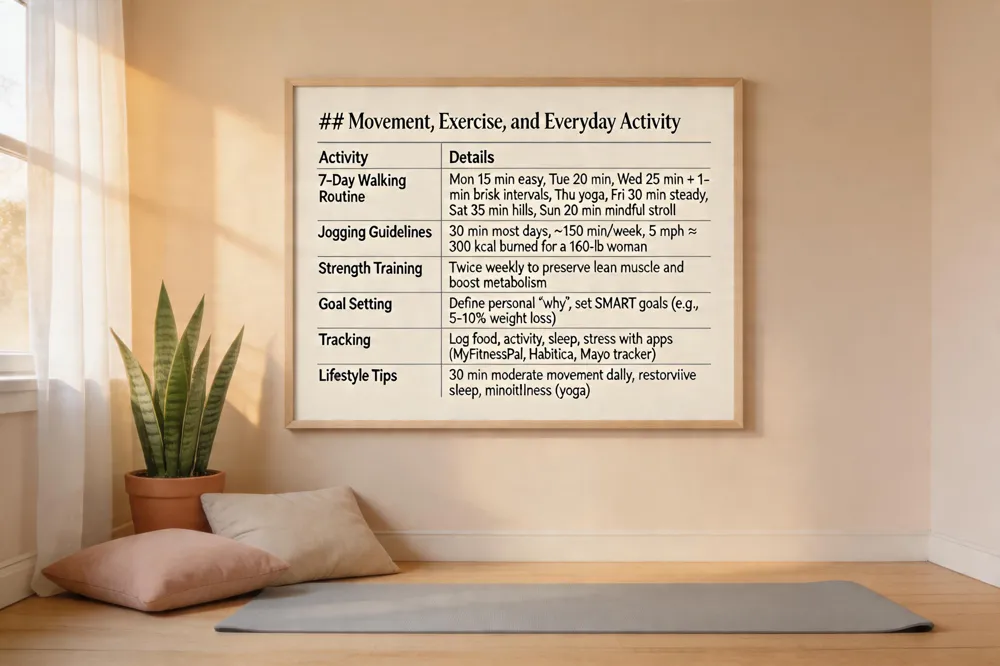 Personalized movement plans begin with clear, achievable targets. A gentle 7‑day walking routine supports hormonal balance and joint health: start Monday with 15 minutes easy‑pace, Tuesday 20 minutes, Wednesday 25 minutes adding a 1‑minute brisk interval every five minutes, Thursday rest with light yoga, Friday 30 minutes steady walk, Saturday 35 minutes including gentle hills, Sunday 20 minutes mindful stroll. For weight loss, aim for about 30 minutes of jogging most days—roughly 150 minutes weekly—as recommended by U.S. guidelines; a 30‑minute jog at 5 mph burns ~300 calories for a 160‑lb woman. Pair jogging with strength training twice weekly to preserve lean muscle and boost metabolism. A sustainable weight‑loss plan starts by defining your personal “why,” setting SMART goals (e.g., 5‑10 % weight reduction), and tracking food, activity, sleep, and stress. Choose whole‑food meals, incorporate 30 minutes of moderate movement daily, and prioritize restorative sleep and stress‑reduction techniques such as yoga or mindfulness. Regularly review progress and adjust to keep the routine enjoyable and lasting.
Hormonal, Metabolic, and Gut Health Considerations
Hormonal, Metabolic, and Gut Health Considerations
| Factor | Recommendations |
|---|---|
| Hormonal Shifts | Perimenopause, thyroid, PCOS → adjust metabolism & appetite |
| Testing | Thyroid panel, fasting insulin, vitamin D, magnesium, gut‑microbiome analysis |
| Targeted Nutrients | Omega‑3s, probiotics, vitamin D, magnesium |
| FAQs – Kelly Clarkson | Walking + diet + weight‑loss medication (no drastic dieting) |
| Sustainable Rate | 0.5‑1 kg (1‑2 lb) per week; 2‑4 kg (4‑8 lb) per month |
| Gaining Weight While Working Out | Often muscle, water retention, hormonal fluctuations |
| Mimic Ozempic Naturally | 25‑30 g fiber daily from fruits, veg, grains, legumes |
| Local Programs | Austin clinics (e.g., Dr. Ruthie Harper’s, West Holistic Medicine) |
| Best Programs | Combine nutrition, training, hormone labs, mindset coaching, optional GLP‑1 agonists |
 Weight‑loss for women must consider hormonal shifts—perimenopause, thyroid, PCOS—because they alter metabolism and appetite. Testing (thyroid panels, fasting insulin, vitamin D, magnesium, gut‑microbiome) uncovers deficiencies and dysbiosis; targeted nutrients such as omega‑3s, probiotics, vitamin D and magnesium support hormone balance and nutrient absorption.
How did Kelly Clarkson really lose her weight? She added walking, a diet and a weight‑loss medication, achieving loss without dieting.
Is losing 2.5 lb a week sustainable? This exceeds the safe 0.5–2 lb range; a slower 0.5–1 lb per week pace better preserves muscle and hormones.
Female gaining weight while working out? Gains often reflect growth, water retention and hormonal fluctuations, not fat.
How can I mimic Ozempic naturally? Aim for 25‑30 g fiber daily from fruits, vegetables, grains and legumes to curb cravings.
Weight loss near me? Austin clinics such as Dr. Ruthie Harper’s and West Holistic Medicine provide nutrition and coaching.
Best weight‑loss programs? Blend nutrition, training, hormone‑balancing labs, mindset coaching and, FDA‑approved GLP‑1 agonists.
Practical Resources and Next Steps
Practical Resources and Next Steps
| Resource | Action |
|---|---|
| Integrative Clinics | Locate local clinic for personalized hormonal & gut‑health‑nn |
| PDFable PDFs | Download 30‑day holistic diet guide (whole‑food meals, mindfulness, movement) |
| Tracking Apps | MyFitnessPal, Habitica, Mayo Clinic habit‑tracker for meals, activity, sleep, stress |
| Tailored Nutrition PDF | Start with health assessment → calculate zig‑zag calorie deficit → adjust macros → weekly review |
| Custom Meal Plan Nutritionist | Professional review of medical history, hormone status, food preferences → whole‑food anti‑inflammatory menu |
| Free Diet‑ PDF | Harmony.care 30‑day holistic diet PDF (plant‑forward, balanced protein/fats, optional mindfulness) |
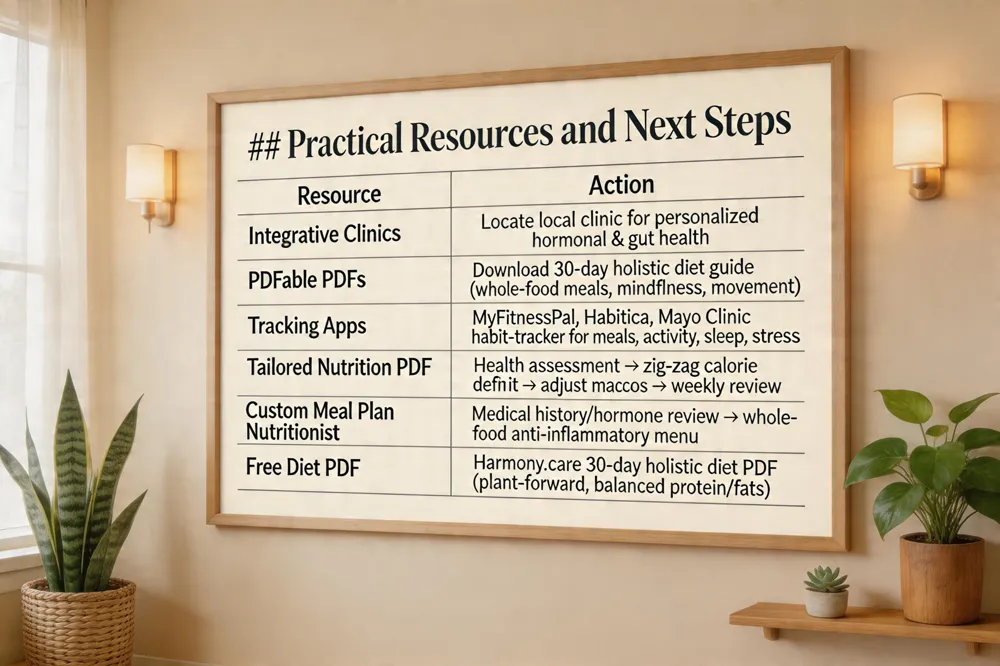 To keep your weight‑loss journey on track, start by locating a local integrative clinic where physicians, nutritionists, and wellness coaches can tailor plans to your hormonal profile, gut health, and lifestyle. Many clinics offer printable PDFs—such as a 30‑day holistic diet guide that outlines whole‑food meals, mindfulness tips, and gentle movement ideas—right from their websites or by email request.
For daily accountability, apps like MyFitnessPal, Habitica, or the Mayo Clinic habit‑tracker let you log meals, activity, sleep, and stress levels, providing real‑time feedback and reminders.
Designing tailored nutrition plans for sustainable weight loss pdf – Begin with a personal health assessment, calculate a weekly calorie deficit using a gentle “zig‑zag” cycle, adjust macronutrients for protein‑satiety and hormonal balance, incorporate familiar regional foods, and review progress weekly for tweaks.
Custom meal plan Nutritionist – A nutritionist reviews your medical history, hormone status, and food preferences, then creates a whole‑food, anti‑inflammatory menu with seasonal recipes, macronutrient ratios, and ongoing support.
Free diet plan pdf – Download a complimentary 30‑day holistic diet PDF from Harmony.care Resources, featuring plant‑forward meals, balanced protein, healthy fats, and optional mindfulness practices, to use alongside personalized professional guidance.
Putting It All Together for Lasting Wellness
Creating lasting wellness hinges on the seamless synergy of nutrition, movement, and mindset. Whole‑food, tailored meals provide the macro‑ and micronutrients women need while supporting hormone balance; regular cardio, strength, and flexibility work boost metabolism and preserve lean muscle; and mindfulness practices keep stress‑induced cortisol in check, fostering healthier eating choices. This triad is not static—regular review of progress, lab results, and personal feedback guides iterative refinements, preventing plateaus and ensuring the plan evolves with changing life stages. Professional partners such as registered dietitians, fitness trainers, and integrative clinicians add safety, expertise, and accountability. Finally, empowerment comes from evidence‑based tools—SMART goal trackers, AI‑driven meal planners, and habit‑monitoring apps—that translate complex data into actionable steps, allowing women to confidently steer their own sustainable weight‑loss journeys. Tracking sleep, hydration, and mood alongside meals creates a holistic picture that fuels sustained progress daily.